

How to Prepare for Your First Cardiology Appointment
Preparing for your first heart specialist visit? Learn what records to bring, what questions to ask, and how to track symptoms with our patient guide.
A first visit to a heart specialist often feels more serious than an ordinary clinic appointment, especially when you are waiting for answers about chest discomfort, palpitations, blood pressure, or an abnormal test. Preparation helps turn that worry into useful information the cardiologist can work with.
Before your first cardiology appointment, choose a cardiologist and gather the details that explain what has been happening:
Your medicines
Symptoms
Previous reports
Medical history
The questions you most want answered.
Planning questions in advance helps prevent important concerns from being forgotten during the consultation.
If you are still deciding whether specialist review is appropriate, understanding what cardiology covers and when to see a cardiologist can help clarify why a referral or consultation may be recommended.
What to Bring to Your First Cardiology Appointment
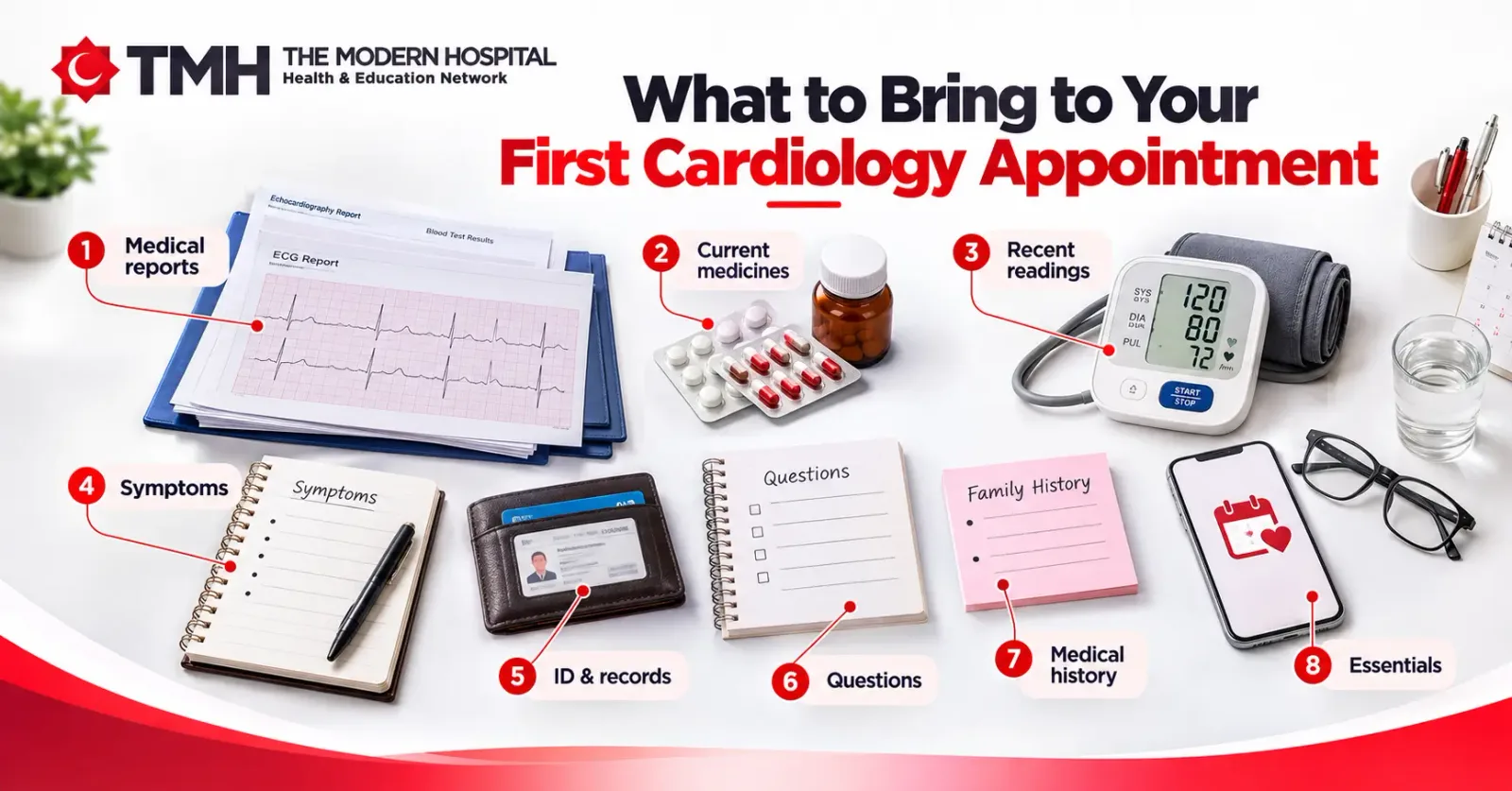
A Complete Medicines and Supplements List
Write down every prescription medicine you take, including the dose and how often you take it. Add:
Over-the-counter medicines
Vitamins
Herbal products
Supplements
Adding all these is necessary because some may affect blood pressure, heart rhythm, bleeding risk, or treatment decisions. Bring a complete medicines list rather than relying on memory. If writing everything down is difficult, labelled medicine packets may help the doctor verify names and doses.
Previous Heart Tests and Medical Reports
Bring copies of:
ECGs
Echocardiograms
Stress-test reports
Holter results
Angiography reports
Hospital discharge summaries
Relevant blood tests when available.
Older results help the cardiologist compare changes over time instead of starting with only the newest information. If you have had recent ECG or Echo testing, include the report and images if they were provided.
A Short Symptom Timeline
Write down:
When symptoms began
How often they occur
How long they last
What you were doing when they started
What seems to improve or worsen them.
Include related symptoms such as sweating, nausea, dizziness, fainting, breathlessness, or pain spreading to another area. A timeline often reveals patterns that are hard to remember under pressure during the appointment.
Know Your Medical and Family History
A cardiologist will usually ask about high blood pressure, diabetes, cholesterol, kidney disease, stroke, previous heart problems, operations, allergies, and tobacco exposure. Mention any major illnesses or hospital admissions even when they seem unrelated.
Family history also matters. Tell the cardiologist if parents, siblings, or children have had heart disease, cardiomyopathy, rhythm disorders, or sudden cardiac death, especially at a younger age.
Bring Recent Measurements When They Matter
Home blood pressure or heart-rate readings may help when the concern changes from day to day. Bring a short log rather than isolated numbers if you have been monitoring at home. Include the date, time, reading, and any symptoms you noticed.
Avoid changing medicines because of a home reading unless your healthcare professional has already given you a specific plan for doing so.
Questions Worth Writing Down Before the Visit
Appointments move quickly, and anxiety makes it easy to forget what you meant to ask. Ask about your condition, tests, medicines, and follow-up plan whenever an explanation or next step isn’t clear.
What are the most likely explanations for my symptoms, and what needs to be ruled out?
Do I need any heart tests, and what question will each test answer?
Should I keep taking my current medicines exactly as prescribed before any planned test?
Which symptoms should prompt me to seek urgent medical help?
Are there changes to activity, food, tobacco use, sleep, or monitoring that matter for my heart health?
When should I return, and which results should I bring to follow-up?
A written list of questions to ask your cardiologist can help you cover the concerns that matter most during the visit.
What Usually Happens During the Appointment?
The cardiologist will usually review your symptoms and history before deciding whether testing is needed. A physical examination may include blood pressure, pulse, heart sounds, breathing, and signs of swelling or circulation problems.
Depending on the reason for referral, an ECG may be performed during the visit or arranged separately. Other tests, such as an echocardiogram, ETT, or Holter monitor, may follow if the doctor needs more information. The main tests used to diagnose heart problems each answer a different clinical question.
What Should You Avoid Before a Cardiology Appointment?
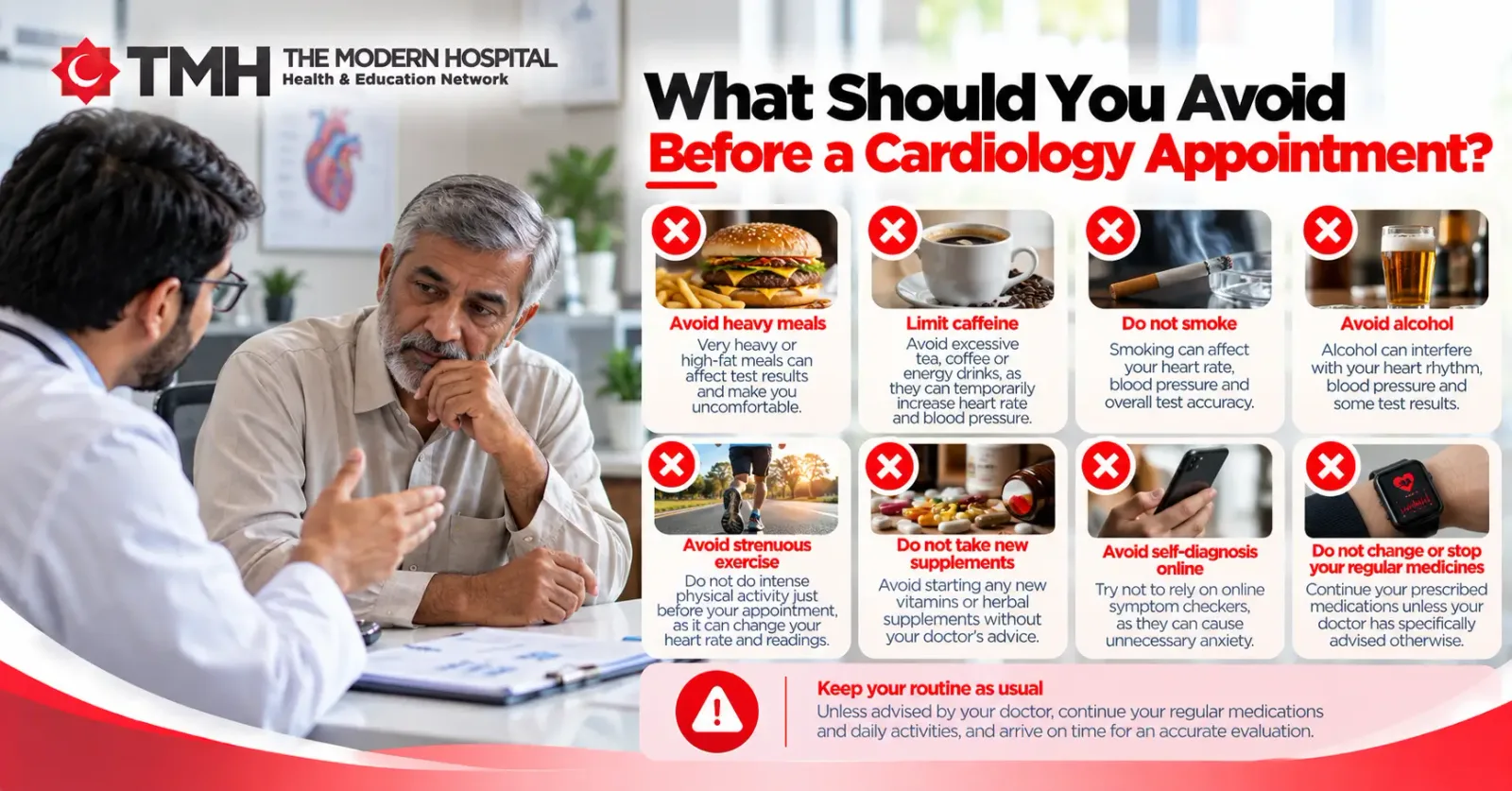
Don't stop prescribed medicines, fast, skip meals, or avoid normal activity unless the clinic has specifically told you to do so for a planned test. Preparation instructions differ depending on the investigation, so confirm any test-specific requirements with the care team.
Limit guesswork. A complete account of what you usually eat, drink, smoke, take, and do is more useful than changing habits for a day or two before the visit.
Making the Visit Feel More Manageable
Heart appointments often carry emotional weight because patients may be worried about what a symptom or test result means. The Modern Hospital's cardiology team recognises that a useful consultation starts by listening carefully before moving to investigations or recommendations.
Before booking, patients can arrange a consultation through the Cardiology Department or check the cardiologist schedule for appointment timing. Bringing the checklist above gives the doctor clearer information and gives you a better chance of leaving with answers you understand.
Frequently Asked Questions
1. Should I bring all my medicines to my first cardiology appointment?
A written list with names, doses, and timing is usually enough, although labelled medicine packets may help when you aren't sure of the details. Include supplements and over-the-counter products.
2. Should I fast before seeing a cardiologist?
Routine consultations don't always require fasting. Some blood tests or specific investigations have separate preparation instructions, so follow the instructions provided by the clinic.
3. What previous tests should I bring?
Bring relevant ECGs, Echo reports, stress tests, Holter results, angiography records, blood tests, and hospital discharge summaries when available.
4. Can I bring someone with me?
A trusted family member or friend may help you remember information, especially when you feel anxious or have many medical details to discuss. Check any visitor policy before the appointment.
5. What if I develop severe chest pain before the appointment?
Don't wait for the scheduled clinic visit. Severe or persistent chest pain with heart attack warning signs needs immediate emergency medical help.