

How to Know If Chest Pain Is Serious
Understand which chest pain symptoms may point to a heart problem, how they may differ from gas pain, and when urgent medical care is needed.
Chest pain is frightening because the same general area may hurt for very different reasons. Indigestion, muscle strain, anxiety, lung problems, and heart conditions may all cause chest discomfort, and the sensation alone doesn't always reveal which one is responsible.
Knowing how to know if chest pain is serious starts with recognising warning signs rather than trying to diagnose the cause at home. Sudden chest pain that doesn’t go away, especially when it feels like pressure or squeezing or spreads to the arm, neck, jaw, stomach, or back, needs emergency medical assessment.
When symptoms feel severe, persistent, or different from your usual pattern, emergency assessment is safer than waiting to see whether they settle.
What Serious Heart-Related Chest Pain May Feel Like
Heart-related chest discomfort may feel like pressure, tightness, squeezing, heaviness, fullness, or pain in the centre or left side of the chest. Some people experience burning or discomfort similar to indigestion, so the sensation alone may not clearly identify the cause.
Chest discomfort lasting more than a few minutes or returning after easing may occur alongside pain or discomfort in one or both arms, the back, neck, jaw, or stomach. Other warning signs may include shortness of breath, sweating, nausea, lightheadedness, or unusual tiredness.
Signs Chest Pain Needs Emergency Help
Certain features make chest pain more concerning, especially when the discomfort is intense, lasts several minutes, returns after easing, or appears alongside other symptoms.
The pattern of the pain, where it spreads, what triggers it, and the person’s heart history all help determine how urgently medical assessment is needed:
Chest pressure, squeezing, heaviness, or pain is severe, persistent, or keeps returning.
Discomfort spreads to an arm, the back, neck, jaw, shoulder, or upper abdomen.
Chest pain occurs with shortness of breath, sweating, nausea, vomiting, marked weakness, dizziness, or fainting.
Symptoms start during physical effort or worsen with exertion.
The person has known heart disease or major cardiovascular risk factors and develops new or unusual chest symptoms.
The symptoms feel distinctly different from the person's usual indigestion, muscular pain, or anxiety symptoms.
Anyone experiencing these warning signs should seek immediate assessment through an Emergency Department or local emergency medical services. Don’t wait for a routine cardiology appointment when symptoms suggest urgent evaluation is needed.
Heart Pain vs Gas Pain: Why the Difference Is Hard to Judge
Chest discomfort from a heart problem and discomfort caused by indigestion, acid reflux, or trapped gas may feel surprisingly similar. Both may cause burning, pressure, or discomfort around the chest and upper abdomen, which makes symptoms alone an unreliable way to identify the cause.
Certain features may point more strongly toward one cause, but no single symptom confirms whether chest pain comes from the heart or digestive system.
The comparison below may help you understand common patterns while keeping emergency warning signs in mind.
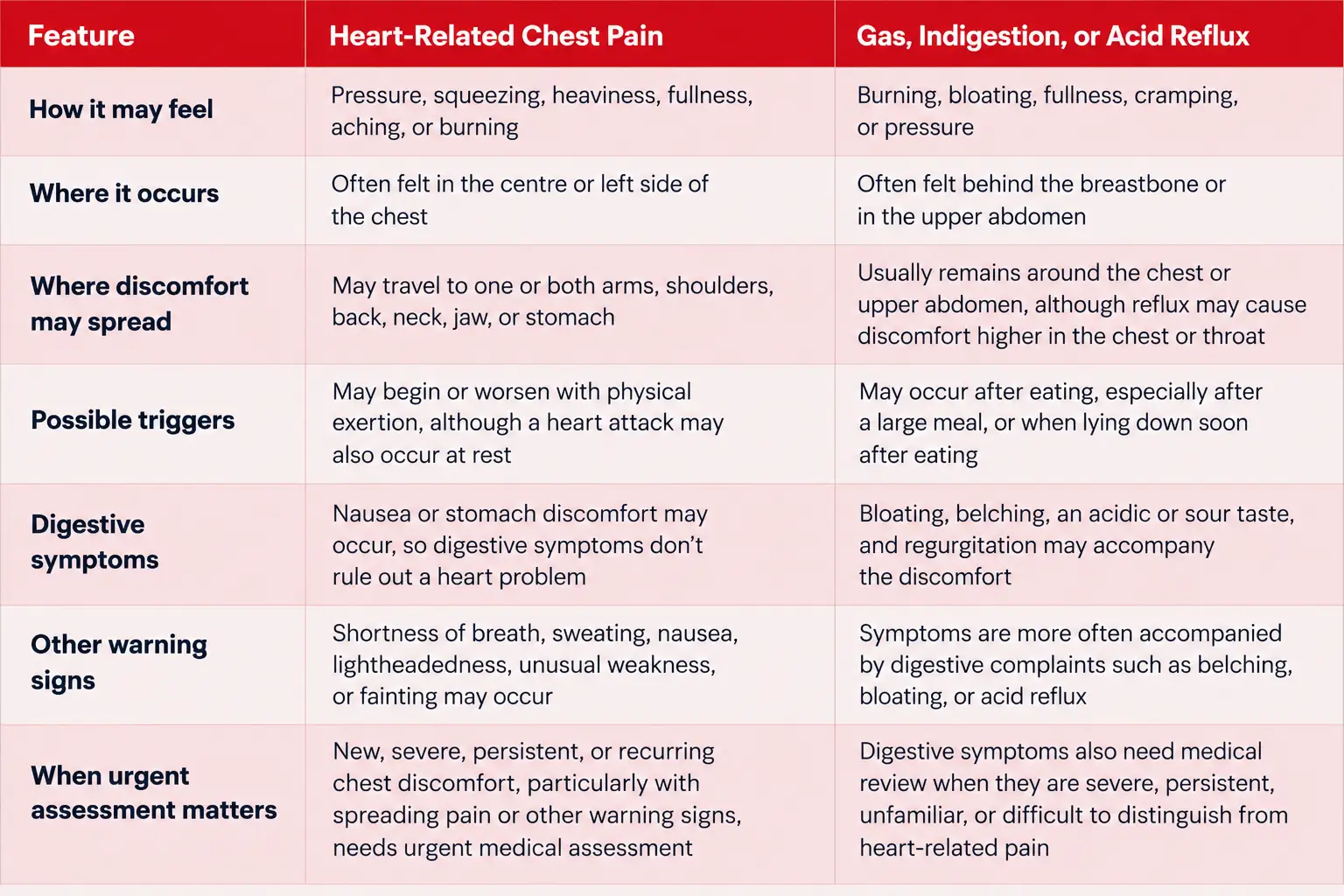
Digestive clues such as bloating, belching, an acidic taste, or symptoms closely linked with meals may suggest a gastrointestinal cause. They shouldn't reassure someone when chest pressure, shortness of breath, sweating, spreading discomfort, dizziness, or fainting is also present. Heart attacks may also cause burning, fullness, nausea, or discomfort that feels similar to indigestion.
If chest pain is new, severe, lasts more than a few minutes, returns after easing, or occurs with other heart attack warning signs, seek urgent medical assessment rather than trying to determine the cause at home.
What About Chest Pain From Muscles or Movement?
Musculoskeletal pain may follow exercise, coughing, lifting, injury, or a new movement. Pain reproduced by pressing on a specific spot or moving the upper body may point toward a chest-wall cause.
However, that pattern doesn't guarantee the heart is uninvolved when other warning signs are present. New chest pain deserves extra caution when a person has high blood pressure, diabetes, tobacco exposure, abnormal cholesterol, known heart disease, or a strong family history.
What About Anxiety or Panic Symptoms?
Anxiety may cause chest tightness, a fast heartbeat, breathlessness, tingling, dizziness, or a sense of fear.
Heart problems may produce several of the same symptoms. A first episode, a major change from previous episodes, or symptoms with exertion deserve medical evaluation rather than an assumption that anxiety is the cause.
Chest Pain in Women and Older Adults
Heart attacks don't always begin with dramatic chest pain. Some people experience more prominent breathlessness, nausea, fatigue, back discomfort, jaw discomfort, dizziness, or weakness. Older adults and people with diabetes may also have less typical symptom patterns.
A lower threshold for emergency assessment makes sense when symptoms are new, unexplained, or accompanied by a clear change in how the person feels.
When Recurrent Chest Pain Needs a Cardiologist
Chest pain that has settled but keeps returning still deserves medical assessment. A doctor may review the pattern, cardiovascular risk factors, and previous results before deciding whether heart testing is needed.
A broader understanding of what cardiology covers can help explain why recurrent chest symptoms sometimes need specialist review through the Cardiology Department.
Tests such as an ECG, Echo, ETT, or other investigations are selected according to the clinical situation rather than used as a home screening shortcut.
Getting Assessed When You Are Unsure
Chest pain often creates a difficult question:
Am I overreacting, or am I waiting too long?
The Modern Hospital understands that patients may not know the cause before they arrive, and emergency assessment exists to evaluate serious possibilities quickly when warning signs are present.
If chest symptoms are severe or suggest a heart attack, seek help through the Emergency Department immediately.
Stable, recurrent symptoms may be discussed with a cardiologist after urgent causes have been excluded when appropriate.
Frequently Asked Questions
1. How do I know if chest pain is serious?
Chest pain is more concerning when it is severe, persistent, recurrent, triggered by exertion, spreads to other areas, or occurs with breathlessness, sweating, nausea, dizziness, fainting, or marked weakness.
2. Can gas pain feel like heart pain?
Yes. Digestive discomfort and heart-related discomfort sometimes overlap, especially when burning or indigestion-like symptoms are involved. Warning signs should prompt medical assessment regardless of suspected gas.
3. Does pain on the left side always mean a heart problem?
No. The location alone doesn't identify the cause. Heart-related pain may occur centrally or spread beyond the chest, while non-heart conditions may also cause left-sided pain.
4. Should chest pain that goes away still be checked?
Recurrent or unexplained chest pain deserves medical assessment even when it settles. Symptoms that were severe or paired with heart attack warning signs need urgent evaluation.
5. What should I do if someone has chest pain right now?
If the pain may represent a heart attack, activate local emergency medical services and follow their instructions. Knowing what to do during chest pain helps you focus on the immediate steps while emergency care is being arranged.