

What Is Cardiology? A Complete Guide to Heart Health
What Is Cardiology
A racing heartbeat after climbing stairs, chest discomfort that keeps returning, or an unexpected blood pressure reading often makes people wonder whether they should be worried about their heart.
Heart concerns deserve clear answers because cardiovascular diseases remain the leading cause of death worldwide, accounting for an estimated 17.9 million deaths each year.
If you have ever asked what is cardiology, the simplest answer is that cardiology is the medical specialty focused on the heart and blood vessels. Through the Cardiology Department, a cardiologist can assess symptoms, medical history, risk factors, examination findings, and heart tests together to decide whether a cardiovascular problem needs monitoring, treatment, or further investigation.
Knowing where cardiology fits into your care helps you respond appropriately when symptoms appear. The guide below explains what cardiologists do, when heart care is needed, which tests are commonly used, and how everyday choices support long-term heart health.
What Is Cardiology?
Cardiology is a branch of medicine that focuses on the cardiovascular system, including the heart and the blood vessels that carry blood around the body. Cardiologists assess how the heart pumps, how its electrical system controls rhythm, how the valves work, and whether blood reaches the heart muscle properly.
The specialty covers prevention, diagnosis, and ongoing medical care. A cardiologist may investigate symptoms, review an abnormal ECG, manage blood pressure or cholesterol in a higher-risk patient, monitor an existing heart condition, or decide whether another heart specialist should become involved.
If symptoms keep returning or a test result raises questions, patients can choose from available cardiologists before arranging a consultation.
What Does a Cardiologist Do?
A cardiologist begins by understanding what you are feeling and how the symptoms fit into your broader health history. Questions often cover when symptoms started, what triggers them, which medicines you take, whether you have diabetes or high blood pressure, and whether close relatives developed heart disease at an early age.
A physical examination may include checking blood pressure, pulse, heart sounds, breathing, and signs of fluid retention or circulation problems. Tests are chosen according to the clinical question rather than ordered automatically.
Cardiologists assess symptoms such as chest discomfort, shortness of breath, palpitations, dizziness, fainting, or reduced exercise tolerance.
They interpret investigations such as ECGs, echocardiograms, exercise tests, blood tests, and longer heart-rhythm recordings.
They manage medical treatment and cardiovascular risk factors when a heart or blood-vessel condition has been identified.
They monitor established heart conditions and decide when a referral to an interventional specialist or cardiac surgeon is appropriate.
Common Heart Problems Seen in Cardiology
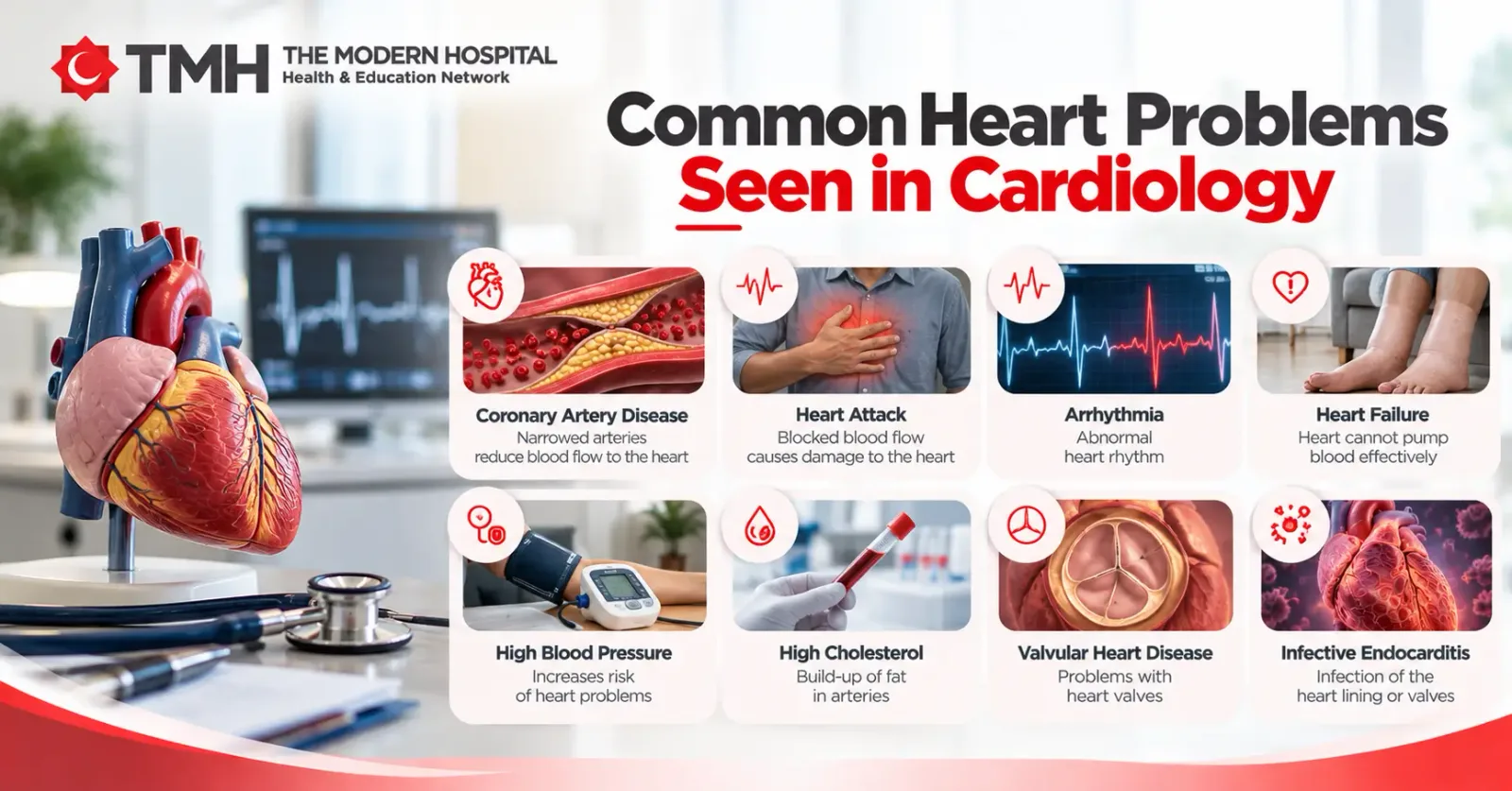
Cardiology covers a wide range of conditions. The exact diagnosis depends on a clinical assessment, but several groups of heart problems appear frequently in cardiology care:
Coronary artery disease:
Coronary artery disease affects the arteries that supply the heart muscle and may lead to angina or a heart attack when blood flow becomes severely reduced.
Heart rhythm problems:
Heart rhythm problems, also called arrhythmias, alter the speed or pattern of the heartbeat and may cause palpitations, dizziness, weakness, or fainting.
Heart failure:
Heart failure develops when the heart doesn't pump as effectively as the body needs, often leading to breathlessness, fatigue, or swelling in the legs.
Heart valve disease:
Heart valve disease affects valves that have become narrowed or leaky, which may alter blood flow through the heart.
High blood pressure and cardiovascular risk:
High blood pressure, diabetes, abnormal cholesterol, tobacco exposure, excess weight, and family history all influence cardiovascular risk.
Heart muscle conditions:
Heart muscle conditions may affect pumping function, rhythm, or both and often require specialist follow-up.
Some conditions overlap, which is why symptoms alone rarely identify the exact cause. A careful history, examination, and appropriate testing help narrow down what is happening and what the next step should be.
When Is Heart Care Needed?
Heart symptoms don't always feel dramatic. New, persistent, worsening, or unexplained symptoms deserve medical attention, especially when risk factors such as diabetes, high blood pressure, smoking, or a strong family history are present.
Chest pain or pressure may feel like tightness, squeezing, heaviness, burning, or discomfort. Because digestive, muscular, lung, and heart problems sometimes produce similar symptoms, self-diagnosis isn't a safe way to rule out a serious cause.
Shortness of breath during activity, at rest, or when lying down deserves assessment when it appears without a clear explanation or becomes worse.
Palpitations that recur, last longer than usual, or occur with dizziness, breathlessness, chest discomfort, or fainting need medical attention.
Repeated dizziness or unexplained fainting may have cardiovascular or non-cardiovascular causes and should be assessed.
Persistent swelling in the legs or feet, especially alongside breathlessness or rapid weight gain, may reflect fluid buildup.
A noticeable decline in exercise tolerance may be worth discussing with a doctor even when there isn't obvious pain.
When Heart Symptoms Need Emergency Care
Severe or sudden chest pain needs urgent attention. Seek emergency medical help immediately if the following symptoms last more than a few minutes, returns after easing, or occurs with shortness of breath, sweating, nausea, fainting, marked weakness, or discomfort spreading to the arm, back, neck, jaw, or upper abdomen:
Pressure
Squeezing
Heaviness
Pain
Heart attack warning signs may begin with mild discomfort rather than sudden intense pain.
If a heart attack may be happening, don't wait for a routine appointment. Go directly to an Emergency Department or activate local emergency medical services. Quick assessment matters because treatment works best when serious heart problems are identified early.
What Heart Tests Are Common in Cardiology?
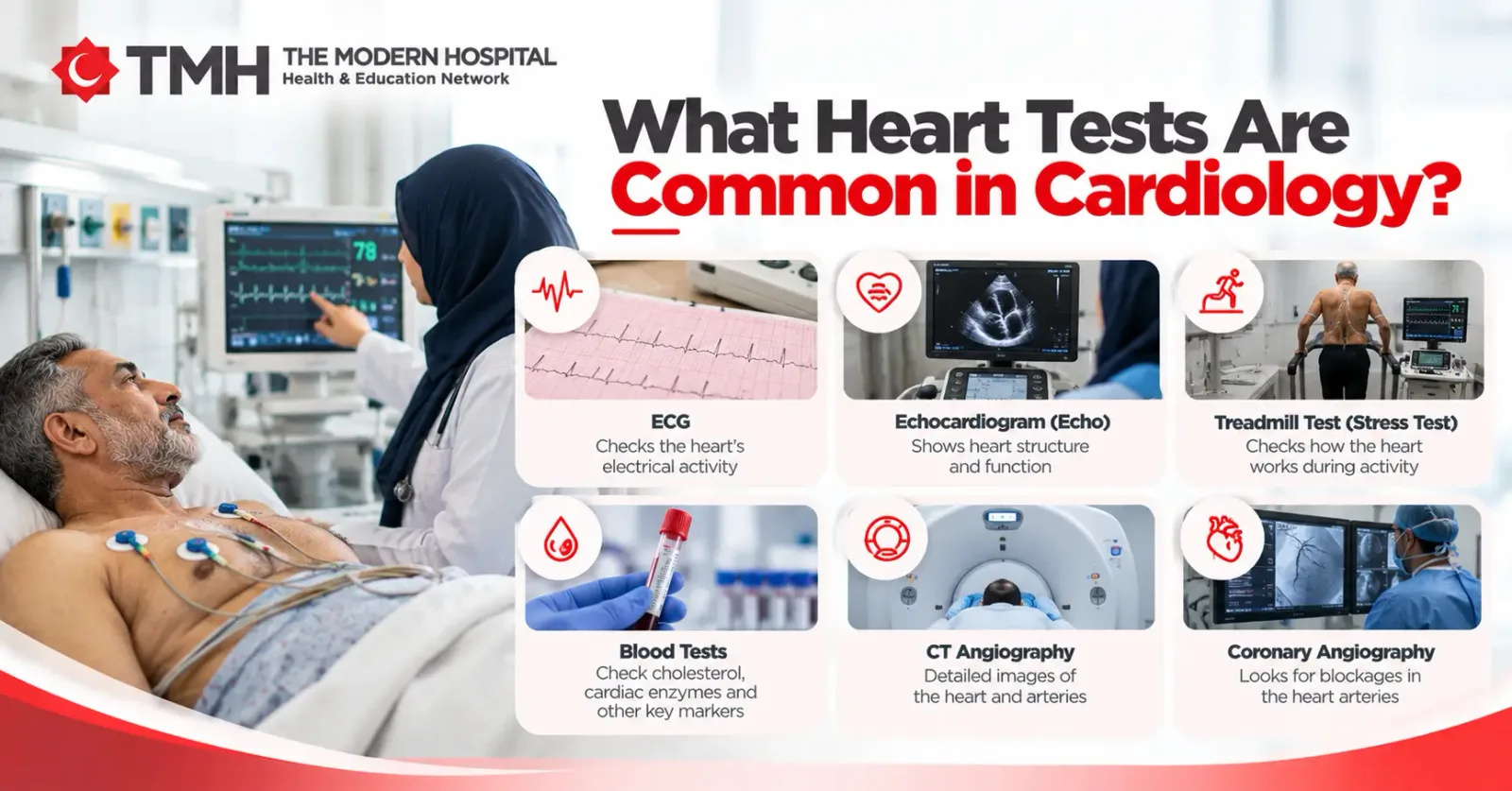
Heart tests answer different questions, so there isn’t one test that checks every part of cardiovascular health. A cardiologist selects tests according to your symptoms, examination, age, risk factors, and previous results.
ECG (Electrocardiogram)
An ECG records the electrical activity of the heart through electrodes placed on the skin. It helps assess heart rate and rhythm and may reveal electrical changes associated with several heart conditions. The test is usually quick and painless.
Echocardiogram (Echo)
An echocardiogram uses ultrasound to create moving images of the heart. It helps clinicians examine pumping function, heart valves, wall movement, and the size of different heart chambers. The hospital’s ECG and Echo Doppler service provides more information about cardiac imaging available through the service.
ETT (Exercise Tolerance Test)
An exercise tolerance test monitors the heart while you walk on a treadmill or perform another form of supervised exercise. Heart rate, rhythm, blood pressure, symptoms, and ECG changes are observed as the workload increases. A cardiologist decides whether an ETT is appropriate based on the clinical situation.
Holter Monitoring
A Holter monitor records heart rhythm over an extended period while you continue normal daily activities. Longer monitoring may help when palpitations, dizziness, or irregular rhythms occur intermittently and don’t appear during a short ECG recording.
Blood Tests and Other Investigations
Blood tests may check cholesterol, blood sugar, kidney function, thyroid function, blood counts, and markers requested for a specific clinical concern. Some patients need additional imaging or specialist tests after the initial assessment.
The NHLBI overview of heart tests provides a useful patient reference for ECG and other investigations. Test results should always be interpreted by a qualified clinician who understands the full medical context.
What Happens During a Cardiology Appointment?
A first cardiology appointment usually begins with a detailed conversation rather than a test. The cardiologist will want to know what you are feeling, when the symptoms began, what makes them better or worse, and whether there is a history of heart disease, stroke, high blood pressure, diabetes, or high cholesterol in you or your family.
Bringing a current medicine list, previous ECGs or scans, recent blood-test reports, and a short record of your symptoms often makes the visit more productive. Exact details matter. For example, describing whether chest discomfort appears during exertion, after meals, or at rest gives the doctor more useful information than simply saying that the chest hurts sometimes.
Before a consultation, checking the cardiologist schedule and preparing your medicines, previous reports, and questions can make a first cardiology appointment more productive.
Cardiology and Cardiac Surgery: Where Is the Difference?
Cardiology and cardiac surgery both focus on heart disease, but the specialists have different roles.
Cardiologists diagnose heart conditions, manage medicines and risk factors, interpret heart tests, and may perform catheter-based procedures depending on their subspecialty.
Cardiac surgeons perform operations on the heart and major blood vessels when surgery is required.
Many patients see a cardiologist first. If the assessment suggests that surgery should be considered, the cardiologist and cardiac surgeon may work together to decide what approach fits the patient’s condition and overall health.
How to Protect Your Heart Health
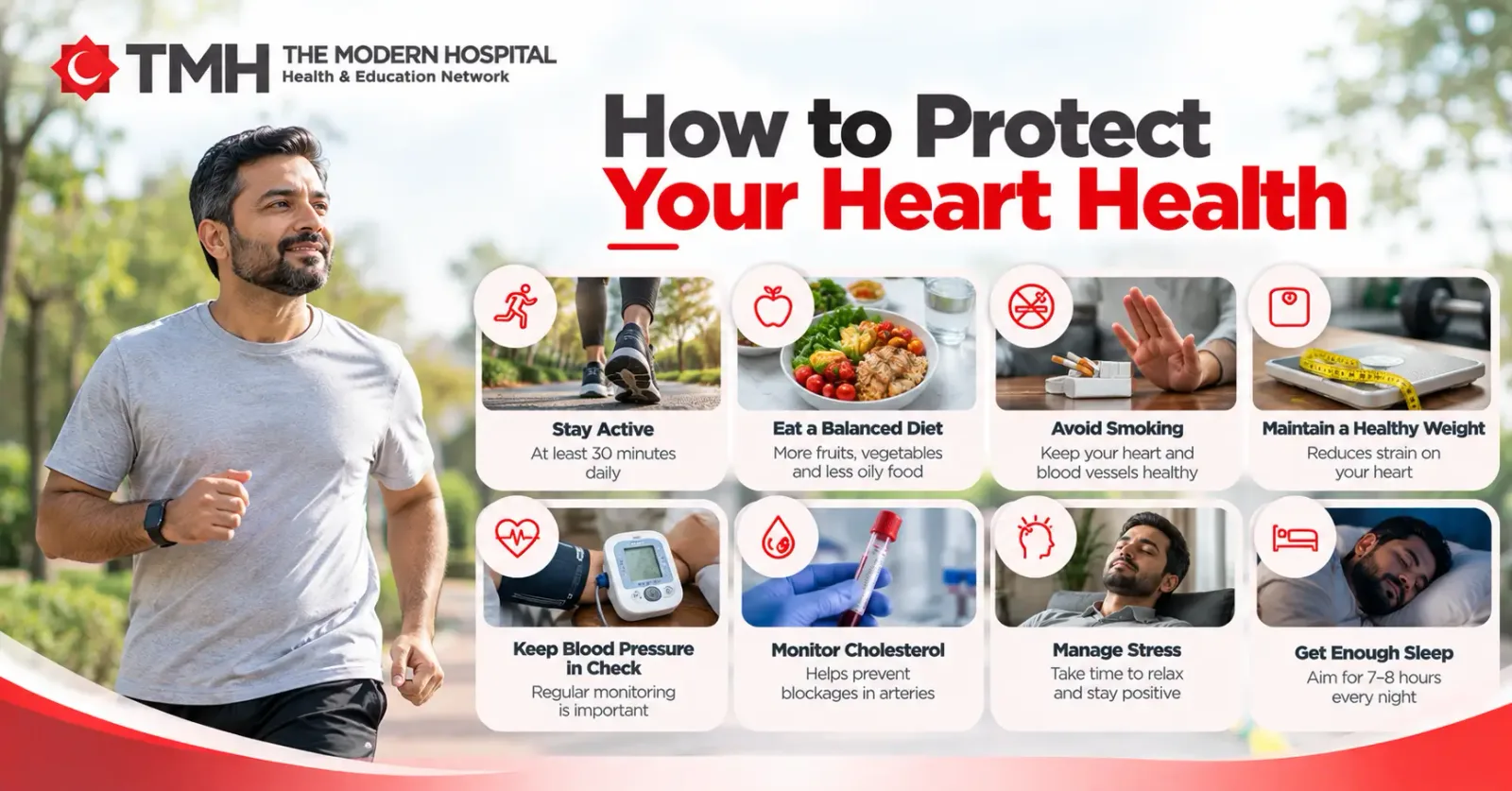
Cardiology also has a strong preventive role. Heart disease risk develops through a combination of factors, and some of the most important ones respond to regular monitoring and daily habits.
Know your blood pressure:
High blood pressure often causes no obvious symptoms, so checking it gives you information that symptoms alone won’t provide.
Check cholesterol and blood sugar when advised:
Abnormal cholesterol and diabetes may raise cardiovascular risk over time, especially when several risk factors occur together.
Avoid tobacco and nicotine exposure:
Smoking and other tobacco use damage blood vessels and substantially increase cardiovascular risk.
Stay physically active:
Regular activity supports blood-pressure control, fitness, weight management, and overall cardiovascular health. Your doctor may recommend individual limits when symptoms or known heart disease are present.
Build meals around heart-supportive foods:
Vegetables, fruits, whole grains, legumes, nuts, seeds, and appropriate sources of protein support a balanced eating pattern, while excess sodium, highly processed foods, and trans fats deserve limits.
Pay attention to sleep and weight:
Sleep quality and body weight both form part of cardiovascular risk assessment and may interact with blood pressure, blood sugar, and other health factors.
The American Heart Association groups several of these priorities within Life’s Essential 8, covering diet, physical activity, nicotine exposure, sleep, weight, cholesterol, blood sugar, and blood pressure. A cardiologist may adapt prevention advice to your age, medical history, symptoms, and current level of risk.
Should You See a Cardiologist Without Symptoms?
Some people benefit from a heart-risk discussion before symptoms develop. A doctor may recommend cardiology input when:
Blood pressure remains high
Cholesterol is markedly abnormal
Diabetes is present
A close relative developed heart disease at an early age
Previous testing has raised a concern.
A routine cardiology visit isn’t automatically necessary for every healthy person. Primary-care assessment and cardiovascular risk screening often identify who needs specialist review. When a referral or consultation is recommended, seeing a cardiologist gives you a chance to understand your individual risk and decide which tests or follow-up steps are appropriate.
Understanding Cardiology Makes Heart Care Easier to Navigate
Knowing what cardiology covers helps you separate routine heart care from situations that need urgent attention. Cardiologists look at symptoms, risk factors, physical findings, and test results together, which provides a fuller picture than any single reading or scan on its own.
If you have ongoing heart symptoms, a new cardiovascular concern, or test results that need specialist interpretation, the Cardiology Department at The Modern Hospital provides access to cardiology assessment and heart-care services. For non-emergency concerns, you may also review available cardiologists before arranging a consultation.
Chest pain or symptoms that suggest a heart attack should never wait for a routine appointment. In an urgent situation, seek emergency medical care immediately.
Frequently Asked Questions
1. What is cardiology in simple terms?
Cardiology is the medical specialty that focuses on the heart and blood vessels. Cardiologists assess symptoms, diagnose cardiovascular conditions, review heart tests, manage medical treatment, and help patients reduce heart-disease risk.
2. What symptoms should make me see a cardiologist?
Chest discomfort, unexplained shortness of breath, palpitations, fainting, repeated dizziness, leg swelling, or a noticeable decline in exercise tolerance may justify medical assessment. Severe or sudden symptoms need emergency care rather than a routine appointment.
3. Is chest pain always caused by the heart?
No. Chest pain has several possible causes, including digestive, muscular, lung, and heart-related problems. Because symptoms sometimes overlap, sudden, severe, persistent, or concerning chest pain requires prompt medical evaluation.
4. What is the difference between an ECG and an Echo?
An ECG records the heart’s electrical activity and rhythm. An Echo uses ultrasound to create moving images of the heart, including its valves, chambers, and pumping function. A cardiologist may request one or both depending on the clinical question.
5. What is an ETT used for?
An ETT monitors the heart during supervised exercise. Doctors may use it to assess symptoms that occur with exertion and to observe heart rate, rhythm, blood pressure, and ECG changes as activity increases.
6. Does seeing a cardiologist mean I have heart disease?
No. People see cardiologists for many reasons, including symptom evaluation, abnormal test results, cardiovascular risk assessment, follow-up of an existing condition, or advice after another doctor recommends specialist review.
7. How often should I have a heart checkup?
There isn’t one schedule that fits everyone. The right frequency depends on age, symptoms, blood pressure, cholesterol, diabetes, family history, smoking history, existing heart conditions, and previous test results. A clinician can recommend a follow-up plan based on your risk.
8. When should chest pain be treated as an emergency?
Seek emergency care immediately for severe, sudden, or persistent chest pressure or pain, especially when it occurs with shortness of breath, sweating, nausea, fainting, marked weakness, or pain spreading to the arm, back, neck, jaw, or upper abdomen.