

Dog Bite First Aid - What to Do Immediately and When to Seek Rabies Care
Learn essential dog bite first aid. Discover why washing with soap and running water for 15 minutes saves lives, and when to seek urgent rabies care.
Immediate dog bite first aid requires rapid, thorough wound irrigation:
Wash the wound immediately under running tap water with soap for a full 15 minutes.
Apply gentle pressure with a clean cloth to slow active bleeding.
Apply an antiseptic solution like povidone-iodine to the wound edges.
Keep the wound open without tight bandaging.
Visit a hospital immediately for professional rabies and tetanus evaluation.
Dog Bite First Aid: What to Do Immediately and When to Seek Rabies Care
Dogs are often called a person’s best friend. They bring companionship, loyalty, and comfort, but even a familiar dog can bite when it feels threatened or frightened. In that moment, the first question that comes to mind is:
What should I do now?
A dog bite should never be ignored, even if the wound looks small. The right first aid steps taken immediately after a bite reduce the risk of infection and ensure you receive the care needed for rabies prevention and wound management.
Many people delay treatment, rely on home remedies, or wait to see if the injury gets worse. Knowing what to do after a dog bite helps you act quickly and avoid unnecessary risks.
This guide explains the correct dog bite first aid steps, what to avoid, and when you need medical attention after an animal bite.
The First Step After a Dog Bite: Wash the Wound Immediately
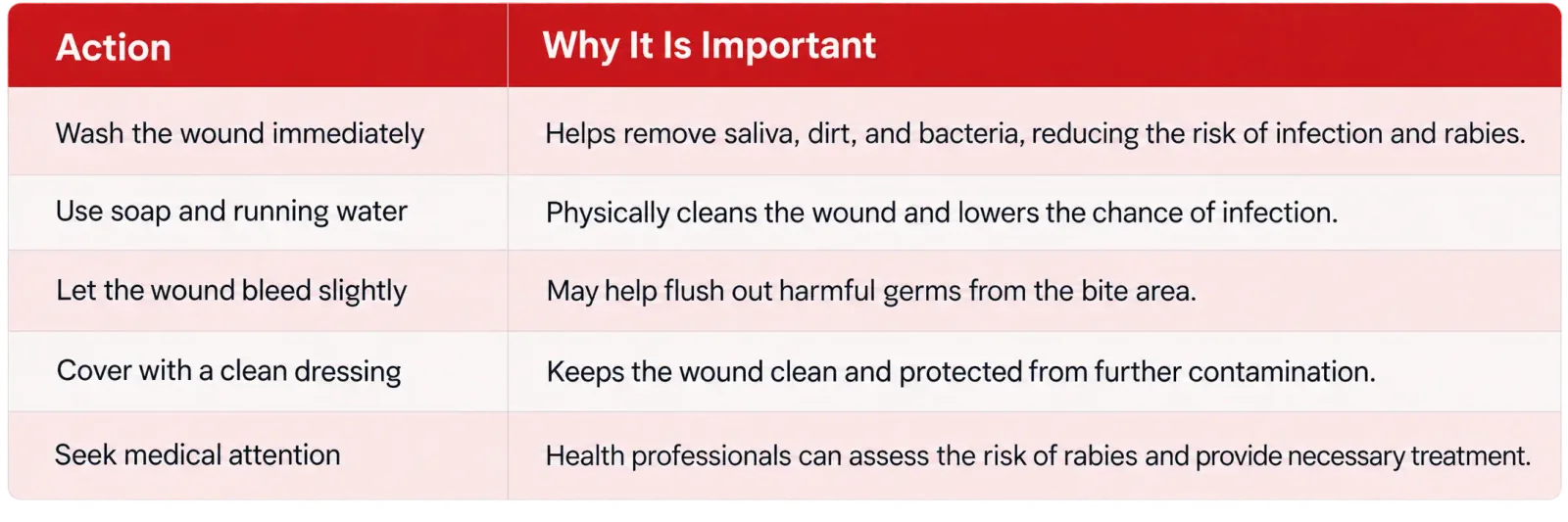
After a dog bite or scratch, the most important action starts before you reach a hospital. Thoroughly washing the wound with soap and running water removes saliva, bacteria, and contaminants from the injured area and reduces the risk of serious complications.
Many people underestimate small bites or scratches because the wound appears minor. However, even a small break in the skin requires proper cleaning and medical assessment, especially when rabies exposure is possible.
Follow these steps immediately after an animal bite:
1. Wash the Wound Thoroughly
Place the injured area under clean running water and wash it carefully with soap. Clean the wound continuously and remove any visible dirt or contamination.
Proper wound cleaning is the first and most important step in [dog bite first aid].
2. Control Bleeding and Protect the Area
If the wound is bleeding, apply gentle pressure using a clean cloth or sterile gauze.
After cleaning, cover the injury with a clean dressing and avoid touching the wound unnecessarily.
3. Apply an Appropriate Antiseptic
After washing the wound, apply an antiseptic recommended for wound care, such as povidone-iodine.
Avoid applying harsh household chemicals or unverified substances directly to the injury, as they damage tissue and interfere with proper healing.
4. Avoid Closing the Wound Without Medical Advice
Animal bite wounds require careful assessment before closure. Deep bites, puncture wounds, and injuries in sensitive areas need evaluation by a healthcare professional to determine the safest wound management approach.
Seeking timely Wound Care after an animal bite ensures the injury receives appropriate treatment and reduces the risk of complications.
Dangerous Home Remedies to Avoid After a Dog Bite
After a dog bite, people often receive advice to apply household substances to the wound. These remedies do not prevent rabies and often increase the risk of infection, tissue damage, and delayed treatment.
Avoid applying:
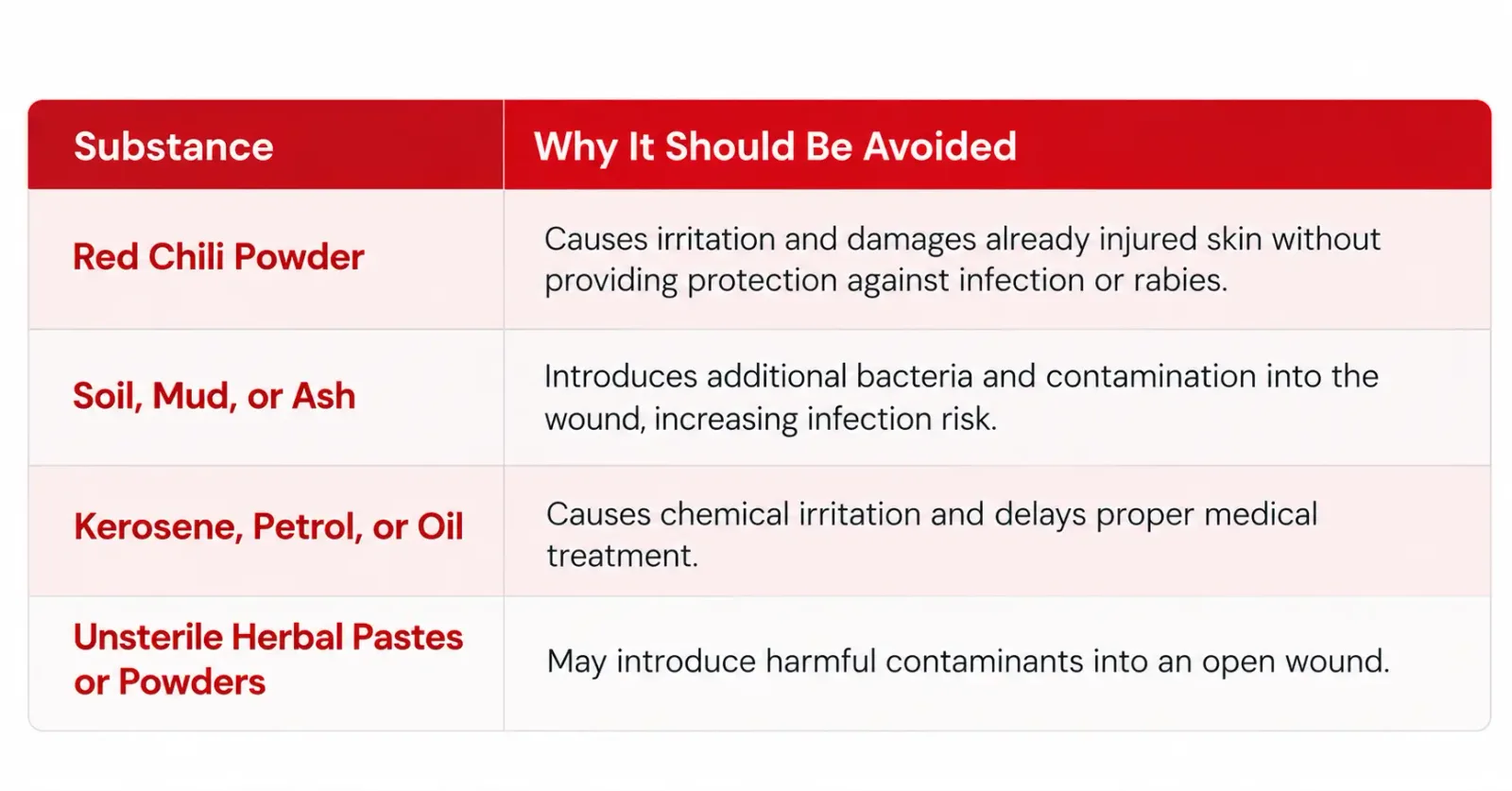
Another common mistake is tightly wrapping a bite wound or applying pressure in an attempt to stop rabies from spreading. These methods do not prevent rabies transmission and may worsen tissue damage.
The rabies virus requires medical prevention measures after exposure. Delaying proper wound cleaning and medical assessment creates unnecessary risk.
Why Rabies Prevention After a Dog Bite Cannot Be Delayed
Rabies is a serious viral infection transmitted through the saliva of infected animals. The virus enters the body through broken skin or contact with mucous membranes during bites, scratches, or exposure to saliva.
After entering the body, the virus affects the nervous system. Without timely prevention after exposure, rabies progresses toward severe neurological disease.
Once symptoms appear, rabies is almost always fatal. Warning signs include difficulty swallowing, fear of water, confusion, agitation, and paralysis.
A common mistake is waiting to see whether the animal appears sick. An animal may transmit rabies before obvious signs of illness appear, which is why medical assessment after a high-risk bite is essential.
Starting appropriate post-exposure care early gives the best protection against rabies.
How Doctors Assess Rabies Exposure After an Animal Bite
Healthcare professionals assess every animal bite based on the type of exposure, the location of the injury, and the condition of the animal involved.
The World Health Organization categorizes rabies exposure into three levels:
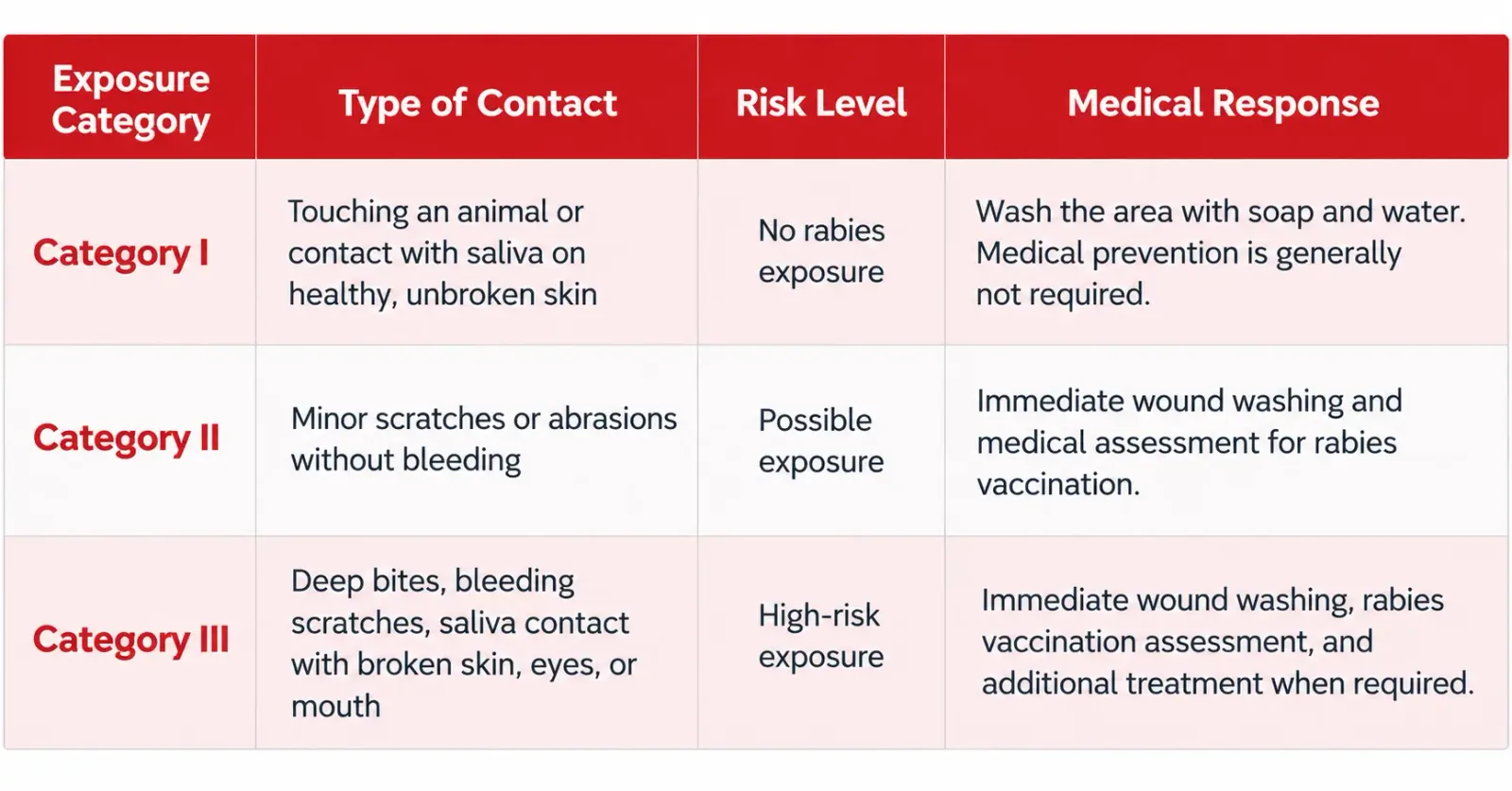
For higher-risk exposures, doctors may recommend both Rabies Vaccine and additional preventive treatment based on the injury and exposure details.
Rabies prevention requires proper medical assessment because treatment decisions depend on factors such as wound severity, location, and the type of animal exposure.
Never delay professional care after a suspected rabies exposure.
Preventing Tetanus and Bacterial Infections After a Dog Bite
Rabies is one of the most serious concerns after an animal bite, but it is not the only risk. A dog bite also introduces bacteria from the animal’s mouth deep into the skin and surrounding tissues, increasing the risk of infection.
Because bite wounds often involve punctures and damaged tissue, bacteria can multiply quickly if the injury is not cleaned and treated properly.
After a dog bite, watch for signs of infection such as:
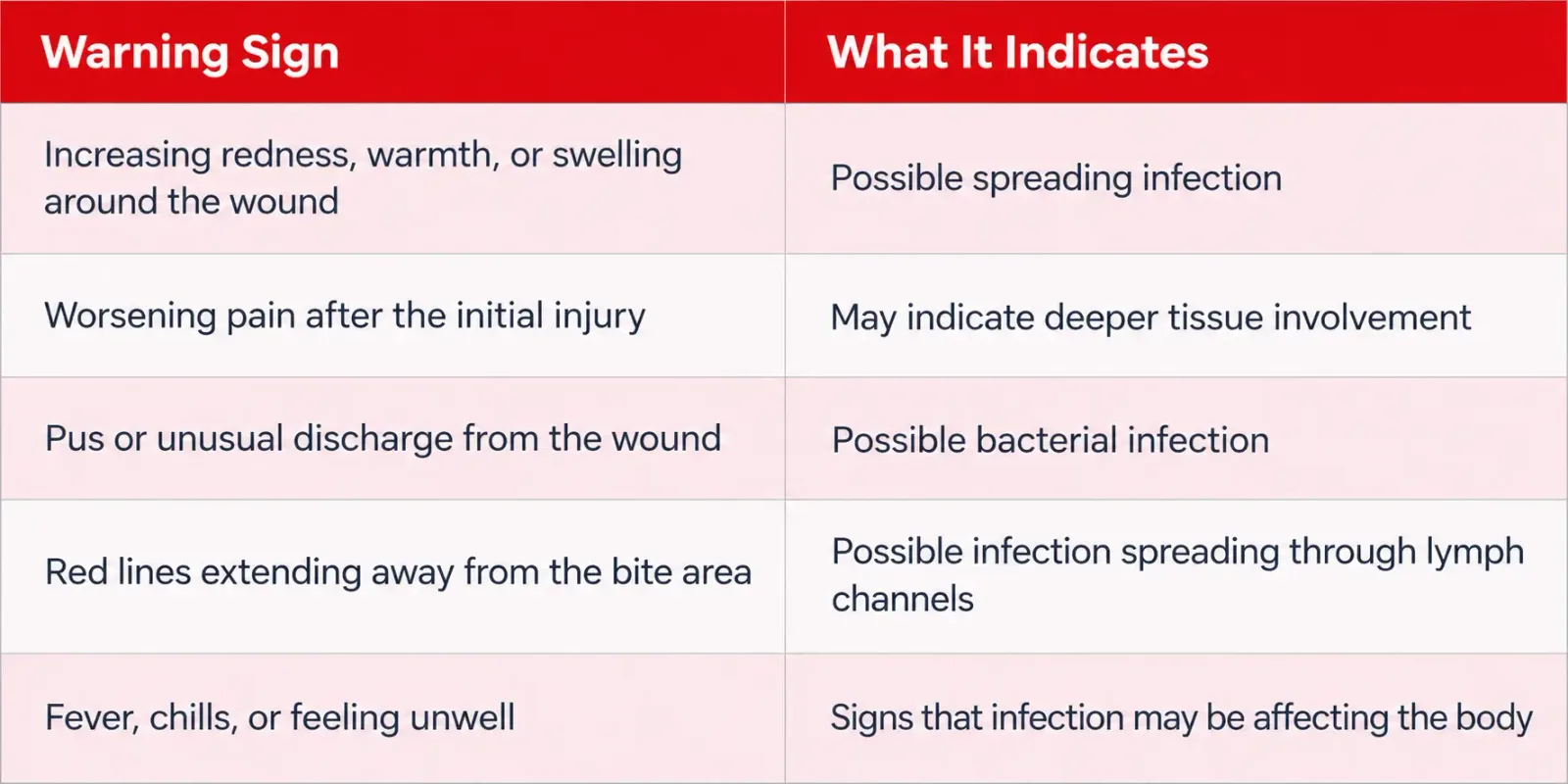
Another important concern after an animal bite is tetanus. Deep puncture wounds create conditions where Clostridium tetani bacteria can grow, especially when the injury is contaminated with soil, dirt, or other materials.
A medical professional reviews your vaccination history and determines whether you need a Tetanus booster or additional protection based on the type of injury and your previous immunization status.
Doctors also assess whether antibiotics are required to prevent bacterial infections from becoming more serious. Proper wound management reduces the risk of complications such as abscess formation, deeper tissue infection, or problems affecting movement.
Dog Bites in Children: Why They Require Special Attention
Children require extra care after a dog bite because their injuries often involve more sensitive areas of the body.
Due to their height and natural curiosity around animals, children are more likely to suffer bites on the face, neck, scalp, or hands rather than areas commonly affected in adults.
These injuries require careful medical assessment because they involve:
Parents should seek medical care through a dedicated Pediatrics Clinic after a significant bite or facial injury.
Pediatric specialists assess wound severity, review rabies exposure risks, evaluate vaccination requirements, and guide parents through the recovery process.
Emergency Animal Bite Care at The Modern Hospital
A dog bite requires timely medical attention to properly manage the wound, assess infection risks, and begin preventive care when required.
At The Modern Hospital, the Emergency team provides assessment and treatment for animal bite injuries, including wound cleaning, injury evaluation, vaccination guidance, and further care based on the patient’s condition.
The 24/7 Emergency department supports patients with urgent injuries through trained medical staff and nursing teams experienced in emergency care.
For complex injuries, including deep wounds, facial bites, or injuries involving muscles and joints, patients receive further evaluation through relevant specialist departments.
The Modern Hospital provides emergency support from its location at Main University Road, Block 7, Gulshan-e-Iqbal, Karachi (opposite Safari Park). For emergency assistance, contact 021-111-864-864.
Frequently Asked Questions About Dog Bites and Rabies
How soon should I get medical care after a dog bite?
You should seek medical assessment as soon as possible after a dog bite, especially when the skin is broken. Early evaluation allows healthcare professionals to assess rabies exposure risk, review tetanus protection, and provide appropriate wound care before complications develop.
Can a pet dog transmit rabies?
A pet dog requires medical assessment after a bite if there is any concern about rabies exposure, vaccination status, or contact with potentially infected animals. Even a familiar animal should not be assumed risk-free without considering the complete exposure situation.
Should I cover a dog bite wound at home?
After washing the wound thoroughly with soap and running water, cover it with a clean, loose dressing if needed. Avoid tight wrapping or sealing the wound because bite injuries require proper assessment and monitoring for infection.
What should I do with the dog that caused the bite?
If the dog has an owner, collect information about the animal and follow local medical guidance regarding observation and assessment. If the animal is stray or unavailable, inform healthcare professionals because this affects rabies exposure evaluation and treatment decisions.
Quick Action After a Dog Bite Protects Your Health
A dog bite requires immediate and careful action. Cleaning the wound properly, avoiding harmful home remedies, and seeking medical advice quickly reduces the risk of serious complications.
Do not wait for symptoms to appear before seeking help. Rabies prevention, tetanus protection, and proper wound management depend on timely medical assessment.
The Modern Hospital provides emergency evaluation, Wound Care, vaccination guidance, and specialist support for animal bite injuries.
For urgent assistance, visit The Modern Hospital Emergency Department or contact 021-111-864-864.