

Persistent Bone Pain in Children - Common Causes and Cancer Red Flags
Understand bone pain in children. Learn how to tell normal growing pains from red flags, when to visit a pediatrician, and how doctors evaluate symptoms.
Bone pain in children often results from common issues such as growing pains, minor injuries, muscle strains, or temporary inflammation after infections. Parents should seek medical advice when pain continues or appears with warning signs, including:
Pain that lasts for several weeks or repeatedly returns
Discomfort that wakes a child during sleep
Limping, difficulty walking, or reduced activity
Fever, Swelling, unexplained tiredness, or weight changes
A pediatric evaluation helps identify whether the cause relates to muscles, joints, infections, or other medical conditions requiring further care.
Watching your child wake up with leg or joint pain can leave any parent searching for answers. A child who avoids running, complains of recurring aches, or struggles with normal activities may need closer attention, especially if symptoms persist over time.
Most cases of bone pain in children result from common causes such as growing pains, minor injuries, muscle strain, or temporary inflammation after infections. Active children regularly put stress on their muscles and joints through sports, play, and daily movement.
Persistent pain requires a closer evaluation, particularly when it appears with signs such as Fever, Swelling, night pain, limping, or changes in activity levels. Understanding these patterns helps parents know when routine discomfort needs medical assessment.
This guide explains common causes of bone pain in children, warning signs that need medical attention, and how pediatric specialists evaluate ongoing symptoms.
What Are the Most Common Causes of Bone Pain in Children?
Parents often hear complaints about sore legs, aching shins, or tired knees after an active day. In many cases, bone pain in children develops from everyday causes such as physical activity, minor injuries, growth-related discomfort, or temporary illnesses.
Benign Growing Pains
You may notice your child complaining about leg discomfort in the evening, especially after an active day of running, playing, or sports. In many cases, these aches are related to growing pains, which are common during early childhood.
Growing pains usually affect both legs, often around the calves, shins, or thighs. Although children may describe the discomfort as “bone pain,” the sensation usually comes from the muscles and surrounding tissues rather than the bones themselves.
The pain typically appears in the evening or at night and fades by the next morning, allowing children to return to their usual activities without stiffness, weakness, or difficulty walking.
Muscle Strains and Activity-Related Injuries
Running, jumping, sports, and active play place regular stress on developing muscles, tendons, and joints. Minor strains, twists, or overuse injuries may cause temporary discomfort in specific areas.
Most mild activity-related injuries improve with rest, reduced strain, and appropriate care. Persistent pain or difficulty using the affected limb requires medical assessment.
Transient Synovitis After Viral Infections
Some children develop temporary hip discomfort or a sudden limp after recovering from a viral infection. Transient synovitis occurs when the joint lining becomes inflamed, often causing pain during movement.
Although a sudden limp may concern parents, many cases improve with appropriate monitoring and guidance from a pediatric specialist.
Nutritional Factors and Bone Health
Growing bones require essential nutrients, including calcium and vitamin D, to maintain healthy development. Low vitamin D levels may contribute to bone discomfort, muscle weakness, or fatigue in some children.
A pediatric evaluation can identify whether nutritional factors or other health concerns are contributing to ongoing symptoms.
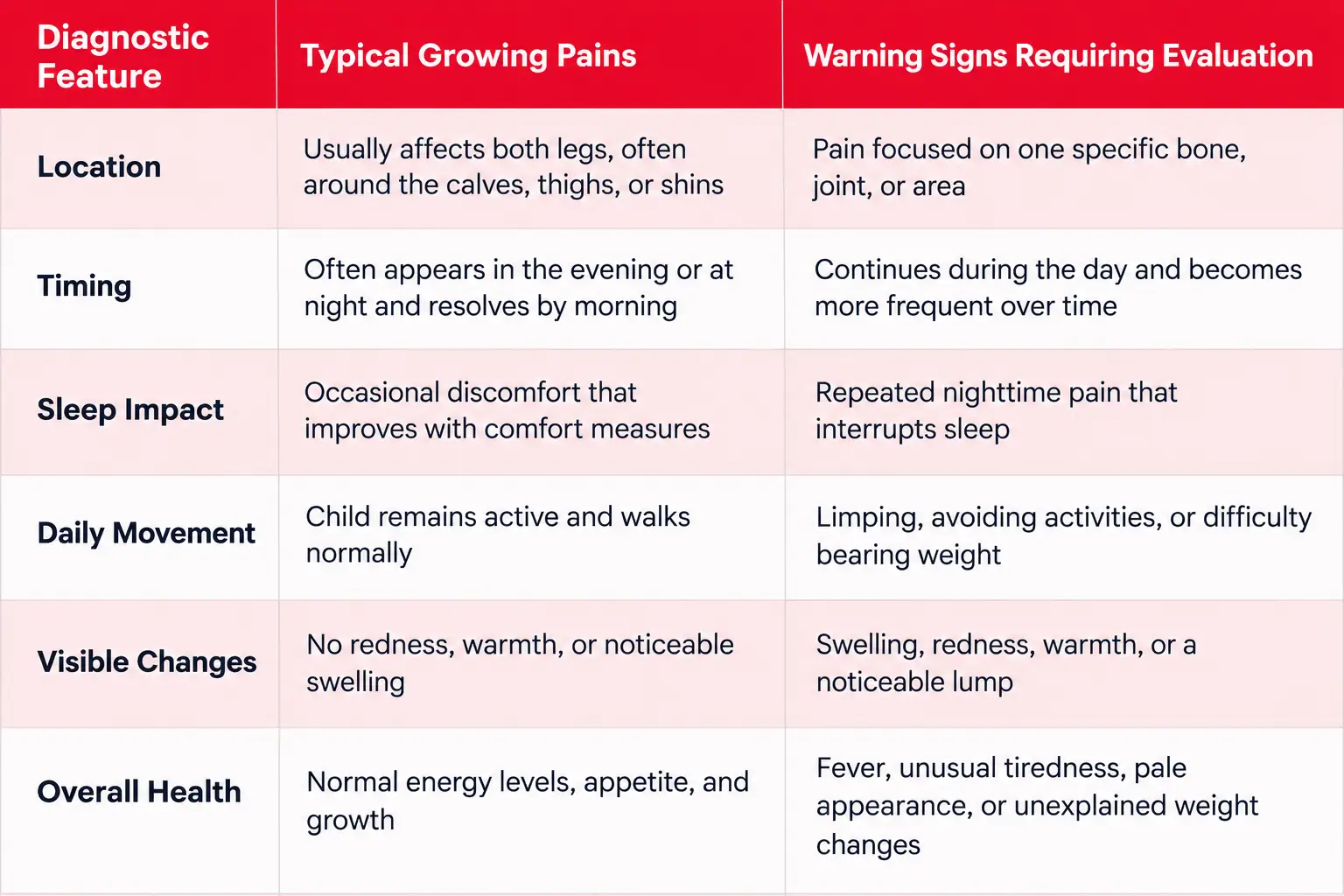
Growing Pains vs. Warning Signs: How Do They Compare?
Understanding the difference between common childhood aches and symptoms requiring medical attention will help you make informed decisions about your child’s health.
When Could Persistent Pain Signal Childhood Cancer Symptoms?
Most cases of bone pain in children are not related to cancer. Childhood cancers affecting bones or blood cells are uncommon, but certain patterns require medical evaluation to identify the cause.
Pain linked with serious conditions often behaves differently from routine childhood aches. It may:
Remain in one specific location
Continue during the day
Become more intense over time
Repeatedly disturb sleep.
Some warning signs requiring closer medical attention include:
Persistent Fever:
A recurring temperature without a clear infection or other common illness symptoms.
Unusual Fatigue or Pale Appearance:
A child who becomes unusually tired, loses interest in normal activities, or appears noticeably pale.
Unexplained Bruising or Skin Spots:
Bruises without a clear injury or small red-purple spots appearing on the skin.
Unintended Weight Changes:
Noticeable weight loss, reduced appetite, or persistent night sweats.
Seeing these warning signs naturally concerns many parents, but they don’t mean your child has cancer.
Several childhood conditions share similar symptoms, making proper evaluation important. When persistent pain appears alongside these warning signs, a consultation with a Pediatrics Clinic provides specialist assessment to identify the cause and guide the next steps in care.
What Medical Tests Help Doctors Evaluate Persistent Bone Pain?
When bone pain in children continues without an obvious explanation, pediatric specialists use several methods to understand the underlying cause.
Physical Examination
The doctor examines:
The affected area
Checks movement and joint flexibility
Looks for swelling or warmth
Observes how the child walks.
These findings show whether the concern involves muscles, joints, bones, or another underlying condition.
Blood Tests
Laboratory tests provide additional information about inflammation, infection, or blood-related concerns.
Complete Blood Count (CBC):
Evaluates blood cells, including red blood cells, white blood cells, and platelets.
Inflammatory Markers:
Tests such as ESR and CRP may indicate inflammation or infection when symptoms require further investigation.
Imaging Tests
Doctors may recommend imaging based on examination findings:
X-rays:
Provide images of bone structure, alignment, fractures, and other changes.
Ultrasound:
Helps evaluate certain joint-related concerns, including fluid around affected areas.
MRI Scans:
Provide detailed images of bones and soft tissues when further evaluation is required. Orthopedic specialists may recommend advanced imaging when symptoms involve deeper structures.
When Does Pediatric Bone or Joint Pain Require Immediate Emergency Care?
Most recurring aches require a proper evaluation. However, some symptoms need urgent medical attention because they may indicate infections, serious injuries, or other conditions requiring immediate care. Seek emergency medical assessment if your child experiences:
Sudden inability to put weight on a leg:
A child who refuses to stand or walk, especially with Fever, severe pain, or distress, requires prompt evaluation for conditions such as septic arthritis or osteomyelitis.
A painful, swollen joint:
Redness, warmth, visible Swelling, and severe pain during movement require medical assessment.
Severe pain after an injury:
Intense limb pain following a fall, sports injury, or accident requires evaluation for possible fractures or other structural injuries.
Severe pain with changes in overall health:
Extreme tiredness, rapid breathing, confusion, or a child appearing unusually unwell requires urgent medical attention.
When these warning signs appear, seek emergency medical care immediately. A timely assessment helps doctors determine the cause of your child’s symptoms and provide the right treatment approach.
How Does The Modern Hospital Support Pediatric Health?
Seeing your child experience ongoing pain can leave you searching for answers and wondering about the right next step. At The Modern Hospital, our approach begins with listening to your concerns, understanding your child’s symptoms, and guiding your family toward the appropriate care.
Through our Pediatrics Clinic, experienced pediatric specialists evaluate your child’s condition with attention to their symptoms, medical history, physical development, and daily activities.
Every child’s situation is different, and careful assessment helps doctors understand whether the concern relates to growth, injuries, infections, or other health conditions. When further evaluation is needed, our medical team works with specialists in areas such as Orthopedics and Oncology to ensure children receive the right medical guidance for their condition.
With access to diagnostic testing and specialist support, The Modern Hospital remains committed to helping families find clear answers and appropriate care when their child’s symptoms require further attention.
Protecting Your Child’s Health with Timely Medical Care
Seeing your child experience ongoing pain can be worrying, especially when symptoms interfere with sleep, play, or everyday activities. While many cases of bone pain in children come from common causes such as growing pains, minor injuries, or muscle strain, changes in the pattern of pain deserve attention.
If your child experiences persistent discomfort, pain in one specific area, difficulty walking, Fever, or swelling, seeking medical advice gives you a clearer understanding of what’s happening and what steps to take next.
At The Modern Hospital, our pediatric team understands the concerns that come with your child’s health. Through careful evaluation, specialist support, and appropriate diagnostic care, we remain committed to guiding families toward the right care for their children.
Frequently Asked Questions
When do normal growing pains usually occur?
Growing pains usually appear during the evening or nighttime, often affecting both legs around the calves, thighs, or shins. The discomfort typically resolves by morning, and children return to normal activities without stiffness, weakness, or difficulty walking.
Can vitamin D or calcium deficiency contribute to bone pain in children?
Low vitamin D or calcium levels affect bone health and may contribute to discomfort, muscle weakness, or cramping. A pediatric assessment, along with appropriate testing when required, determines whether nutritional factors contribute to your child’s symptoms.
When should you take your child’s limb pain to a doctor?
Arrange a pediatric consultation if your child’s pain continues for several weeks, repeatedly affects the same area, interrupts daily activities, causes limping, or appears with symptoms such as Fever or Swelling.
Does childhood bone cancer usually cause sudden or gradual symptoms?
Symptoms linked with childhood bone cancers usually develop gradually rather than appearing suddenly. Persistent pain in one specific area, swelling, or changes in movement require medical evaluation to identify the underlying cause.