

Leukemia Symptoms in Children: When General Symptoms Need Assessment
Learn the early leukemia symptoms in children, why symptom clusters matter, when to get a blood test, and how pediatric doctors evaluate your child safely.
Early leukemia symptoms in children appear when abnormal white blood cells build up in the bone marrow and reduce the production of healthy blood cells. Common symptoms include:
Persistent Paleness and Fatigue: A child looking unusually pale, losing interest in play, or becoming tired.
Recurring Fevers: Returning fevers without an infection or continuing despite recovering from an illness.
Unexplained Bruising and Bleeding: Bruises appearing without cause, nosebleeds, bleeding gums, or tiny red spots.
Deep Bone and Joint Pain: Ongoing aches affecting movement, limping, or disturbing sleep.
Swollen Glands or a Full Feeling in the Belly: Painless swelling in the neck or an enlarged spleen that creates discomfort around the abdomen.
Noticing changes in your child’s energy, appearance, or usual habits can leave you searching for answers. You may spot details that feel unusual, such as pale skin, less interest in playing outside, or bruises that appear without a clear cause. When these changes continue, speaking with a healthcare professional can help you understand what’s happening and decide on the right next steps.
Understanding leukemia symptoms in children helps you recognize patterns that deserve attention. Health initiatives supported by Childhood Cancer International highlight the importance of recognizing warning signs and seeking medical advice when concerns persist. These signs also connect with broader Childhood Cancer Symptoms that parents should understand.
In this guide, we’ll explore leukemia symptoms in children, how the condition affects blood production, the warning signs parents should discuss with a doctor, and the tests used during evaluation.
How Does Childhood Leukemia Affect a Child’s Body?
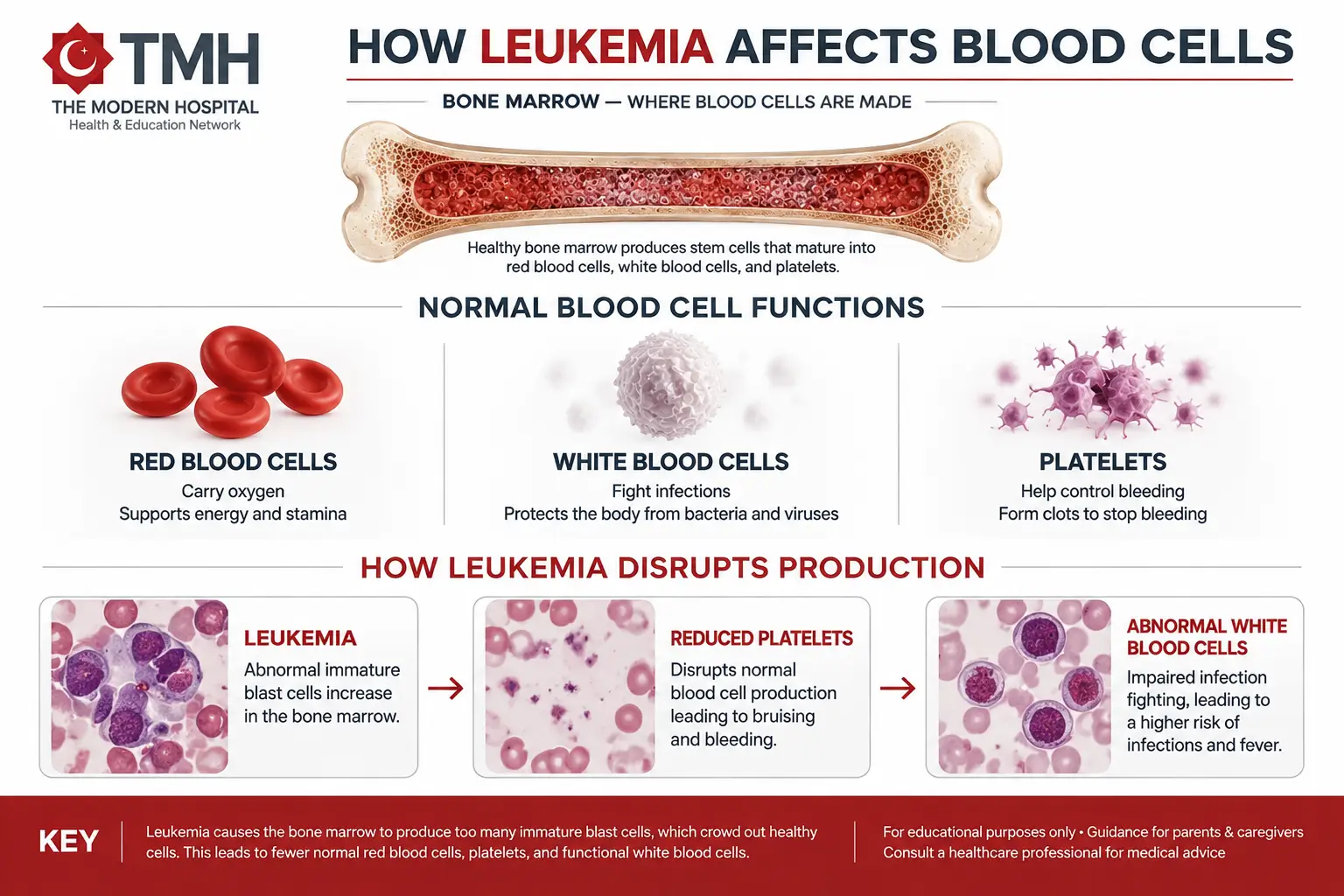
To understand why leukemia causes different symptoms, it helps to look at the role of bone marrow. Bone marrow is the soft tissue inside bones responsible for producing the blood cells your child’s body needs every day.
A healthy bone marrow produces three main types of blood cells:
Red Blood Cells:
These carry oxygen throughout the body and support energy levels, physical activity, and overall stamina.
White Blood Cells:
These help the immune system fight infections caused by viruses and bacteria.
Platelets:
These support blood clotting and help stop bleeding after injuries or minor cuts.
Leukemia begins when the bone marrow produces large amounts of abnormal, immature white blood cells called blast cells. These cells multiply quickly and leave less space for healthy blood cells to develop.
As healthy blood cell production decreases, different symptoms may appear:
Low red blood cell levels:
Reduced oxygen supply may lead to tiredness, weakness, and pale skin.
Low platelet levels:
Fewer platelets may cause easy bruising, bleeding gums, or frequent nosebleeds.
Abnormal white blood cells:
The immune system may struggle to fight infections, leading to repeated or longer-lasting fevers.
What Are the Warning Signs of Leukemia Parents Should Discuss With a Doctor?
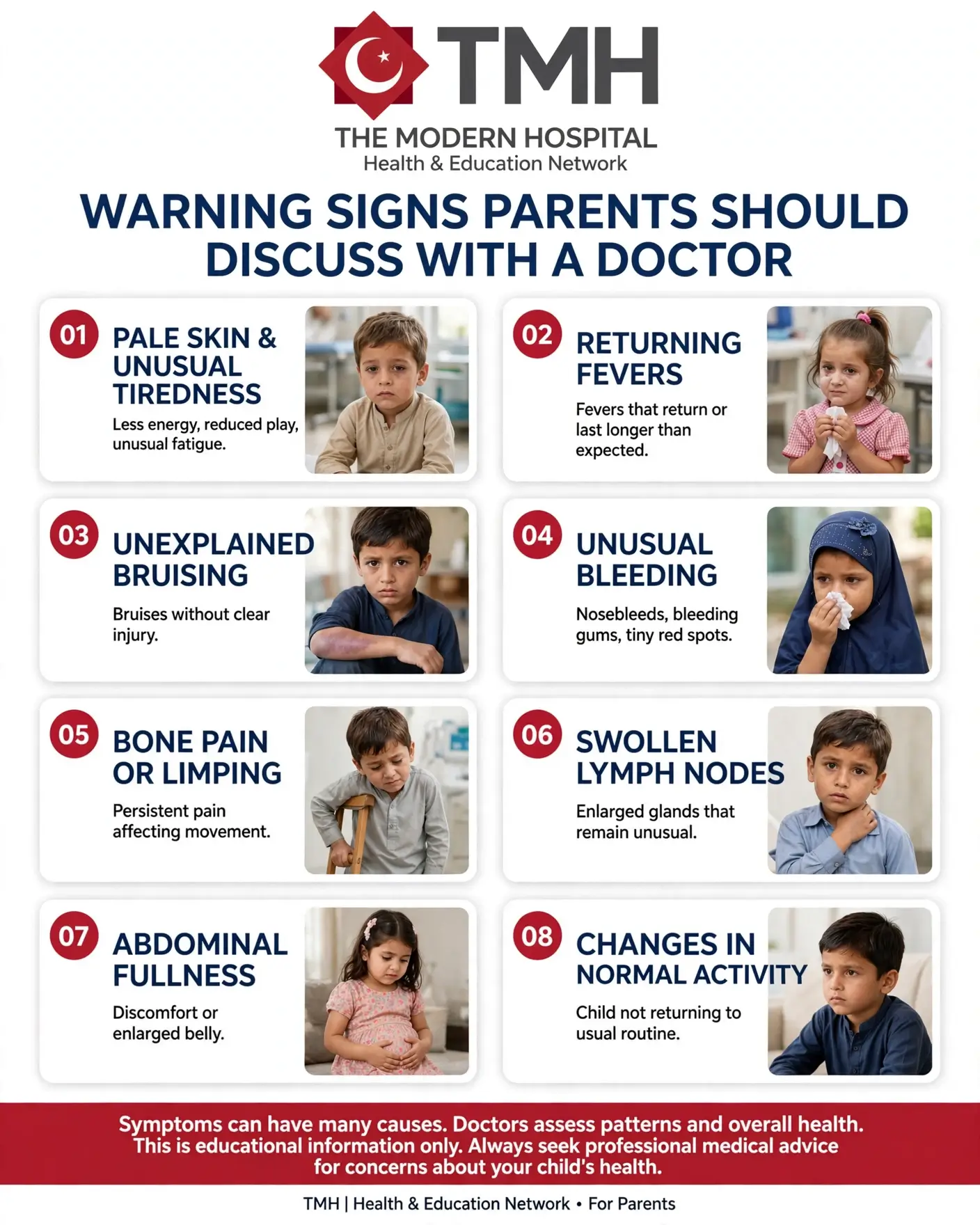
The early leukemia symptoms in children often look similar to common childhood illnesses, which is why paying attention to lasting changes matters. A fever, tiredness, or bruise becomes more concerning when it feels unusual for your child, continues longer than expected, or appears alongside other symptoms.
Persistent Paleness and Unusual Tiredness
A child with lower red blood cell levels often looks paler than usual because the body isn’t carrying enough oxygen to support normal energy levels. You might notice:
Your child looks pale around the lips, gums, or inside the lower eyelids.
Activities they usually enjoy feel more tiring than before.
They ask for more breaks during play.
They seem exhausted even after a full night’s sleep.
A child who suddenly stops keeping up with their usual routine deserves attention, especially when the tiredness continues for several weeks.
Fevers That Keep Returning
Fevers are a normal part of childhood, especially during common infections. A fever that keeps coming back without a clear reason needs a closer look. Parents often notice patterns such as:
Fever episodes that return after a short period of improvement
Fevers without typical cold symptoms like coughing or a runny nose
Sweating heavily during sleep
Feeling unusually unwell between fever episodes
When infections seem to linger or return more often than expected, a pediatrician will look at the complete picture rather than focusing on a single fever.
Unexplained Bruising and Bleeding
Children naturally collect bruises while playing. Most everyday bruises appear on areas like the knees, elbows, and shins because these areas often take bumps during activities.
Bruises that need medical attention often look different. Watch for bruises that:
Appear without a clear injury
Develop on the back, chest, stomach, or other protected areas
Keep appearing over a short period
A drop in platelets also affects how the body controls bleeding. Other signs include:
Frequent nosebleeds
Bleeding gums during brushing
Tiny red or purple spots on the skin called petechiae
Persistent Bone Pain and Limping
Children experience occasional aches after busy days, sports, or active play. These pains usually improve with rest.
Leukemia-related bone pain often feels different. Parents might notice:
Pain that keeps returning in the same area
Limping without a recent injury
Trouble walking or refusing to use a leg
Pain that interrupts sleep
When a child’s movement changes without an obvious explanation, it’s worth discussing with a doctor.
Swollen Lymph Nodes and Abdominal Fullness
Swollen lymph nodes often appear when the body fights an infection. These usually become smaller as the child recovers.
Pay attention when swollen glands:
Remain enlarged for a longer period
Feel firm or unusual
Appear without signs of an infection
Leukemia can also affect organs such as the spleen and liver. When these organs become enlarged, your child might complain about stomach discomfort, feel full quickly while eating, or appear to have a swollen belly.
Why Do Multiple Symptoms Matter?
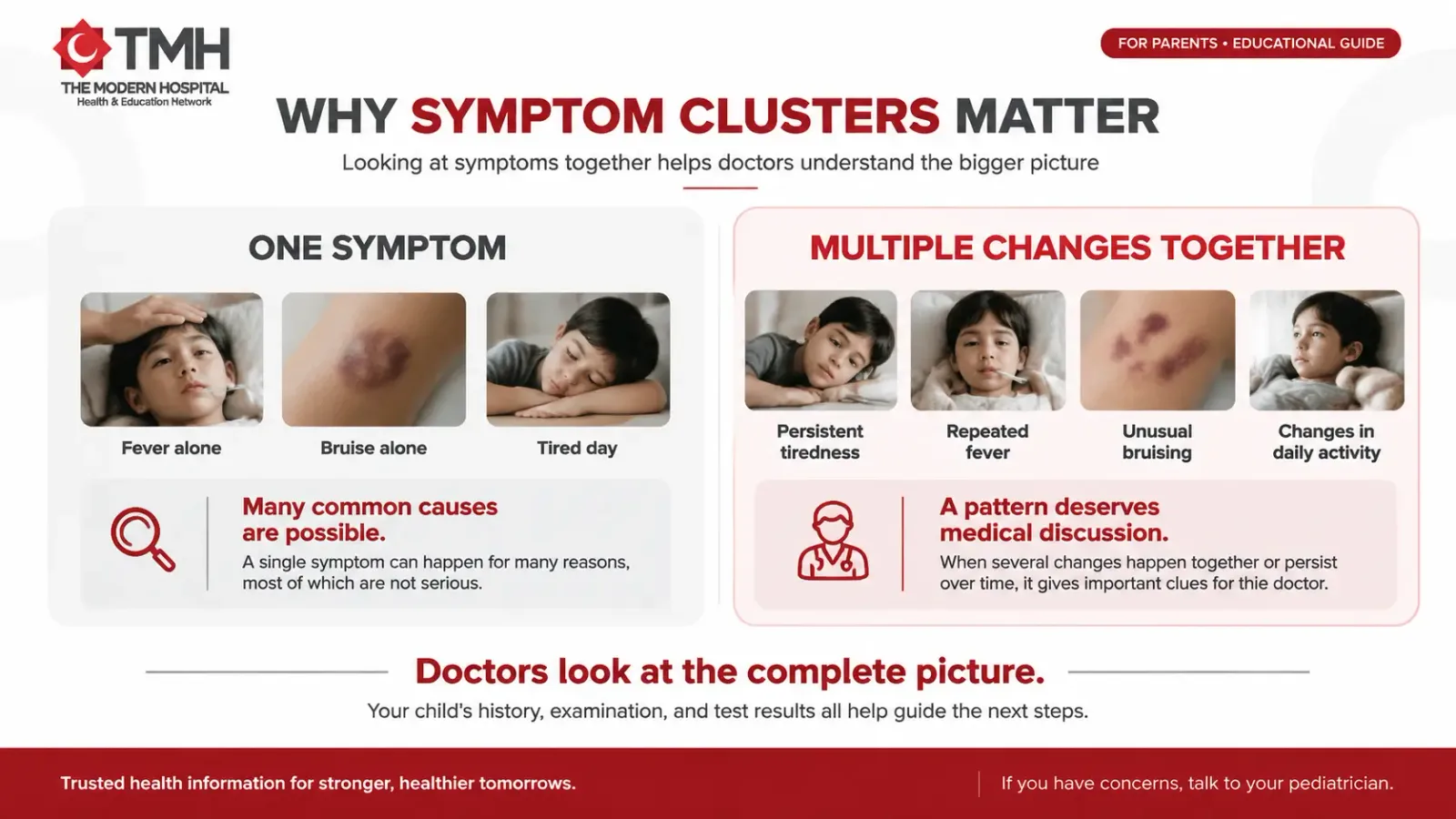
A single bruise, fever, or tired day usually doesn’t point to leukemia. Children experience these issues often as they grow.
Doctors look for patterns that stand out from your child’s normal routine. For example, ongoing tiredness combined with unusual bruising and repeated fevers creates a different picture than one symptom appearing alone.
Before your appointment, write down what you’ve noticed:
When symptoms started
How often fevers appear
Where bruises develop
Changes in energy, appetite, or daily activities
Having these details ready makes the conversation with your child’s doctor more focused and allows them to understand the full timeline of changes.
Can a Routine CBC Test Diagnose Leukemia in Children?
When leukemia symptoms in children such as ongoing tiredness, unexplained bruises, or returning fevers appear, a doctor usually begins with a detailed assessment and basic blood tests. A consultation at a Pediatrics Clinic allows the pediatrician to review your child’s symptoms, perform a physical examination, and decide which tests are needed.
One of the first investigations doctors request is a Complete Blood Count, commonly known as a CBC Test. A CBC measures different blood cell levels and provides important information about your child’s health.
The test checks:
Hemoglobin and Red Blood Cells:
These levels show whether anemia is contributing to tiredness, weakness, or pale skin.
Platelet Counts:
These numbers show whether low platelets are linked to unusual bruising or bleeding.
White Blood Cells:
These results show the number and appearance of infection-fighting cells.
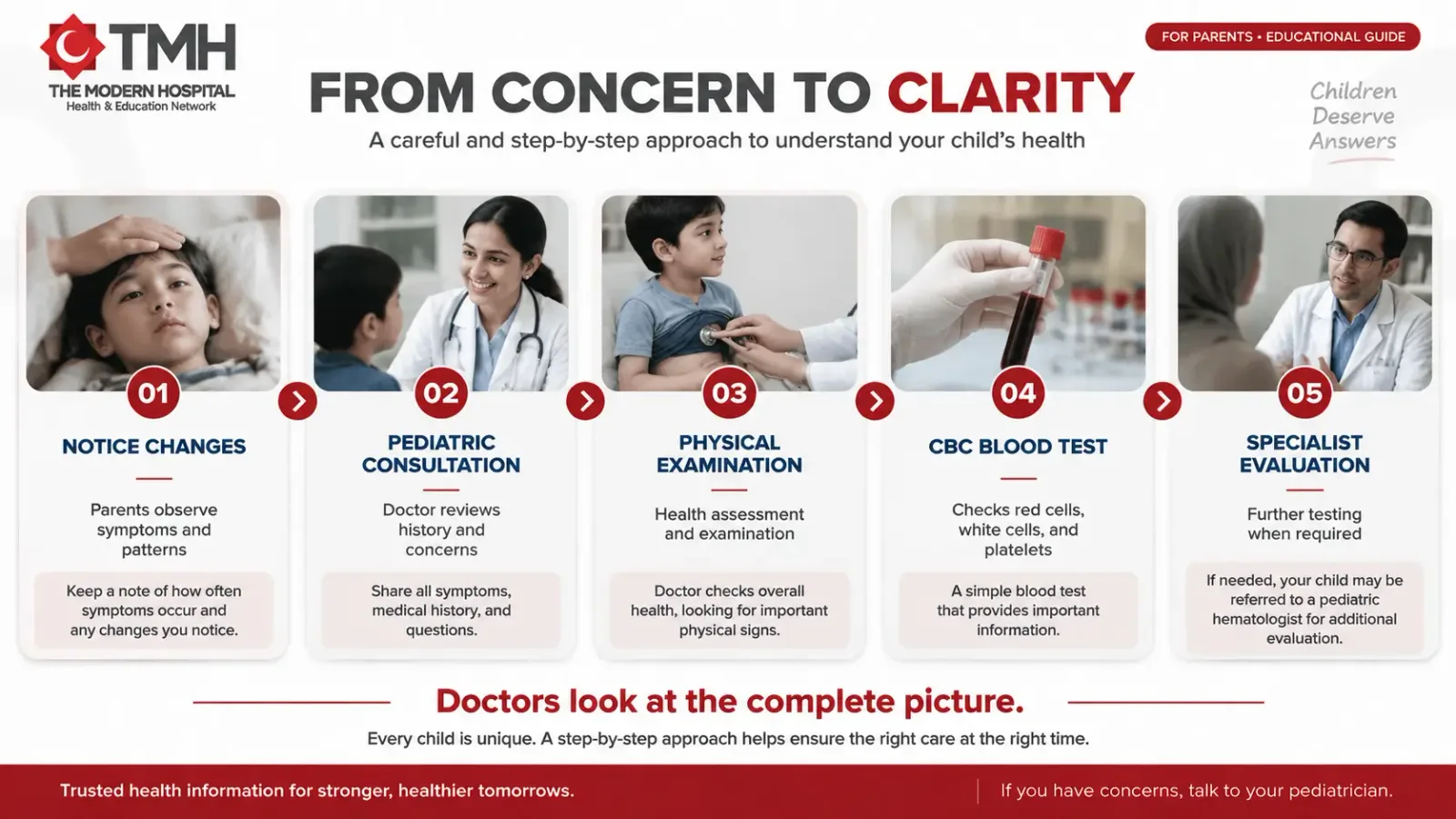
If blood results show unusual cell patterns, the doctor may request a peripheral blood smear. During this test, a pathologist examines a blood sample under a microscope to look for immature cells called blast cells.
When these findings raise concerns, your pediatrician works with a hematology or Oncology specialist for additional testing. A bone marrow examination is one of the tests used to confirm a diagnosis and understand the condition affecting your child.
When Should Parents Seek Emergency Medical Care?
Most leukemia symptoms develop gradually, allowing parents time to arrange a medical appointment and discuss concerns with a doctor. Some situations require immediate medical attention, especially when symptoms suggest a serious drop in healthy blood cells.
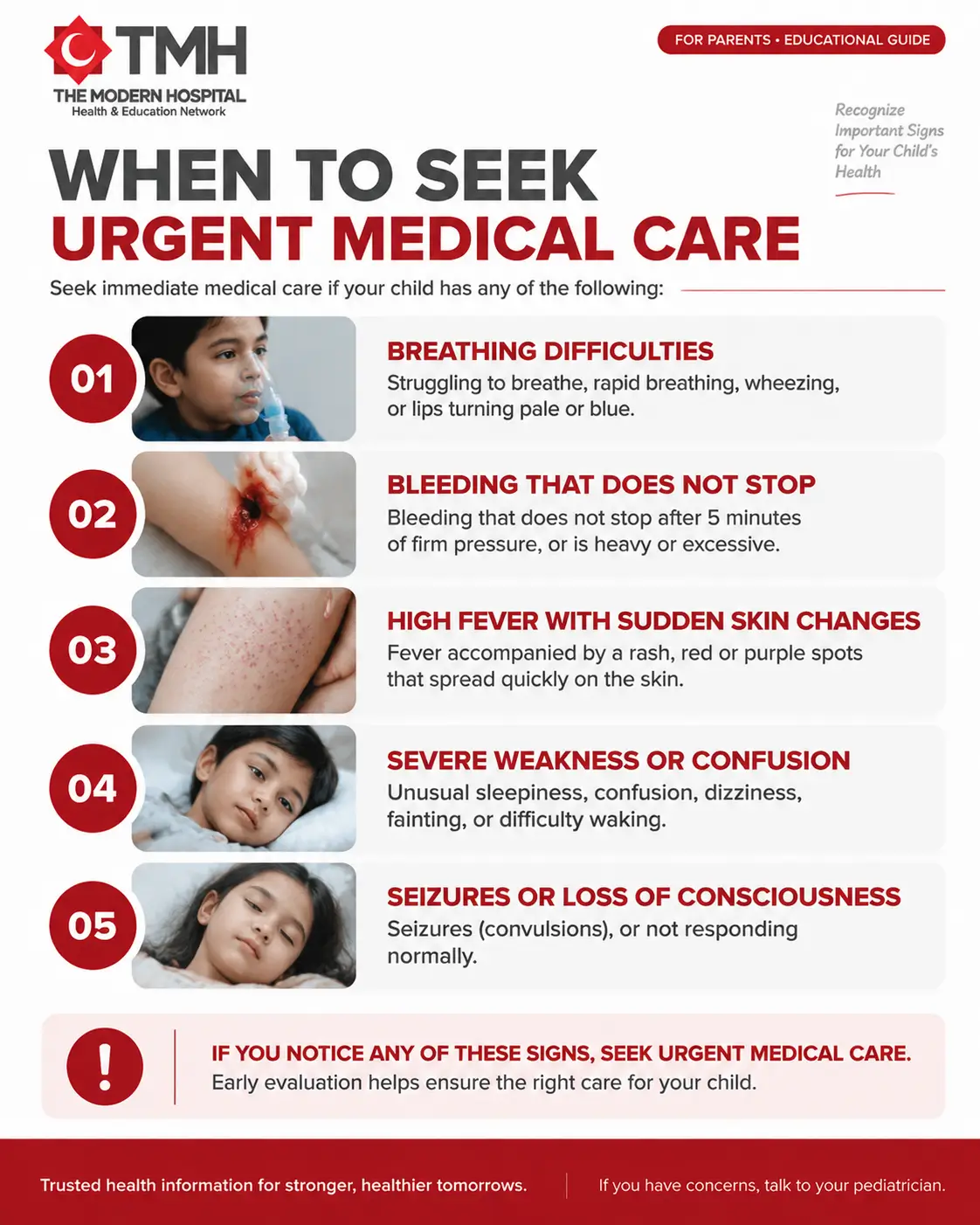
Seek emergency care if your child experiences:
Breathing Difficulties:
Fast breathing, struggling to breathe, unusual sounds when breathing, or visible chest movement during breathing.
Bleeding That Does Not Stop:
Ongoing bleeding from the nose or mouth despite applying pressure, or blood in vomit or stool.
High Fever With Sudden Skin Changes:
A high fever combined with a rapid appearance of tiny red or purple spots on the skin.
Severe Weakness or Confusion:
Difficulty waking up, unusual drowsiness, confusion, loss of consciousness, or seizures.
Quick medical attention allows doctors to manage urgent symptoms, support vital functions, and begin the right treatment without delay.
How Does The Modern Hospital Support Families Facing Pediatric Concerns?
You know when your child’s usual routine starts to feel different. A little less energy, bruises that appear without a clear reason, or fevers that keep returning are signs worth discussing with a healthcare professional when they continue over time.
Many of these symptoms have causes other than leukemia, but getting them checked removes uncertainty and helps your child receive the right care sooner.
A pediatric evaluation brings together your child’s medical history, physical examination, and necessary tests to understand what’s happening. At The Modern Hospital, our pediatric team supports families through consultations and diagnostic services, including blood testing through the Laboratory.
If you’re concerned about changes in your child’s health, speaking with a doctor is the right place to begin. For consultations or emergency support, you can contact The Modern Hospital at 021-111-864-864.
Trusting Your Instincts Through Early Medical Evaluation
Recognizing leukemia symptoms in children starts with noticing when your child’s usual energy, habits, or behavior begins to change.. When something feels different and doesn’t improve like a typical childhood illness, arranging a medical evaluation is a responsible step.
A doctor’s assessment and diagnostic tests provide answers, rule out common causes, and identify the right care approach for your child.
The Modern Hospital’s pediatric team provides evaluations supported by diagnostic services through the Laboratory. For consultations, medical guidance, or emergency support, contact The Modern Hospital directly at 021-111-864-864.
Frequently Asked Questions
How treatable is childhood leukemia today?
Childhood leukemia has become one of the most successfully treated childhood cancers. Acute lymphoblastic leukemia (ALL), the most common type of childhood leukemia, responds well to modern treatment approaches.
How quickly do leukemia symptoms in children develop?
Leukemia symptoms often develop gradually over several weeks. Parents might first notice small changes, such as lower energy levels, frequent bruises, or fevers that take longer to settle.
How do you tell the difference between normal play bruising and leukemia-related bruising?
Everyday childhood bruises usually appear after a bump, fall, or active play. They often develop on areas such as the knees, elbows, and shins. Bruises linked to low platelet levels often appear without a clear injury. They may develop on areas like the stomach, back, or inner arms and appear alongside other signs such as tiny red or purple spots on the skin.
Can a child have leukemia without a fever?
Yes. Some children with leukemia do not develop a noticeable fever at the beginning. Early symptoms might include pale skin, reduced energy during normal activities, or unusual bruising.