

Childhood Cancer Warning Signs: What Parents Should Discuss With a Doctor
Learn the key childhood cancer symptoms to watch for. Understand symptom persistence, when to consult a pediatrician, and how to protect your child.
When your child’s health changes, it’s natural to look for answers. A fever that keeps returning, unusual tiredness that doesn’t go away, or changes that feel different from your child’s normal routine can leave you wondering what might be happening.
Cancer in children is extremely rare, but as a parent, even the slightest possibility can feel difficult to ignore. Wanting to understand the warning signs doesn’t mean expecting the worst. It comes from wanting to recognise changes early, ask the right questions, and make sure your child receives medical attention when something doesn’t feel right.
Most childhood symptoms are linked to common illnesses, infections, or everyday activities. Still, learning about possible childhood cancer symptoms allows you to notice patterns that deserve a conversation with your child’s doctor.
That’s why organisations like Childhood Cancer International work to raise awareness about childhood cancer symptoms because recognising changes early plays an important role in timely diagnosis.
In this guide, you’ll learn about the symptoms worth discussing with a doctor, what changes to pay attention to, and how healthcare professionals evaluate concerns to find the right answers.
The Persistence Rule: Why Everyday Symptoms Look Suspicious
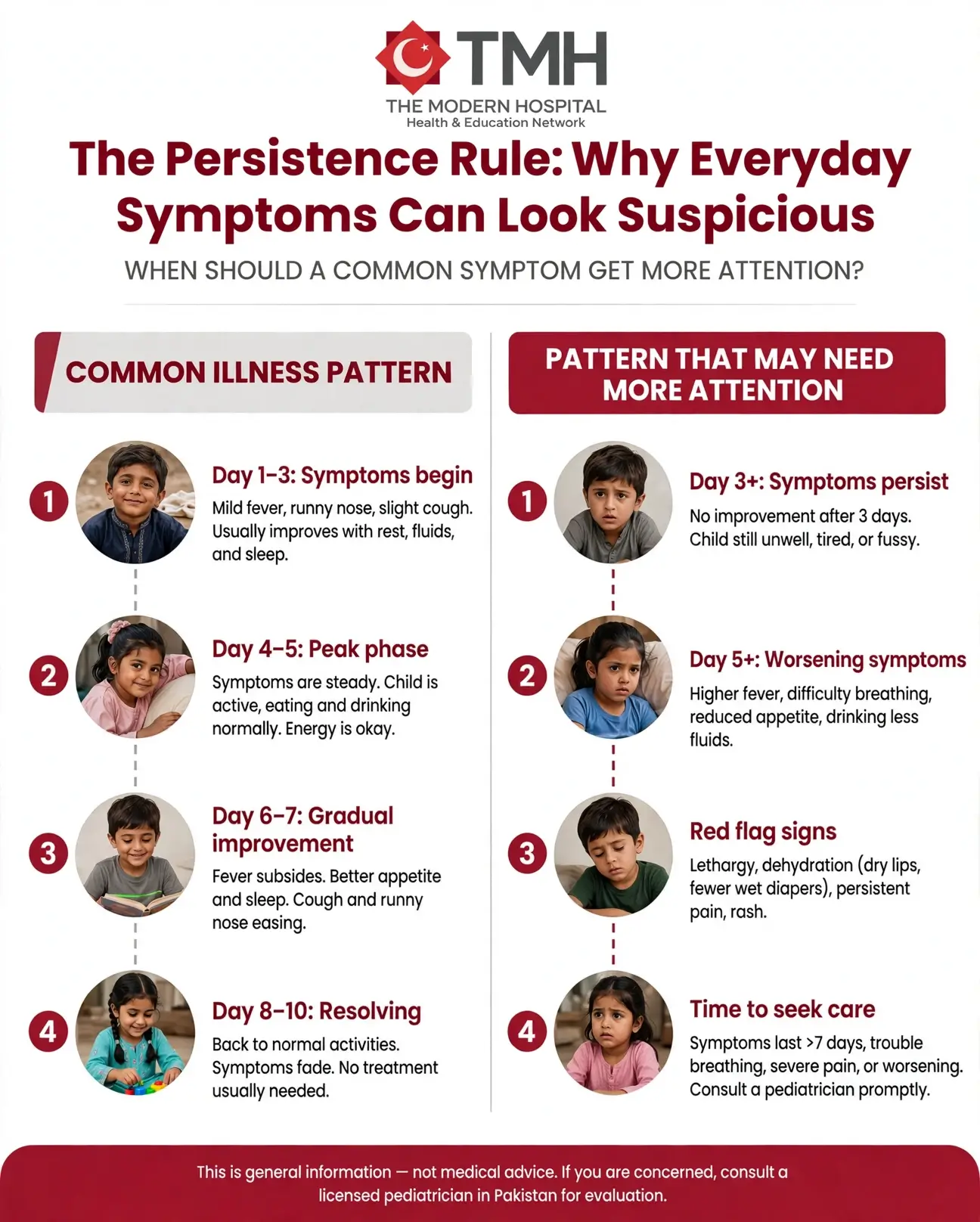
Children get sick often as their immune systems continue developing. Fevers, coughs, stomach bugs, bumps, and bruises are all common parts of childhood.
With so many everyday illnesses happening throughout the year, knowing when a symptom needs closer attention often comes down to noticing how long it lasts and whether your child returns to their usual self.
Most common illnesses follow a pattern. Symptoms appear, reach their peak, and gradually improve as your child recovers.
When a symptom continues for longer than expected, keeps returning, or comes with other changes in your child’s health, it’s worth discussing with a doctor.
The difference between repeated childhood illnesses and a symptom that needs further evaluation often lies in the pattern.
For example, A child experiencing separate infections usually has periods where they feel well, regain their energy, and return to normal activities between illnesses. Ongoing symptoms without clear improvement may provide important information for your child’s doctor when deciding whether they should be interpreted as childhood cancer symptoms.
Keeping track of:
When symptoms begin
How they change
Whether anything improves or worsens over time
Will make your child’s medical consultation more useful.
Warning Signs Parents Should Track and Discuss with a Doctor
When you’re trying to understand changes in your child’s health, a single symptom rarely tells the full story. Doctors look at the overall pattern, including how long a symptom lasts, whether multiple signs appear together, and whether your child’s usual energy and daily activities have changed.
Pay attention to these warning signs and discuss them with your child’s doctor:
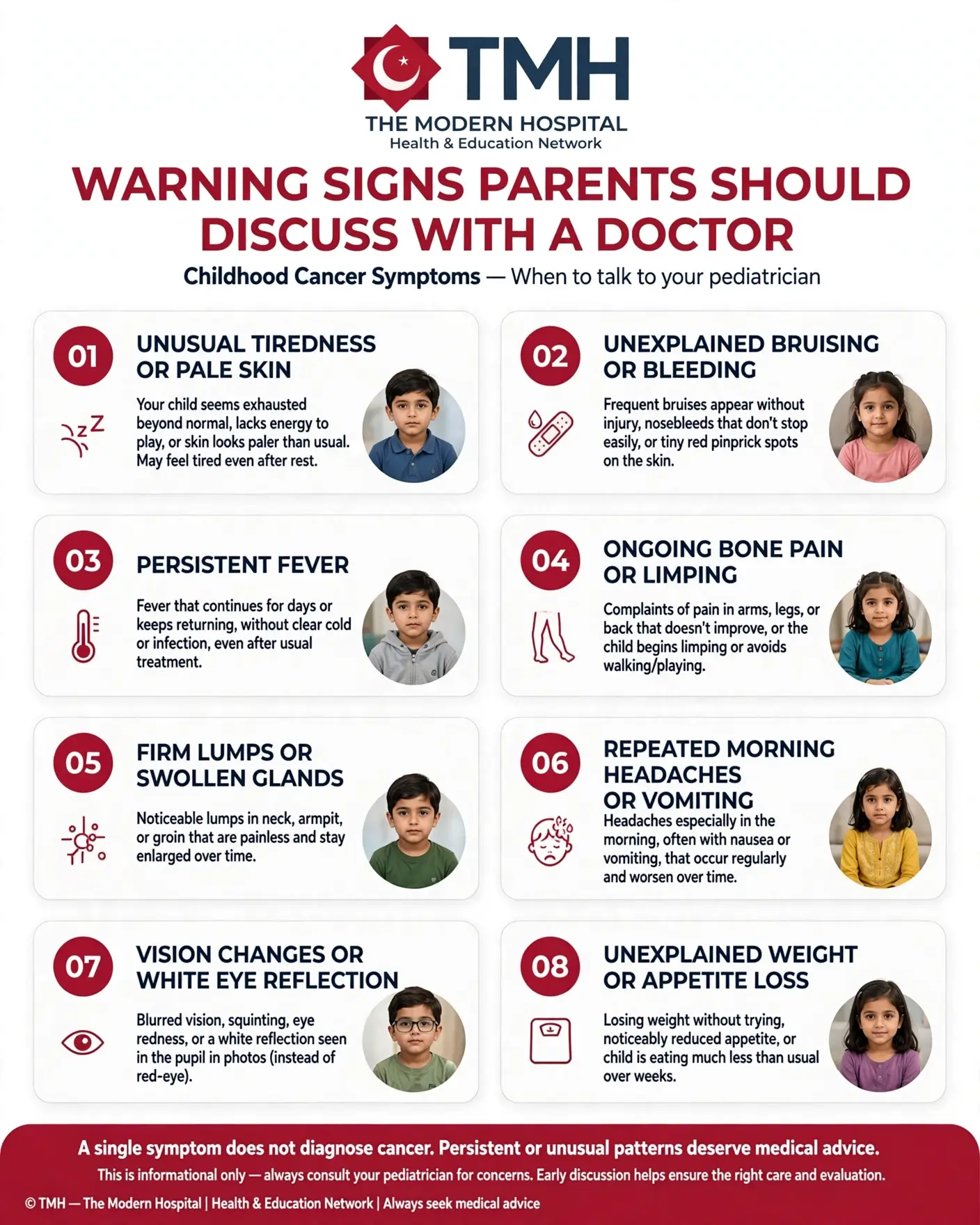
Unexplained Pallor and Deep Fatigue
A noticeable change in your child’s skin colour, especially when it appears alongside ongoing tiredness, deserves attention. Pale skin may appear on the lips, nail beds, palms, or the inner lining of the lower eyelids.
Low red blood cell levels, known as anemia, often cause this type of tiredness. A child who is usually active might become less interested in playing, tire quickly during normal activities, or struggle to maintain their usual energy levels. When rest and a balanced diet don’t improve these changes, a simple blood test can help identify what’s causing them.
Unusual Bruising and Frequent Bleeding
Bruises are a normal part of childhood. Active children often develop marks on their shins, knees, and elbows from playing, running, and everyday accidents.
Pay closer attention when bruises appear without a clear injury, especially in areas such as the back, stomach, chest, or calves. Low platelet levels affect the body’s ability to form clots, which may lead to signs such as tiny red or purple spots on the skin (petechiae), frequent nosebleeds, or bleeding from the gums during regular brushing.
Persistent Fever and Lingering Infections
Fever is a common part of childhood illnesses and usually improves as the body fights an infection. Most fevers linked to routine infections settle within a few days as the child begins to recover.
A fever continuing beyond two weeks, returning without a clear cause, or appearing without common signs of infection needs medical evaluation. Pay attention to other changes that appear alongside the fever, such as heavy night sweats that leave your child’s clothes or bedding damp and ongoing tiredness.
Ongoing Bone Pain or Limping
Children often experience leg discomfort during growth, commonly referred to as growing pains. These aches usually affect both legs, occur later in the day, improve with gentle massage, and disappear by morning.
Pain that continues, affects one specific area, worsens with activity, or interrupts sleep requires a doctor’s assessment. You might notice your child limping without an injury, avoiding certain movements, or refusing to put weight on a leg.
Firm, Painless Lumps and Swollen Glands
Swollen lymph nodes are common in children, especially after infections such as:
Sore throats
Ear infections
Dental problems.
Many swollen glands in children appear during infections and return to their normal size as the body recovers.
A lump that feels firm, stays in one place, continues growing, or remains enlarged without improvement needs a doctor’s review. If you notice a painless swelling in your child’s neck, armpit, groin, or abdomen, discuss it with their doctor.
Frequent Morning Headaches and Vomiting
Children experience headaches for many reasons, including:
Dehydration
Eye strain
Common illnesses.
Repeated headaches that occur early in the morning deserve a checkup. Headaches that:
Wake your child from sleep
Appear alongside vomiting
Changes in balance
Clumsiness
Difficulty with everyday movements
Require prompt attention from a pediatrician.
Sudden Vision Changes and White Eye Reflections
Changes in your child’s vision should always be evaluated by a healthcare professional. A new squint, difficulty focusing on familiar objects, or a sudden change in eye alignment requires an eye examination.
Another sign parents should know about is a white or yellowish reflection in the centre of the pupil, known as a cat’s-eye reflex or leukocoria. While pupils usually appear dark or show a red reflection in photographs taken with flash, an unusual white reflection requires examination by an eye specialist.
Unexplained Weight and Appetite Loss
Children naturally go through periods of changing appetite, and temporary differences in eating habits are common.
A noticeable drop in weight over several weeks, especially alongside reduced appetite, loose-fitting clothes, or ongoing tiredness, deserves a discussion with your child’s doctor.
Understanding common childhood cancer symptoms allows you to recognise changes that deserve medical attention while keeping everyday childhood illnesses in perspective.
Pattern Recognition: Understanding Leukemia Symptoms and Clustered Signs
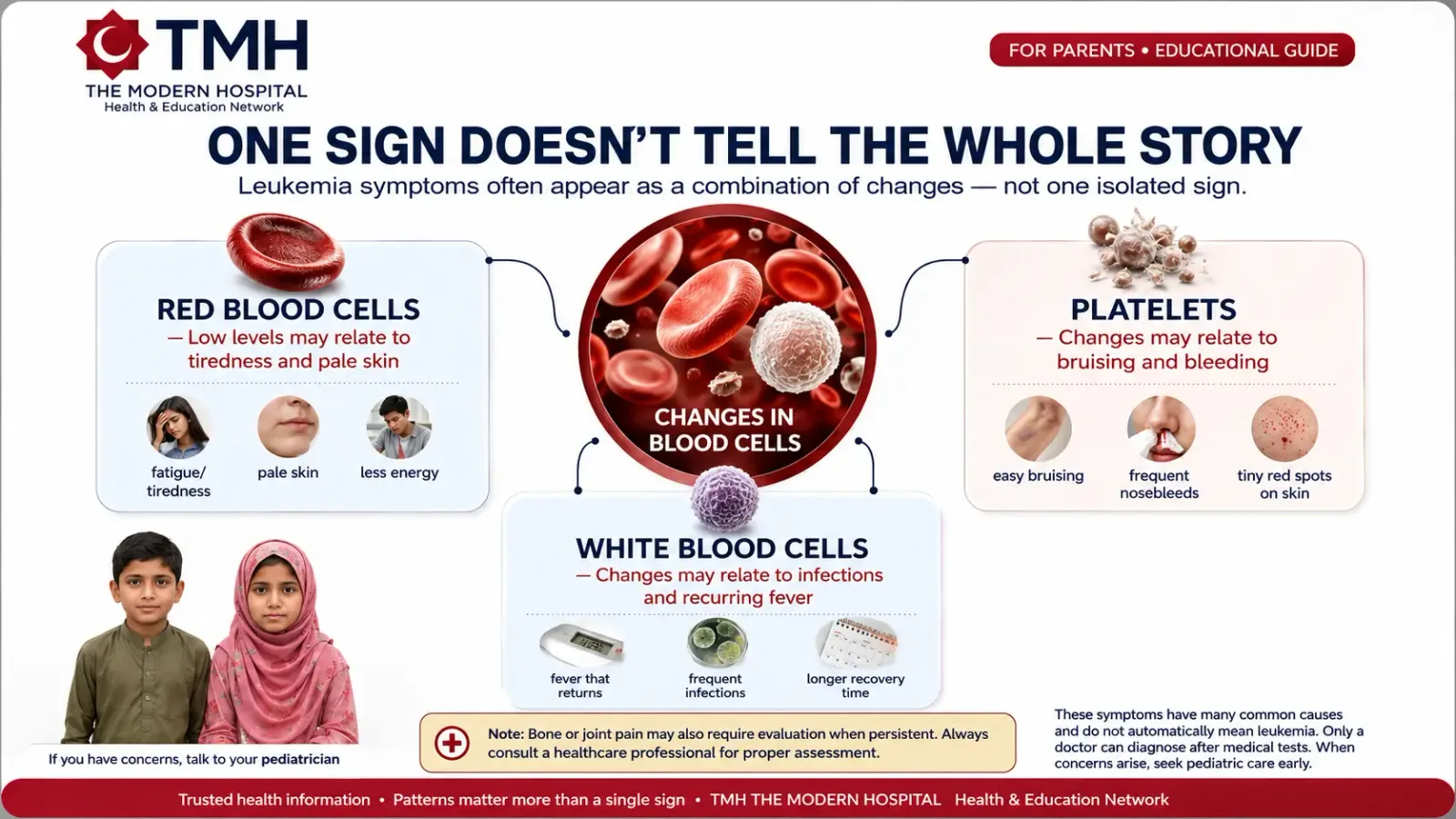
A single symptom rarely tells the full story. A bruise on the knee after playing, a mild fever that settles within a few days, or an occasional headache are common parts of childhood.
Active children get bumps, catch infections, and experience changes that usually pass with time.
Doctors pay closer attention when several unusual symptoms appear together or continue over a period of time. Looking at the overall pattern helps separate everyday childhood illnesses from changes that need further evaluation.
How Leukemia Symptoms Can Appear Together
Early childhood cancer symptoms often appear through a combination of changes rather than one isolated sign. Leukemia symptoms, for example, may involve changes in blood cell levels that cause:
Unusual tiredness or low energy
Pale skin or a noticeable change in complexion
Bruising without a clear injury
Frequent infections or recurring fevers
Bone or joint pain
Other conditions affecting the lymphatic system may also involve a combination of symptoms, including:
Swollen lymph nodes
Ongoing night sweats
Unexplained weight loss.
When several changes appear together, especially when they continue, they provide important information for your child’s doctor during an evaluation.
Tracking Changes Before a Doctor’s Visit
If you notice multiple symptoms that don’t seem to improve, keeping a simple record can make your appointment more productive. Note details such as:
When each symptom started
How often it appears
Temperature readings during fevers
Changes in appetite
Differences in your child’s usual energy levels
Sharing these details with your pediatrician creates a clearer picture of what your child has been experiencing and supports the next steps in their evaluation.
Understanding the Next Steps After Noticing Warning Signs
When symptoms continue without a clear explanation, knowing what to do next can feel overwhelming. A medical evaluation allows your child’s doctor to understand what is happening, check common causes first, and decide whether further testing is needed.
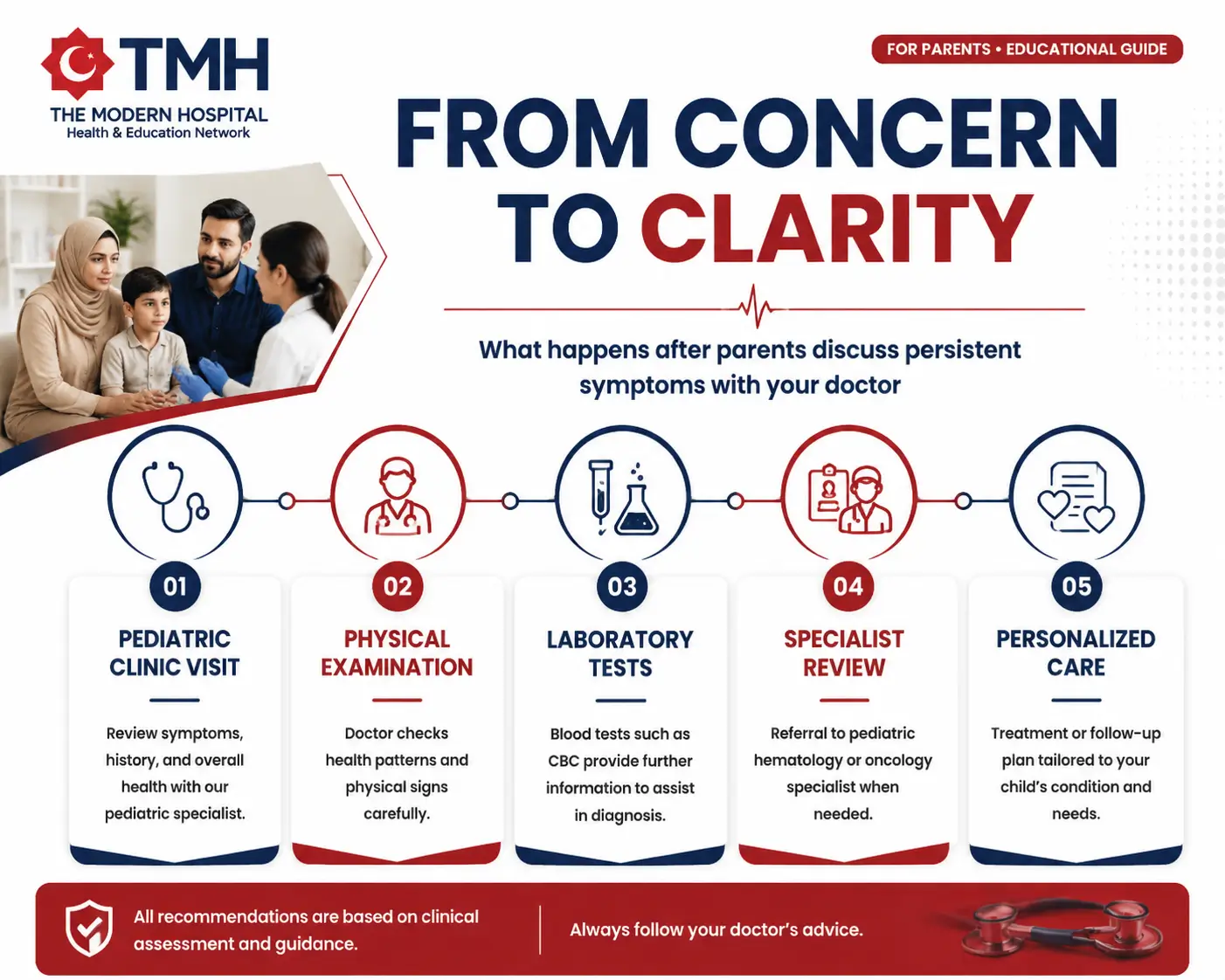
Here’s what the evaluation process usually looks like:
Step 1: Start With a Visit to a Pediatric Clinic
Your child’s pediatrician is the right place to begin when you notice symptoms that continue, return frequently, or feel different from your child’s usual health.
During the appointment, the doctor will review your child’s symptoms, medical history, and overall health before carrying out a physical examination.
This may include:
Checking the neck, armpits, and groin for enlarged lymph nodes
Examining the abdomen for changes in the liver or spleen
Looking at the skin for signs such as unusual bruising, petechiae, or paleness
Reviewing growth patterns, weight changes, and fever records
Many symptoms that worry parents have common causes, including infections or nutritional deficiencies. The examination gives your doctor a clearer understanding of your child’s health and what needs to be checked next.
Step 2: Blood Tests at the Laboratory
If your child’s symptoms or examination results need a closer look, the doctor will usually begin with routine blood tests. These tests examine blood cell levels and provide important details about your child’s overall health.
A Complete Blood Count (CBC) with a peripheral blood smear is often one of the first tests doctors consider. It examines:
Red Blood Cells and Hemoglobin:
Checks for low blood counts that may relate to tiredness or paleness.
White Blood Cells:
Reviews immune cell levels and identifies unusual changes that require further investigation.
Platelet Counts:
Evaluates the cells responsible for blood clotting, which relates to bruising and bleeding concerns.
Depending on your child’s symptoms, the doctor might also recommend imaging tests such as an ultrasound or X-ray to examine specific concerns like swelling or ongoing bone pain.
Step 3: When Specialist Care Is Needed
If test results show unusual findings or your child’s symptoms require further investigation, the pediatrician may refer you to a pediatric hematologist or an Oncology specialist.
An oncology referral can feel frightening for any parent, but it does not automatically mean bad news. Specialists evaluate a wide range of conditions, including non-cancerous disorders, and use their expertise to understand what’s causing your child’s symptoms.
If your child requires specialised treatment, seeing the right specialist early ensures they receive care based on their specific needs.
Practical Advice for Parents: How to Speak With Your Pediatrician
When you’re worried about your child’s health, it’s easy to feel overwhelmed before a doctor’s appointment. After spending days watching symptoms, checking for changes, and trying to understand what’s happening, you might find it difficult to explain everything clearly during the visit.
Before your appointment, take a moment to note the changes you’ve noticed. Think about:
When the symptoms started
How often they appear
How they affect your child’s usual routine.
Details such as when a fever returns, when your child started limping, or changes in energy levels give your pediatrician a clearer picture of what has been happening.
You know your child’s normal behaviour better than anyone. If something feels different from their usual routine, mention it during the appointment. Changes in appetite, sleep, activity levels, mood, or physical symptoms all matter when your doctor is understanding your child’s overall health.
To make your conversation with the pediatrician more useful, consider asking:
“What common infections or childhood conditions could explain these symptoms lasting this long?”
“Would a Complete Blood Count (CBC) or other routine blood tests provide more information about these changes?”
“What improvements should we expect to see, and when should we return for a follow-up appointment?”
“Which changes require urgent medical attention if they appear or become worse?”
When Your Child Needs Immediate Emergency Care
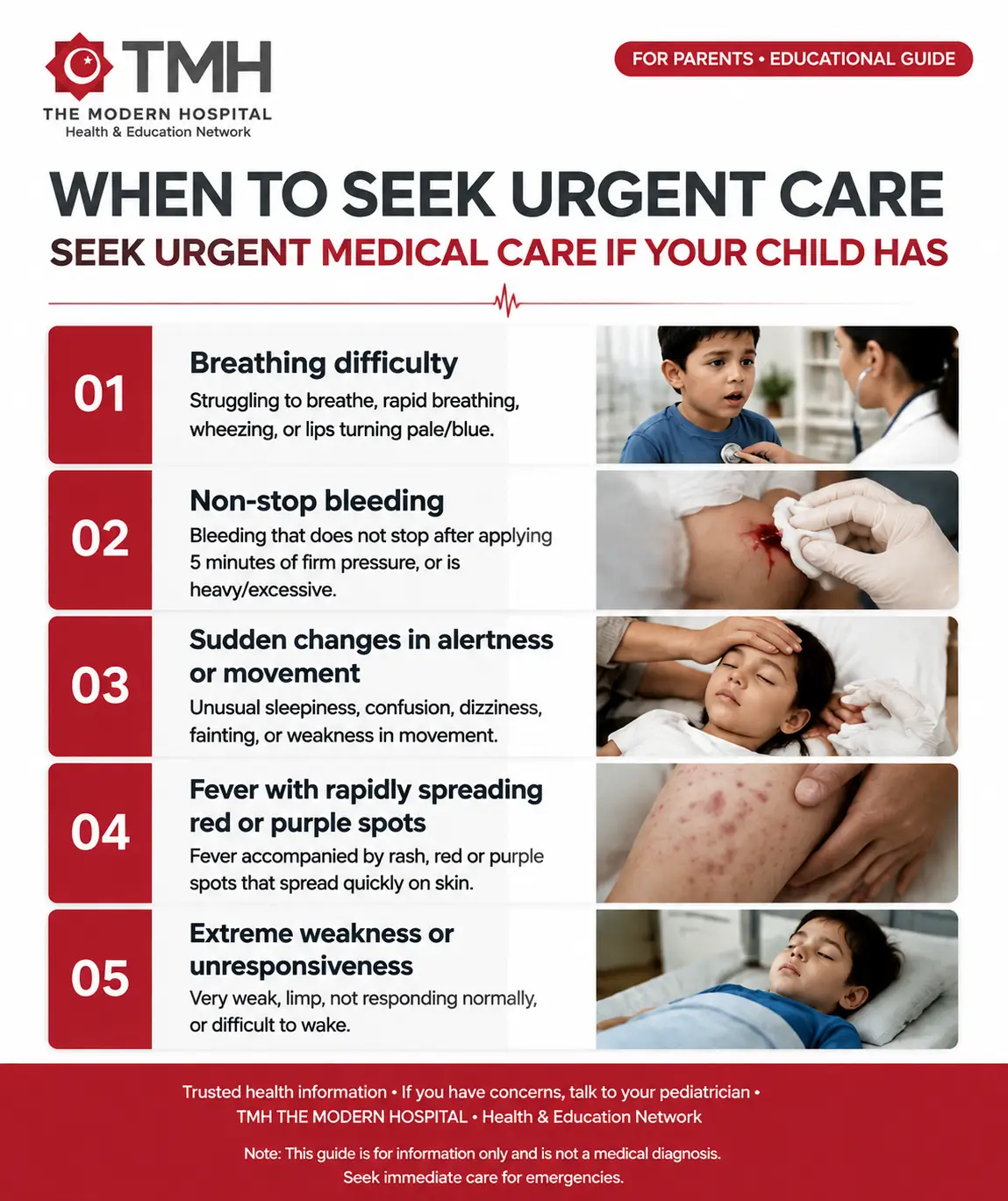
Most childhood symptoms develop gradually and require a proper medical assessment rather than immediate emergency care. However, some changes in your child’s condition require urgent attention and should not wait for a routine appointment.
Seek emergency medical care if your child experiences any of the following signs:
Sudden Breathing Difficulty
Seek immediate care if your child is:
Struggling to breathe
Breathing unusually fast
Making grunting sounds
If the skin between the ribs pulls inward with each breath.
Breathing difficulties require urgent medical attention, especially when your child is struggling to breathe or showing signs of distress.
Non-stop Bleeding
Non-stop bleeding despite applying direct pressure needs urgent medical attention. Watch for signs such as:
Frequent heavy nosebleeds
Bleeding from the gums
Blood in vomit
Dark, tar-like stools.
Sudden Changes in Alertness or Movement
Seek emergency care if your child is:
Difficult to wake
Suddenly confused
Has a seizure
Develops a loss of balance that prevents normal movement.
These changes require immediate assessment by a medical team.
Fever With Rapidly Spreading Spots
A high fever alongside tiny red or purple spots on the skin (also called petechiae) that appear suddenly or spread quickly requires urgent medical evaluation.
Extreme Weakness or Unresponsiveness
A child who becomes unusually limp, stops responding normally, or cannot stay awake needs immediate medical attention.
If your child experiences any of these emergency signs, seek medical care without delay. Quick assessment during an emergency allows the medical team to respond to your child’s immediate needs and determine the care required.
The Modern Hospital provides 24/7 Emergency care with teams equipped to handle urgent medical situations and support children and families when they need immediate attention.
Trusting Your Instincts Through Early Medical Evaluation
When something about your child’s health feels different, paying attention to those changes matters. You know your child’s usual habits, energy levels, and personality better than anyone else.
Understanding the common childhood cancer symptoms worth discussing with a pediatrician allows you to recognise changes that deserve attention while keeping everyday childhood illnesses in perspective. Many symptoms have common explanations, but changes that continue, return frequently, or feel unusual should be discussed with a healthcare professional.
At The Modern Hospital, our pediatric services provide medical evaluations for children, supported by diagnostic facilities through our Laboratory. For urgent situations, our 24/7 Emergency Department is available when your child needs immediate medical attention.
Frequently Asked Questions About Childhood Cancer Symptoms
What is the most common form of childhood cancer?
Leukemia is the most commonly diagnosed childhood cancer, with acute lymphoblastic leukemia (ALL) being the most common type. It affects the bone marrow and changes the production of blood cells, including red blood cells, white blood cells, and platelets.
How do normal growing pains differ from serious bone pain?
Growing pains usually affect both legs, appear in the evening, and improve by the next morning. Bone pain that continues, affects one specific area, interrupts sleep, or causes limping requires medical evaluation.
Can a standard blood test detect childhood cancer?
A Complete Blood Count (CBC) does not confirm childhood cancer symptoms or diagnose cancer by itself. It examines blood cell levels and identifies changes that require further medical investigation.
Are swollen lymph nodes usually a sign of something serious?
Most swollen lymph nodes in children occur due to common infections and return to normal as the child recovers. Lymph nodes that remain enlarged, feel firm, stay fixed, or continue growing need a doctor’s assessment.
What causes an unusual white reflection in a child’s eye?
A white or yellowish reflection in the pupil, known as leukocoria, requires an eye examination. It has several possible causes, including cataracts, infections, or retinoblastoma, a rare tumour of the retina.