

Breastfeeding Guide for New Mothers in Pakistan
breastfeeding benefits
Breastfeeding is one of the first and most important decisions a mother makes after childbirth. It can feel natural for some, but for many, it comes with questions, uncertainty, and sometimes stress. That’s completely normal.
Understanding the breastfeeding benefits for both mother and baby can make this journey easier to approach with confidence. From supporting your baby’s early development to helping your body recover after birth, breastfeeding plays a key role in newborn care during the first few months.
At the same time, knowing how to breastfeed matters just as much as understanding the breastfeeding benefits for both mother and baby. Things like getting the right breastfeeding latch, understanding feeding frequency, and recognising whether your baby is feeding well can make a real difference in your experience.
This guide is designed for mothers and families in Pakistan who are looking for clear, reliable information without confusion. Whether you are just starting out or facing challenges like low breast milk supply or concerns such as newborn jaundice, you will find practical guidance here along with clarity on when it’s time to seek help from a gynaecological clinic or pediatrics clinic.
Breastfeeding Benefits for Mothers and Babies

Understanding breastfeeding benefits goes beyond knowing it is recommended. Clear knowledge of how breastfeeding supports a baby’s growth and how it helps a mother recover can make early decisions more confident and less stressful.
Benefits for Your Baby: Nutrition, Protection, and Development
Breast milk is naturally tailored to meet a baby’s needs from the first feed. It provides the right balance of nutrients required for steady growth while also delivering antibodies that help protect against infections such as diarrhoea and respiratory illnesses.
Breastfeeding also supports:
Brain development in the early months
Healthy weight gain
A stronger immune system during newborn care
According to the WHO infant and young child feeding fact sheet, optimal breastfeeding has the potential to save more than 800,000 children under five each year. This study goes on to highlight how early feeding choices directly influence a child’s health.
Benefits for Mothers: Recovery and Long-Term Health
The breastfeeding benefits for mothers are equally important. Physical recovery after childbirth is closely linked to breastfeeding due to hormonal responses in the body.
Breastfeeding can:
Help the uterus return to its normal size
Reduce postpartum bleeding
Lower the risk of breast and ovarian cancers over time
Regular feeding also helps establish a natural routine between mother and baby, which can make daily care more manageable.
Relevance for Families in Pakistan
Breastfeeding often begins with good intentions, yet many families face challenges within the first few weeks. Lack of guidance, cultural pressures, and uncertainty around breastfeeding latch or milk supply can make continuation difficult.
Exclusive breastfeeding rates in Pakistan sit at 48%, which is approximately 12% below global recommendations due to a lack of gaps in support and awareness.
Access to timely care can make a significant difference. Guidance from a gynaecological clinic after delivery and follow-ups at a pediatrics clinic can help address early concerns related to newborn care, feeding patterns, and common conditions such as newborn jaundice.
Moving Forward with Confidence
Breastfeeding improves with understanding and support rather than perfection. Awareness of what is normal, combined with early guidance, helps reduce stress and prevents small issues from becoming bigger concerns.
The next section focuses on the first hour after birth, a critical period that can strongly influence breastfeeding success in the days ahead.
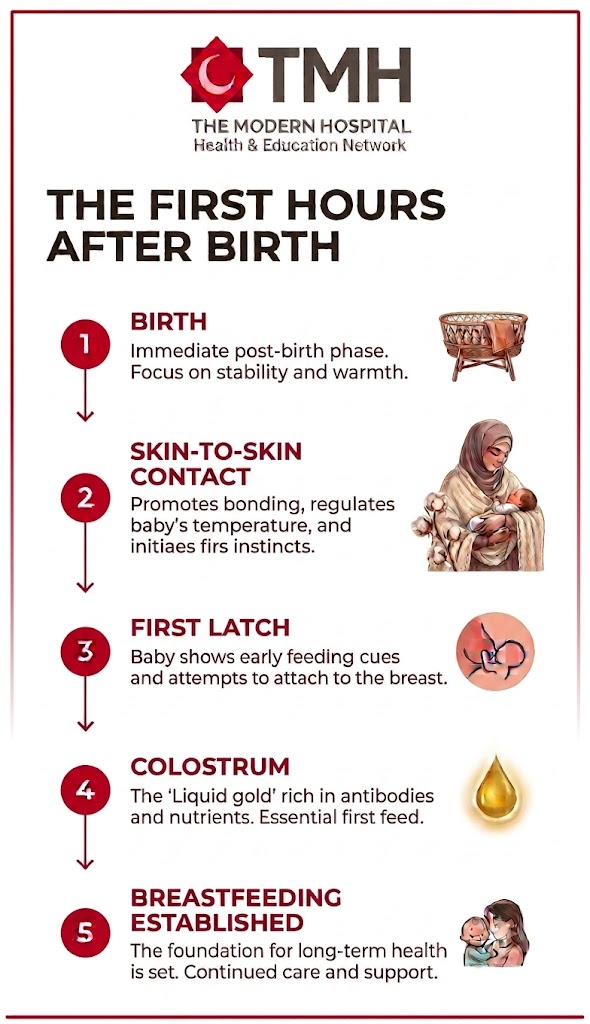
The First Hour After Birth: Why Early Initiation Matters?
The first hour after birth plays a critical role in shaping the breastfeeding journey. Early initiation is not just recommended practice. It directly influences how well breastfeeding is established in the days that follow.
What Early Initiation Means
Early initiation refers to starting breastfeeding within the first hour after delivery. During this time, most newborns are naturally alert and ready to feed. Placing the baby on the mother’s chest allows instinctive behaviours to begin, often leading the baby to latch on with minimal assistance.
This stage also introduces the baby to colostrum, the first form of breast milk, which is rich in nutrients and protective antibodies essential for newborn care.
Why the First Hour Is Important for Your Baby
Feeding early helps the baby receive colostrum, which supports immunity from the very beginning. It also helps regulate the baby’s body temperature, heart rate, and breathing when combined with skin-to-skin contact.
Research-backed guidance highlights the importance of early feeding. According to WHO guidelines on early initiation of breastfeeding, initiating breastfeeding within the first hour significantly reduces the risk of newborn mortality.
Early feeding also:
Helps the baby learn how to latch more effectively
Reduces the chances of feeding difficulties later
Supports healthy digestion from the start
Why Early Initiation Matters for Mothers
Early breastfeeding supports the mother’s body in the immediate postpartum period. Hormonal responses triggered during feeding help the uterus contract, which reduces bleeding after delivery. Starting early also helps establish breast milk supply.
The sooner feeding begins, the clearer the signal the body receives to start producing milk consistently.
This stage can also make it easier to build confidence, especially for first-time mothers who may feel unsure about positioning or breastfeeding latch.
What If Breastfeeding Does Not Start Immediately?
Not every birth goes as planned. Medical procedures, recovery time, or complications can delay the first feed.
However, a delay does not directly mean breastfeeding will not work. In such situations:
Skin-to-skin contact should begin as soon as possible
Feeding can be initiated once the mother and baby are stable
Support from trained staff at a pediatrics clinic can help guide the process
The key is to start as early as circumstances allow, without pressure or panic.
What to Focus on in the First Few Hours
Instead of aiming for perfection, focus on simple, practical steps:
Keep the baby close through skin-to-skin contact
Allow the baby to attempt feeding naturally
Ask for help if the baby is not latching properly
Early support during these hours can prevent common concerns such as poor breastfeeding latch or worries about breast milk supply later on.
Breastfeeding Positioning and Latch Basics

Getting the position and latch right can make breastfeeding more comfortable and effective for both mother and baby. Many early challenges with feeding are linked to positioning. Understanding a few basics early on can prevent pain, improve feeding, and support better breast milk supply over time.
Finding a Comfortable Breastfeeding Position
A good position allows the baby to feed properly without causing strain for the mother. Comfort matters because feeding happens frequently, especially in the early weeks.
Some commonly used positions include:
Cradle hold
Baby rests across your lap, facing your body
Cross-cradle hold
Provides more control of the baby’s head, helpful for newborns
Side-lying position
Useful for rest, especially after delivery
Football hold
Helpful after a C-section or for better visibility of the latch
In every position, the baby’s head and body should be aligned, facing the breast directly rather than turning the neck.
Understanding a Proper Breastfeeding Latch
A proper breastfeeding latch allows your baby to remove milk efficiently while helping prevent nipple pain and supporting healthy milk production. A shallow latch can lead to discomfort and may prevent the baby from getting enough milk.
Signs of a good latch include:
Baby’s mouth covers a large portion of the areola, not just the nipple
Lips are flanged outward
Chin touches the breast
Feeding feels like pulling, not pain
If there is ongoing pain or the baby seems unsettled after feeds, the latch may need adjustment.
For a visual and medically reviewed explanation, refer to UNICEF breastfeeding positioning and attachment guide which outlines how proper latch supports effective feeding.
How Positioning Affects Breast Milk Supply
Positioning and latch are directly connected to breast milk supply. When a baby latches well and feeds effectively, the body receives the signal to produce more milk.
Poor latch can lead to:
Incomplete emptying of the breast
Reduced milk production over time
Frustration for both mother and baby
Fixing positioning early often resolves concerns that are mistaken for low milk supply.
When to Seek Help for Latch or Positioning
Some difficulty is common in the beginning, especially for first-time mothers. Ongoing discomfort or feeding issues should not be ignored. Reach out to a gynaecological clinic or pediatrics clinic if:
Feeding is consistently painful
Baby is not latching properly
Feeds are very long or very short without satisfaction
Concerns about newborn care or weight gain begin to appear
Early support can prevent small issues from turning into long-term challenges.
How to Tell if Your Baby Is Getting Enough Milk

One of the biggest concerns for new mothers is whether their baby is getting enough milk. Fortunately, there are several reliable signs that feeding is going well:
Physical Signs Your Baby Is Getting Enough Milk
A well-fed baby usually shows consistent and observable signs. These indicators reflect both effective feeding and the real-life impact of breastfeeding benefits.
Look for:
Regular wet diapers (at least 6–8 per day after the first week)
Steady weight gain over time
Active sucking and swallowing during feeds
Baby appears calm and satisfied after feeding
These signs suggest that feeding frequency, breastfeeding latch, and milk transfer are working well together.
Behaviour During and After Feeding
A baby who is feeding effectively tends to:
Start feeding actively and then slow down naturally
Release the breast on their own
Appear relaxed or sleepy after feeding
On the other hand, constant fussiness or very short, ineffective feeds may point toward issues with positioning or latch rather than a lack of breast milk supply.
Changes in the Mother’s Body
Certain physical changes can also indicate effective breastfeeding:
Breasts feel softer after feeding
A tingling sensation may be felt during let-down
Milk leakage from the opposite breast during feeding
These are normal signs that milk is flowing well and your baby is feeding effectively. Instead of relying on assumptions, these signs give clear direction on whether feeding is effective or needs support.
Common Breastfeeding Concerns

Awareness of breastfeeding benefits often creates an expectation that feeding will progress smoothly. In practice, many mothers experience challenges in the early weeks. Most concerns are manageable when identified early and addressed with the right guidance.
Concerns About Low Breast Milk Supply
Perceived low breast milk supply is one of the most common reasons mothers consider stopping breastfeeding.
In many cases, milk production is adequate, but feeding patterns or latch issues create the impression that the baby is not receiving enough. These Indicators strongly suggest that milk supply may be sufficient:
Regular wet diapers
Audible swallowing during feeds
Gradual weight gain
Frequent feeding and effective latch play a central role in maintaining supply. Reduced feeding frequency or ineffective milk transfer can affect production over time.
Pain During Breastfeeding
Discomfort in the initial days can occur as the body adjusts. Persistent pain, however, is not expected and often indicates an issue with breastfeeding latch or positioning.
Common causes include:
Shallow latch
Incorrect positioning
Nipple trauma or cracking
Pain that continues beyond the early adjustment phase should be assessed. Addressing the cause early helps prevent further complications and supports continued feeding.
Engorgement and Breast Fullness
Breast engorgement typically occurs when milk production increases in the first few days after delivery. The breasts may feel firm, swollen, and uncomfortable. Management focuses on:
Frequent feeding
Ensuring proper latch
Gentle expression of milk if needed
Delayed or infrequent feeding can worsen engorgement and interfere with effective milk transfer.
Concerns Related to Newborn Jaundice
Newborn jaundice is relatively common, with almost every 6 in 10 newborn babies having it to varying degrees. In many cases, newborn jaundice resolves with adequate feeding as breastfeeding helps support hydration and promotes the elimination of bilirubin.
However, poor feeding can contribute to worsening jaundice. Monitoring feeding patterns and output is important during this period.
Baby Not Latching Properly
Difficulty with latching is frequently reported in the early days. A poor breastfeeding latch can affect both milk intake and maternal comfort.
Signs of latch difficulty include:
Clicking sounds during feeding
Baby slipping off the breast
Prolonged or ineffective feeding sessions
Correcting positioning and ensuring proper alignment often improves latch. In some cases, hands-on guidance may be required.
When Professional Support Becomes Necessary
Certain concerns require timely medical input rather than home management alone, including:
Ongoing pain during feeding
Poor weight gain
Signs of dehydration
Persistent jaundice
Continued difficulty with latch despite adjustments
Consultation with a pediatrics clinic allows for proper assessment and targeted support based on the mother’s and baby’s condition.
Clinical Perspective on Breastfeeding Challenges
Early challenges do not reduce the value of breastfeeding benefits. Most issues arise from technique, timing, or lack of support rather than an inability to breastfeed. With appropriate guidance, many of these concerns can be resolved, allowing breastfeeding to continue in a way that supports both maternal health and newborn care.
Pro Tip
Early support often prevents long-term breastfeeding difficulties. Seeking guidance within the first week of noticing pain, latch issues, or feeding concerns can significantly improve outcomes for both mother and baby. Small adjustments in positioning or feeding technique, when introduced early, are often enough to restore comfort and ensure adequate nutrition without the need for more complex interventions later.
When to Visit a Lactation Consultant or Breastfeeding Clinic

Breastfeeding can take time to establish, especially during the early postpartum period. While minor challenges are common, certain signs indicate the need for professional evaluation and guidance.
Persistent Latching Difficulties
Difficulty with latching that continues beyond the initial days after birth may affect both milk transfer and maternal comfort. Poor latch can lead to inadequate feeding and discomfort, making early assessment important.
Ongoing Pain or Discomfort During Feeding
Mild sensitivity is expected initially, but persistent pain, cracked nipples, or signs of infection such as redness and swelling require clinical attention. Such symptoms may point to improper positioning or underlying conditions that need treatment.
Concerns About Milk Supply
Uncertainty around milk production is one of the most common concerns among new mothers. Indicators such as insufficient infant weight gain, reduced wet diapers, or prolonged feeding sessions may suggest the need for evaluation and support.
Infant Feeding or Growth Concerns
If an infant appears lethargic, struggles to feed effectively, or is not gaining weight as expected, a consultation can help identify feeding issues or medical factors affecting nutrition.
Maternal Health Factors Affecting Breastfeeding
Certain maternal conditions, including hormonal imbalances, recovery complications after delivery, or nutritional deficiencies, can interfere with breastfeeding. Clinical guidance helps address these factors while supporting continued feeding.
Need for Guidance on Expression and Storage
Mothers who plan to return to work or introduce expressed milk may require support with pumping techniques, storage practices, and maintaining supply. Proper guidance helps preserve milk quality, supports consistent feeding routines, and prevents avoidable drops in production.
When challenges persist despite adjustments at home, a clinical assessment can help identify underlying concerns and provide structured, practical solutions. Mothers experiencing ongoing breastfeeding difficulties can consult the lactation specialists and pediatric team at The Modern Hospital for further evaluation and support.
Frequently Asked Questions
How do I know if my baby is feeding enough?
Adequate feeding is usually indicated by steady weight gain, regular wet diapers, and a settled baby after feeding. If any of these are inconsistent, a consultation may help clarify feeding effectiveness.
Is pain during breastfeeding normal?
Mild discomfort in the early days can occur, but ongoing or severe pain is not typical and should be assessed to prevent complications.
Can low milk supply be improved?
In many cases, yes. Identifying the cause, whether related to feeding technique, frequency, or maternal health can help restore supply with appropriate guidance.
When should I seek professional help?
Professional support is recommended if challenges persist beyond a few days, or sooner if the baby shows signs of poor feeding or the mother experiences significant discomfort.