

Correct Breastfeeding Latch: Signs of a Good Latch and Common Problems
breastfeeding latch
A proper breastfeeding latch plays a central role in ensuring that both mother and baby have a comfortable and effective feeding experience.
While breastfeeding is often considered natural, many mothers encounter challenges early on, most of which are linked to how well the baby attaches to the breast. Issues such as sore nipples, baby feeding problems, and concerns about milk intake are frequently tied to an improper breastfeeding latch.
As part of a broader Breastfeeding Guide, understanding the difference between a good and poor latch can help prevent avoidable discomfort and support healthy infant growth.
This guide outlines clear, visible signs of a correct breastfeeding latch, highlights common problems, and explains when professional support may be necessary for safe and effective feeding.
Why a Proper Breastfeeding Latch Matters
Breastfeeding often improves with time. But when the latch is not quite right, small issues can quickly turn into ongoing challenges.
Many concerns mothers face, such as discomfort, unsettled feeding, or worries about milk intake, can often be traced back to how the baby is attached to the breast.
Understanding the impact of latch helps in identifying and addressing these concerns early.
The Importance of A Proper Breastfeeding Latch
Effective Milk Transfer for Adequate Feeding
A proper breastfeeding latch allows the baby to draw milk from deeper within the breast rather than just the nipple. This supports efficient feeding, helping the baby receive enough milk without prolonged or tiring sessions.
Reduced Risk of Sore Nipples and Injury
When the latch is shallow, pressure is concentrated on the nipple, which can lead to soreness, cracking, or bleeding. A deeper latch distributes pressure more evenly, improving comfort during and after feeds.
Supports Healthy Weight Gain in Infants
Even frequent feeding may not be effective if latch is poor. A correct breastfeeding latch ensures that each feed contributes to the baby’s nutritional needs and steady growth.
Helps Maintain a Stable Milk Supply
Milk production depends on how well the breast is emptied. An effective latch supports proper stimulation, helping maintain consistent milk supply over time.
Reduces Baby Feeding Problems
Feeding difficulties such as fussiness, frequent unlatching, or long, unsettled sessions are often linked to latch issues. Improving latch can lead to calmer and more predictable feeding patterns.
Encourages a More Sustainable Breastfeeding Routine
When feeding is comfortable and effective, mothers are more likely to continue breastfeeding without interruption. Early attention to latch helps prevent avoidable challenges later on.
Signs of a Good Breastfeeding Latch

Once the importance of a proper breastfeeding latch is understood, the next step is knowing what to look for during an actual feed. A good latch is based on a combination of how the baby attaches, feeds, and how the mother feels during and after the session.
Visible Positioning Signs
Wide mouth covering more of the areola
The baby’s mouth should take in a significant portion of the areola, not just the nipple. More of the darker area is usually visible above the baby’s mouth than below.
Chin touching the breast with nose free
The baby’s chin should rest against the breast, while the nose remains unobstructed. This position supports a deeper and more stable latch.
Lips turned outward (flanged lips)
Both upper and lower lips should be rolled outward rather than tucked in. This helps create a proper seal for effective feeding.
Feeding Behavior Indicators
Slow, rhythmic sucking pattern
Feeding should follow a steady rhythm rather than rapid, shallow sucking. This indicates that milk is being drawn effectively.
Audible swallowing during feeds
Occasional swallowing sounds suggest that the baby is successfully receiving milk.
Calm and settled behavior
A well-latched baby typically feeds without excessive fussiness and appears satisfied after feeding.
Maternal Comfort Indicators
Minimal to no pain during feeding
Some initial sensitivity may occur, but ongoing pain is not expected with a correct breastfeeding latch.
Nipple maintains natural shape after feeding
After feeding, the nipple should not appear flattened, pinched, or damaged.
Breast feels softer after feeds
If the breasts feel softer after feeds, it indicates that milk has been effectively removed during the session.
Recognizing these signs can help mothers feel more confident about their breastfeeding latch and identify early when adjustments may be needed.
Common Breastfeeding Latch Problems (and What They Look Like)
Even when everything seems fine at first, small latch issues can make feeding uncomfortable or less effective. Approximately 79% of women report nipple pain before hospital discharge.
The key is knowing what’s not normal, so you can adjust early instead of pushing through pain or uncertainty.
Shallow Latch
Baby is only on the nipple (not enough areola)
This often leads to ineffective milk transfer because the baby isn’t compressing the milk ducts properly.
Clicking sounds while feeding
A sign that the seal isn’t secure, meaning the latch keeps breaking.
A shallow latch is one of the most common causes of sore nipples and poor feeding efficiency.
Painful Latch
Sharp or pinching pain during feeds
Discomfort that continues (not just in the first few seconds) usually signals a problem.
Cracked, bleeding, or damaged nipples
These are clear indicators that the latch needs correction.
Pain is not something to “push through”. It often means the baby isn’t positioned correctly.
Poor Milk Transfer
Baby feeds for long periods but seems unsatisfied
This can mean they’re not getting enough milk despite frequent feeding.
Few wet diapers or slow weight gain
These are important signs that feeding may not be effective.
Inefficient feeding can affect the baby’s growth and overall health.
Sleepy or Weak Feeding
Baby keeps falling asleep at the breast
While newborns are naturally sleepy, consistently dozing off early in feeds can be a concern.
Short, weak sucking bursts
This may indicate that the latch isn’t deep enough to sustain feeding. Babies who don’t feed actively may not be getting enough milk.
When to Seek Help?
If you notice persistent pain, nipple damage, your baby isn’t gaining weight, or there are fewer wet diapers than expected, it’s important to speak to a professional. A consultation at a pediatrics clinic or gynaecological clinic can help identify and correct latch issues before they become more serious.
Catching these problems early can make a significant difference - not just for comfort, but for your baby’s feeding success and your overall breastfeeding experience.
How to Achieve a Proper Breastfeeding Latch
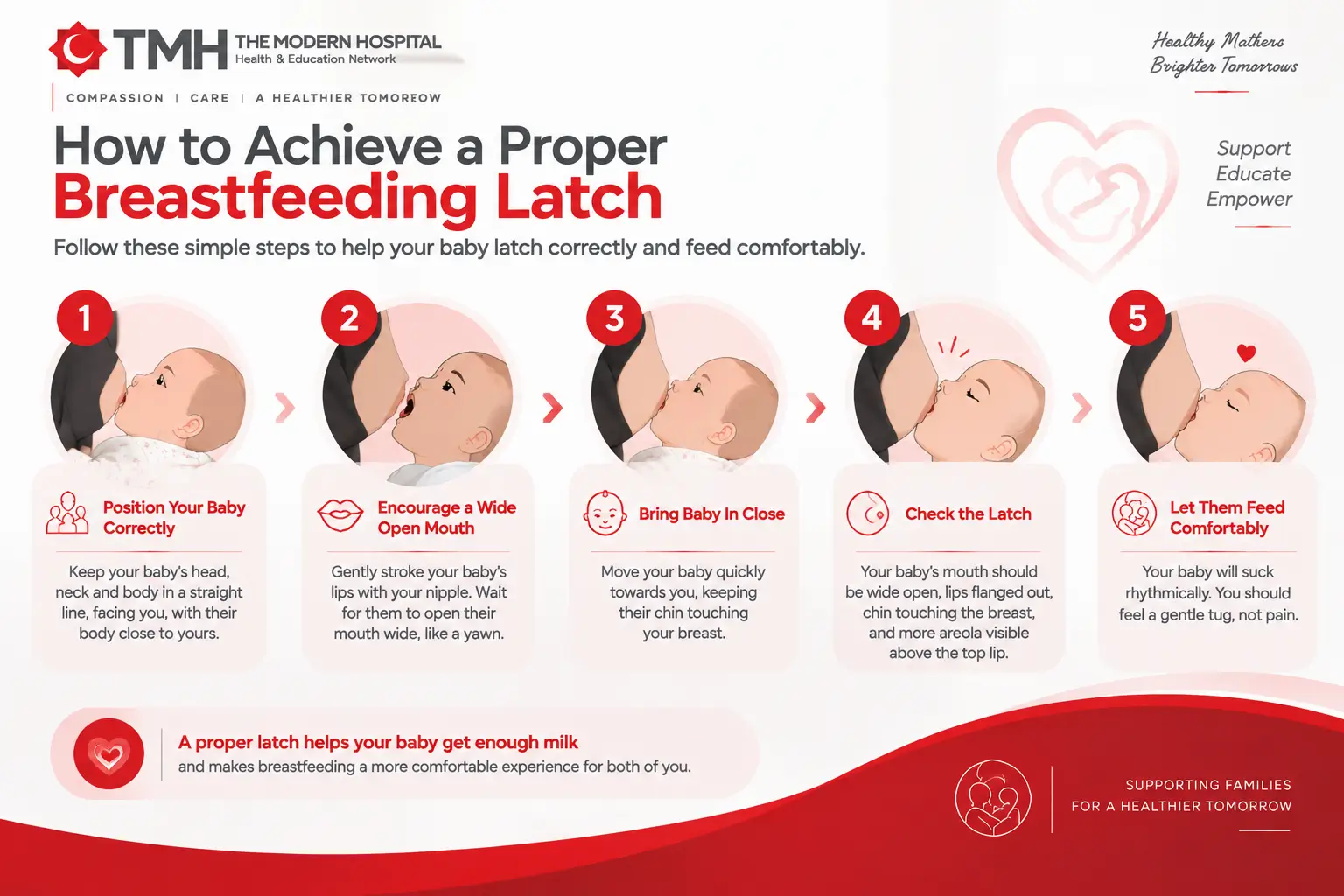
Once you understand what can go wrong, the next step is learning how a good latch actually comes together.
It’s not just about getting the baby onto the breast - it’s about positioning, timing, and subtle cues that make feeding comfortable and effective for both of you.
Positioning Comes First
Align baby’s head and body in a straight line
This helps your baby swallow easily without straining their neck.
Bring baby to the breast (not breast to baby)
Leaning forward can lead to a shallow latch and discomfort over time.
Good positioning sets the foundation. Without it, even a well-attempted latch may not work effectively.
Encourage a Wide Open Mouth
Gently tickle the baby’s upper lip with your nipple
This triggers the natural rooting reflex.
Wait for a wide “yawn-like” mouth opening
That’s your cue to bring the baby in quickly.
A wide mouth ensures more of the areola (not just the nipple) is taken in, creating a deeper and more effective latch.
Aim for a Deep Latch
Baby’s chin should touch the breast first
The nose should remain free or just lightly touching.
More areola visible above the top lip than below
This shows the latch is slightly asymmetrical (which is ideal).
A deep latch allows proper milk flow and prevents nipple pain or damage.
Check for Signs of a Good Latch
No pain after the initial few seconds
Feeding should feel comfortable, not pinching or sharp.
Rhythmic sucking and swallowing sounds
Indicates your baby is actively feeding.
Lips flanged outward (like “fish lips”)
This helps create a strong seal.
These signs confirm that feeding is both effective and sustainable.
Getting the latch right may take a few tries, and that’s completely normal. With practice, these steps become more intuitive, and feeding often becomes a much smoother, more comfortable experience.
Tips to Improve and Maintain a Good Latch
Once you’ve achieved a good latch, the focus shifts to maintaining it consistently. Small adjustments and awareness during feeds can make a big difference in comfort, milk flow, and your baby’s overall feeding experience.
Stay Attentive During Feeds
Watch for changes in sucking or swallowing
If feeding becomes irregular or noisy, the latch may have shifted.
Notice any emerging discomfort
Pain developing mid-feed can indicate the latch has become shallow.
A latch can change during feeding, so staying aware helps you correct issues early.
Break the Latch Gently if Needed
Insert a clean finger into the corner of baby’s mouth
This safely breaks the suction without hurting your nipple.
Avoid pulling baby off directly
This can cause pain and nipple damage.
Resetting the latch properly prevents ongoing discomfort and allows you to try again correctly.
Try Different Positions
Experiment with holds (cradle, cross-cradle, football, side-lying)
Some positions may work better depending on your baby’s size or your comfort.
Adjust as your baby grows
What works in the early days may change over time.
The right position can naturally support a deeper, more stable latch.
Support Your Breast if Needed
Use your hand to shape and guide the breast
This can help your baby latch more easily, especially in the early days.
Keep fingers away from the areola
This ensures your baby can take in enough breast tissue.
Proper support can make latching easier and more effective, particularly for newborns.
Take Care of Yourself
Stay hydrated and well-rested
Your comfort and energy levels can affect feeding sessions.
Address soreness early
Small issues are easier to fix before they become painful problems.
A comfortable, supported mother is better able to maintain consistent, effective breastfeeding.
Building and maintaining a good latch is a learning process, for both you and your baby. With a bit of patience and these practical adjustments, feeding often becomes more natural, comfortable, and rewarding over time.
When to Seek Help for Breastfeeding Latch Issues

As you and your baby continue learning together, it’s normal to have occasional challenges. However, there are times when extra support can make a meaningful difference. Knowing when to reach out ensures that small concerns don’t turn into bigger difficulties.
Persistent Pain or Discomfort
Ongoing pain during or after feeds
While mild discomfort at the start can be normal, pain that continues is not.
Nipple damage (cracks, bleeding, or blisters)
These are signs that the latch or positioning needs adjustment.
Continuing to feed with pain can worsen injury and make breastfeeding more difficult to sustain.
Concerns About Baby’s Feeding
Baby seems constantly hungry or unsatisfied
Even after long feeds, they may not be getting enough milk.
Fewer wet or dirty diapers than expected
This can indicate low milk intake.
Slow or inadequate weight gain
A key sign that feeding may not be effective.
Proper nutrition is essential for your baby’s growth and development, especially in the early weeks.
Difficulty Achieving or Maintaining a Latch
Repeated struggles to get baby to latch deeply
Even with correct positioning, it may not be working consistently.
Baby frequently slips off the breast
This can point to latch or oral issues.
Ongoing latch difficulties can affect both milk supply and feeding success.
When Professional Support Can Help
Consult a lactation consultant or trained healthcare provider
They can observe a feeding session and offer hands-on guidance.
Visit a pediatrics or postnatal care clinic
Regular check-ups help monitor your baby’s growth and feeding progress.
Early support often leads to quick improvements and a more positive breastfeeding experience. Reaching out for help is not a sign of failure. It’s a practical step toward ensuring both you and your baby are comfortable, confident, and thriving.
Wrapping Up
Getting the latch right can make a real difference to your breastfeeding experience, but it doesn’t have to be perfect from day one. Small adjustments, a bit of patience, and understanding your baby’s cues go a long way.
If something feels off, don’t ignore it. Seeking guidance from experienced professionals at The Modern Hospital can provide the hands-on support and reassurance you need. Early help often makes the journey smoother, more comfortable, and far more confidence-building for both you and your baby.
Frequently Asked Questions
How do I know if my baby has a proper latch?
A good latch usually feels comfortable after the first few seconds. You’ll notice your baby taking in more of the areola (not just the nipple), with lips flanged outward and rhythmic sucking with swallowing sounds. Pain, clicking noises, or slipping off the breast may indicate a poor latch.
Is breastfeeding supposed to hurt?
Mild discomfort at the very beginning can be normal, especially in the early days. However, ongoing pain, pinching, or nipple damage is not normal and often points to a latch or positioning issue that needs correction.
How long should a feeding session last?
There’s no fixed time. Feeds can range from 10 to 30 minutes or more, especially for newborns. What matters more is whether your baby seems satisfied afterward and is gaining weight appropriately.
My baby keeps falling asleep while feeding. Is that okay?
Newborns can be sleepy, but if your baby consistently falls asleep shortly after starting and doesn’t feed actively, it may mean they’re not latching deeply or getting enough milk. Gentle stimulation (like tickling their feet) can help keep them engaged.
How can I fix a painful latch?
If feeding is painful, gently break the latch using a clean finger and try again. Focus on positioning, encouraging a wide open mouth, and aiming for a deeper latch. If pain continues, it’s best to seek professional guidance.
Can latch problems affect milk supply?
Yes. An improper latch can reduce how effectively milk is removed, which may eventually impact your milk supply. A good latch helps maintain consistent milk production.