

Breastfeeding Mother Diet in Pakistan - What to Eat, Limit and Discuss With a Doctor
Breastfeeding Mother Diet in Pakistan
Becoming a mother brings with it a whole new set of questions, and one of the most common is about food.
“What should you eat?“
“What should you avoid?”
And more importantly,
“Does your diet really affect your baby?”
When it comes to a breastfeeding mother diet, the pressure to “eat perfectly” can feel overwhelming. Family advice, cultural beliefs, and online information often make it seem like you need special foods or expensive ingredients to support breastfeeding.
In reality, it’s much simpler than that.
A healthy diet during breastfeeding is about balance, consistency, and nourishment using everyday foods you already have at home. Whether it’s roti, daal, sabzi, or a glass of milk, your regular meals can go a long way in supporting both your health and your baby’s needs.
In this guide, we’ll break down what a practical and realistic breastfeeding mother diet in Pakistan looks like, what you should limit, and when it’s important to speak to a professional.
Key Nutrients Every Breastfeeding Mother Needs
A balanced breastfeeding mother diet is really about getting the right nutrients consistently. Instead of focusing only on “what to eat,” it helps to understand why certain foods matter for maternal nutrition.
A well-rounded breastfeeding mother diet using everyday Pakistani foods can naturally cover most of these needs without relying on expensive products.
What to Eat: Building a Balanced Breastfeeding Mother Diet
A healthy breastfeeding mother diet doesn’t need to be expensive or complicated. It just needs to be balanced, diverse, and consistent. The goal is to support your energy levels, recovery after childbirth, and overall maternal nutrition, rather than relying on any single “miracle food.”
1. Include All Major Food Groups Daily
A well-rounded plate helps ensure both mother and baby receive essential nutrients:
Whole grains
Roti, brown rice, oats, daliya
Protein sources
Pulses (daal), chickpeas (chana), beans (lobia), eggs, chicken, fish
Dairy:
Milk, yogurt (dahi), lassi, paneer
Fruits & vegetables:
Spinach (palak), ladyfinger (bhindi), carrots, mangoes, bananas
Healthy fats:
Desi ghee (in moderation), nuts (badam, walnuts), seeds
These foods support recovery and help maintain steady energy levels, which is especially important when managing newborn care routines.
2. Focus on Hydration
Staying hydrated supports your overall health during breastfeeding, although drinking extra fluids beyond your body's needs doesn't directly increase milk production.
Drink according to your thirst and keep water nearby during feeds.
Include options like coconut water, soups, and milk
Keep fluids nearby, especially during feeds
3. Use Familiar Meals
Instead of strict meal plans, think in terms of simple, practical meals:
Breakfast
Paratha with yogurt + boiled egg
Lunch
Daal, roti, sabzi, salad
Dinner
Chicken curry with rice + cooked vegetables
Snacks
Fruit chaat, handful of nuts, homemade smoothies
These everyday meals already provide a strong nutritional foundation without requiring expensive “superfoods.”
4. Foods You Can Continue Eating While Breastfeeding
Many mothers worry unnecessarily about avoiding certain foods. In reality, most items can still be part of a healthy breastfeeding mother diet unless a doctor advises otherwise.
You can usually continue eating:
Eggs
Milk and yogurt
Fish (low-mercury varieties)
Spicy foods
Citrus fruits
Mangoes and other seasonal fruits
Every baby is different, so if you notice unusual fussiness, you can adjust, but there’s no need to restrict your breastfeeding mother diet by default.
Balance Matters More Than Quantity
Eating more food does not automatically improve breastfeeding outcomes. What matters most is quality and variety. A balanced approach supports your body naturally, something often emphasized by a Nutrition & Fitness Expert when guiding new mothers.
While good nutrition helps support your energy, recovery, and overall health during breastfeeding, milk production also depends on effective milk removal. Factors such as frequent feeding and a proper breastfeeding latch help your baby attach comfortably and remove milk efficiently, which can support a smoother breastfeeding journey.
What to Limit: Foods and Habits to Be Mindful Of

While a balanced breastfeeding mother diet includes a wide variety of foods, there are certain items that should be consumed in moderation. The goal is awareness and balance to support both mother and baby.
1. Caffeine in Moderation
Tea and coffee are part of daily life in many Pakistani households, but excessive caffeine may affect some babies (e.g., irritability or disturbed sleep).
Limit to 1–2 cups per day
Be mindful of other sources like soft drinks or chocolate
2. Very Spicy or Oily Foods
Traditional dishes can be rich and spicy. While most babies tolerate this well, in some cases it may lead to fussiness or digestive discomfort.
No need to avoid completely
Just observe your baby’s response and adjust if needed
3. Processed & Junk Foods
Foods high in sugar, salt, and unhealthy fats (e.g., packaged snacks, fast food) offer little nutritional value.
Occasional treats are fine
Avoid making them a regular part of your breastfeeding mother diet
4. Herbal Remedies & “Milk-Boosting” Myths
Some traditional foods and herbs, like fenugreek (methi), fennel (saunf), or moringa, are commonly used in Pakistan to support breastfeeding.
However:
Research on their effectiveness is mixed
They may not be suitable for everyone
They should not replace a balanced breastfeeding mother diet
Always consult a Gynaecological Clinic or healthcare provider before using herbal remedies.
5. Smoking & Exposure to Smoke
Avoid smoking and secondhand smoke, as they can negatively impact both mother and baby’s health. Also avoid trying to lose weight rapidly during the first few weeks after delivery while your body is recovering and breastfeeding is becoming established.
A mindful approach helps you maintain a healthy breastfeeding mother diet without unnecessary restrictions.
Can You Diet While Breastfeeding?
Weight loss is a common concern, but extreme dieting is not recommended during this phase.
Avoid crash diets or skipping meals
Gradual weight loss is generally safer
Focus on nutrient-dense foods instead of calorie restriction
Breastfeeding itself increases your body’s energy needs
A sustainable breastfeeding mother diet supports both recovery and long-term health. If needed, a Nutrition & Fitness Expert can help guide safe, realistic goals.
When to Speak With a Doctor or Nutrition Expert
A well-balanced breastfeeding mother diet works for most women, but there are times when personalized guidance is important. Every mother’s body, recovery, and breastfeeding experience are different, so it’s okay to seek help when something feels unclear or challenging.
1. If You Have Ongoing Fatigue or Weakness
Feeling tired is normal with newborn care, but persistent weakness, dizziness, or low energy may point to nutritional gaps.
A professional can assess your maternal nutrition
They may suggest dietary adjustments based on your routine and health
2. If You Have Medical Conditions
Conditions like anemia, diabetes, thyroid issues, or digestive problems can affect your nutritional needs.
In such cases, your breastfeeding mother diet may need to be tailored
A Gynaecological Clinic or doctor can guide you safely
3. If You’re Unsure About Certain Foods
There’s often confusion around what’s “safe” or “unsafe” during breastfeeding.
Instead of cutting out entire food groups, consult a Nutrition & Fitness Expert
They can help you maintain balance without unnecessary restrictions
4. If You’re Considering Supplements or Herbal Remedies
Not all supplements or traditional remedies are suitable for everyone.
Avoid self-prescribing
Discuss options with a qualified professional to ensure safety
5. If You Have Concerns About Feeding Patterns
While diet plays a role in overall health, feeding challenges are often better addressed through proper guidance.
Refer back to a Breastfeeding Guide for positioning and feeding basics
Seek professional help if concerns persist
Keeping Your Breastfeeding Mother Diet Simple and Sustainable
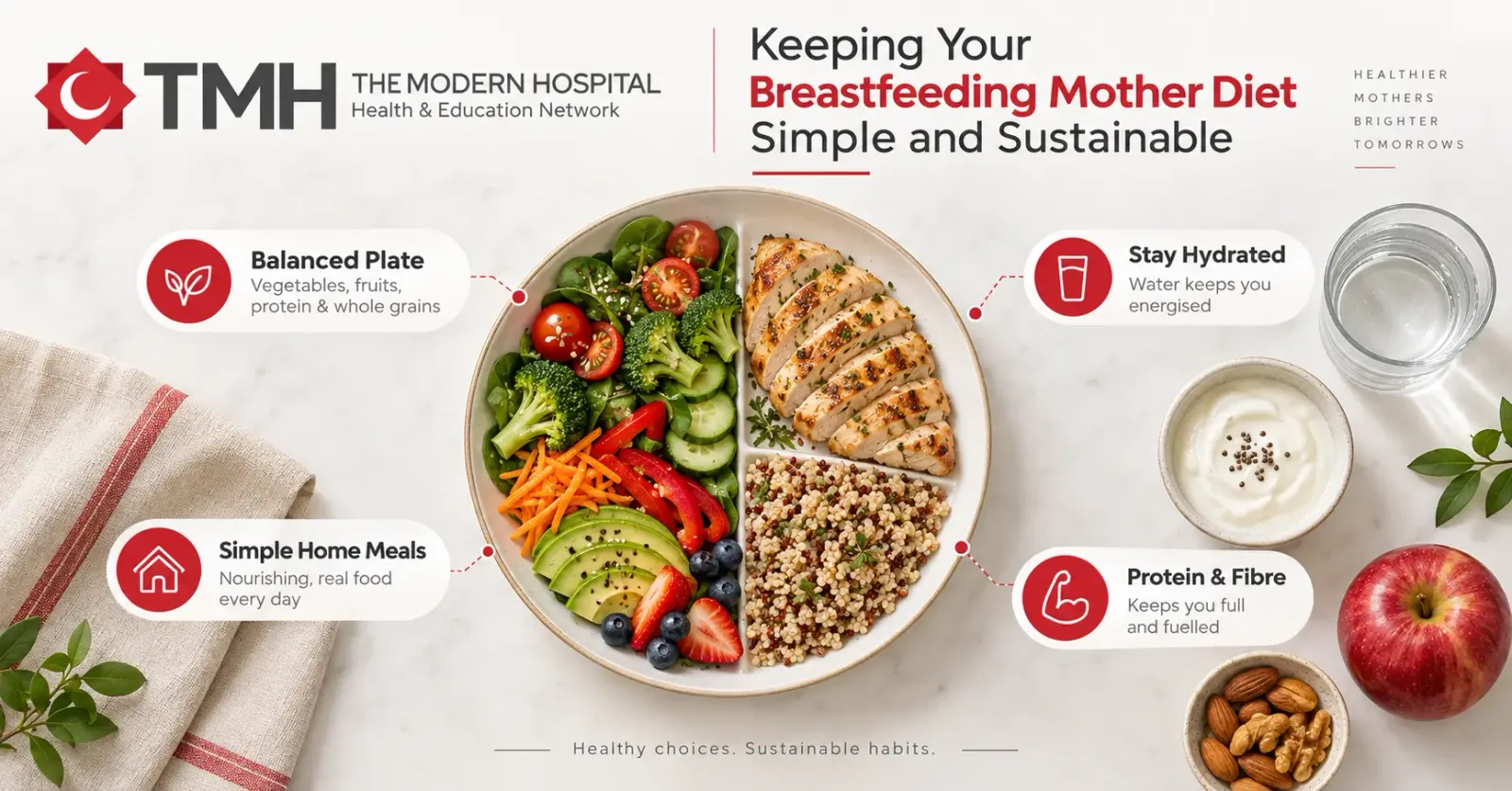
A healthy breastfeeding mother diet is about balance, not perfection. Simple, home-cooked meals using familiar foods can support your energy, recovery, and overall maternal nutrition while managing newborn care.
Instead of focusing on specific “milk-boosting” foods, aim for variety and consistency. If you ever feel unsure, a Nutrition & Fitness Expert or a trusted Gynaecological Clinic can guide you in making the right choices for your body.
For feeding techniques and practical tips, you can always revisit a Breastfeeding Guide alongside your diet approach. And if you’re looking for professional, reliable care, consider consulting specialists at Modern Hospital for personalized support.
Frequently Asked Questions
What is the ideal breastfeeding mother diet?
A good breastfeeding mother diet includes a balance of grains, proteins, dairy, fruits, and vegetables. Simple home-cooked Pakistani meals like daal, roti, sabzi, and yogurt can meet most nutritional needs and support overall maternal nutrition.
Do I need special foods to increase milk supply?
No single food has been proven to increase milk supply on its own. Frequent and effective breastfeeding or milk expression remains the most important factor in maintaining milk production.
Can I drink tea or coffee while breastfeeding?
Yes, but in moderation. Limit caffeine to 1–2 cups daily as part of a balanced breastfeeding mother diet, especially while managing newborn care routines.
Are spicy foods safe during breastfeeding?
Most mothers can eat spicy foods without issues. If your baby shows signs of discomfort, you can adjust your breastfeeding mother diet accordingly.
Should I avoid certain foods completely?
There’s usually no need to eliminate entire food groups. Focus on variety and moderation in your breastfeeding mother diet. If you’re unsure, consult a Nutrition & Fitness Expert.
Do I need supplements during breastfeeding?
Not always. Supplements depend on individual needs and health conditions. It’s best to consult a Gynaecological Clinic before adding anything to your breastfeeding mother diet.
How much water should I drink?
Stay well-hydrated by drinking water regularly throughout the day. Hydration supports your overall breastfeeding mother diet and daily energy levels.
Can breastfeeding mothers eat fish?
Yes. Most breastfeeding mothers can safely eat low-mercury fish as part of a balanced diet. Fish provides protein and omega-3 fatty acids that support both maternal health and your baby's development. Avoid fish known to contain high levels of mercury.