

Dengue in Children - Symptoms Parents Should Not Ignore
Dengue Symptoms in Child
Your children are your whole world, and seeing them unwell is one of the most stressful things a parent can experience.
Spotting dengue in children takes careful observation because toddlers can't tell you where it hurts Instead of explaining body aches, a child might just stop playing, refuse liquids, or sleep much more than usual.
This guide is built to help parents identify key Dengue Symptoms in children, monitor for dehydration, and recognize when immediate clinical care is needed.
Why Children Need Closer Observation
Dengue places significant strain on a young child's body, making the illness progress very differently from a standard seasonal fever. Because little bodies dehydrate rapidly during prolonged fevers, a child's condition can shift noticeably over the course of a single afternoon.
Instead of waiting for fever spikes to pass, parents need to monitor overall stamina and fluid intake. When dengue is involved, kids rarely show the usual bursts of energy between fever doses. Instead, they remain weak, fussy, or unusually sleepy even when their temperature temporarily drops.
Understanding this pattern helps you stay one step ahead of the illness. Pay close attention to these changes in your child's behavior:
Refusing favorite drinks:
Spitting out water, pushing away juice, or turning down breastmilk repeatedly throughout the day.
Abrupt physical withdrawal:
Dropping toys mid-play, refusing to sit up, or sleeping more occasionally than the norm.
Unusual emotional distress:
Crying inconsolably when touched or moved, becoming overly clingy, or showing extreme irritability without an obvious trigger.
Unseasonal drowsiness:
Nodding off during mealtime, struggling to keep their eyes open while sitting, or sleeping far past normal nap schedules.
Tracking these subtle changes gives you a clear baseline so you can notice when your child is struggling before severe dehydration or complications set in.
Early Dengue Symptoms Parents May Notice
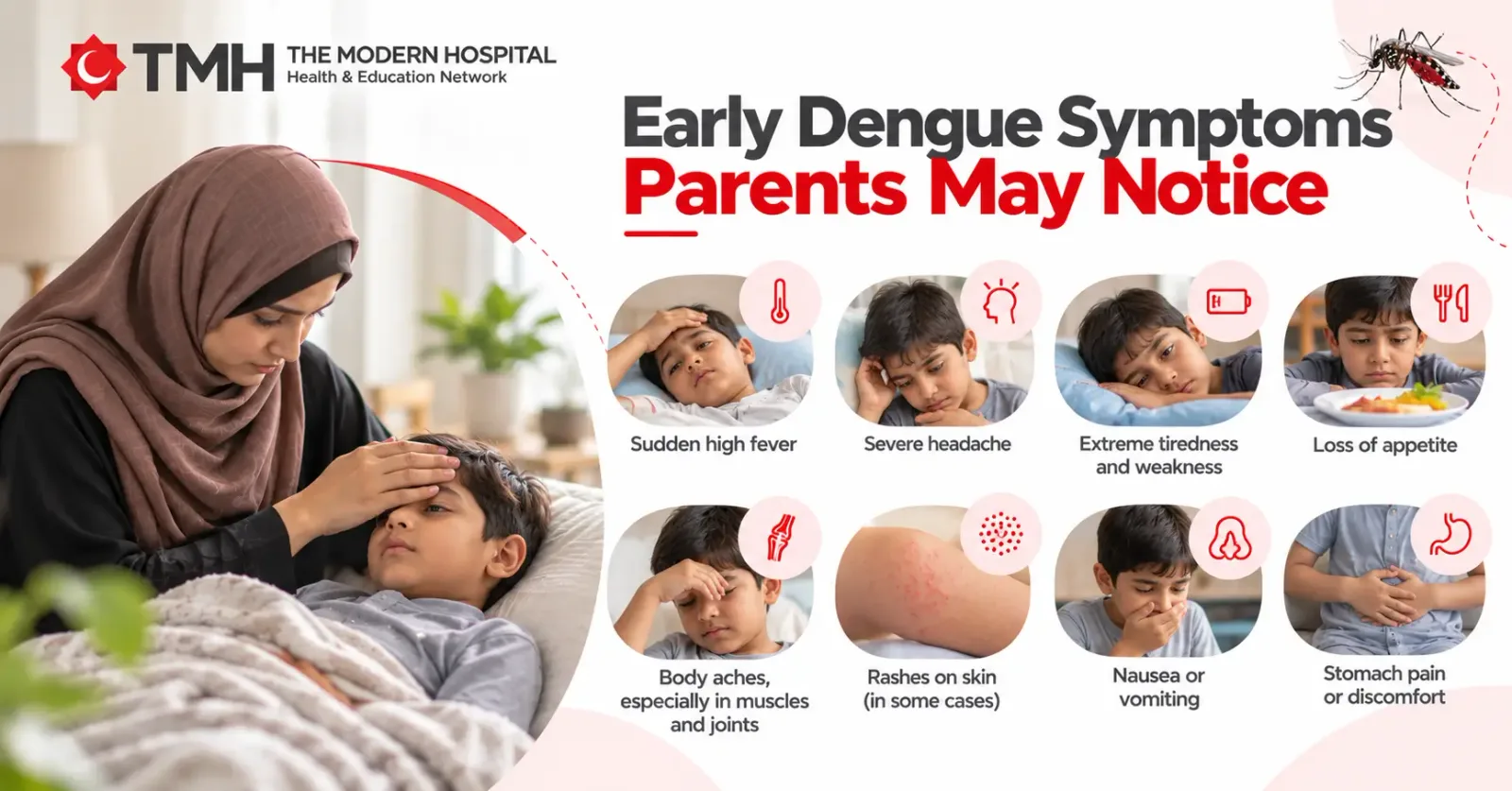
Dengue often starts suddenly. While an older kid might complain about a headache or painful joints, catching early dengue symptoms in child cases usually relies on spotting physical patterns during your normal routine.
Unlike a common cold, dengue rarely comes with a runny nose or a severe cough. Watch for these visible physical signs:
Early Dengue Symptoms in Children
Sudden high temperature
A fever that spikes quickly above 102°F and remains hard to bring down with standard fever medicine.
Flushed skin or rash
Bright red, warm cheeks during the first day, followed by a faint, patchy pink rash on the chest, back, or arms.
Eye soreness and light sensitivity
Squinting in normal indoor lighting, turning away from bright windows, or repeatedly rubbing the eyes.
Persistent stomach upset
Gagging after taking sips of water, throwing up small meals, or complaining that their tummy feels bad.
Deep muscle fatigue
Severe weakness where a child struggles to hold up their head, walk across the room, or sit upright in bed.
Because these early Dengue Symptoms can resemble other childhood illnesses, focus on the overall combination of symptoms. If a high fever appears alongside rash, vomiting, and low energy, it’s time to consult a doctor.
Signs That a Child May Be Dehydrated
Dehydration is one of the biggest risks when dealing with dengue symptoms in child cases. High fever combined with throwing up or refusing water quickly drains a small body's water reserves. Because babies and young children dry out much faster than adults, keeping track of what they drink throughout the day is critical.
Signs of Dehydration in Children
Fewer wet diapers
Going six hours or longer without a wet diaper, or producing very small amounts of dark urine in older kids.
Dry lips and mouth
A tongue that looks sticky or dry, along with cracked lips.
Crying without tears
Producing very few tears or crying completely dry when upset.
Sunken eyes or soft spot
Eyes that look unusually hollow, or a noticeably sunken soft spot on top of a baby's head.
Unusual sleepiness
Extreme tiredness where your child struggles to stay awake or acts confused.
Guidance from pediatric specialists stresses that these signs require quick medical attention. If you see any of these indicators, bring your child to a Pediatrics Clinic right away to get their health back on track.
Warning Signs Parents Should Never Ignore
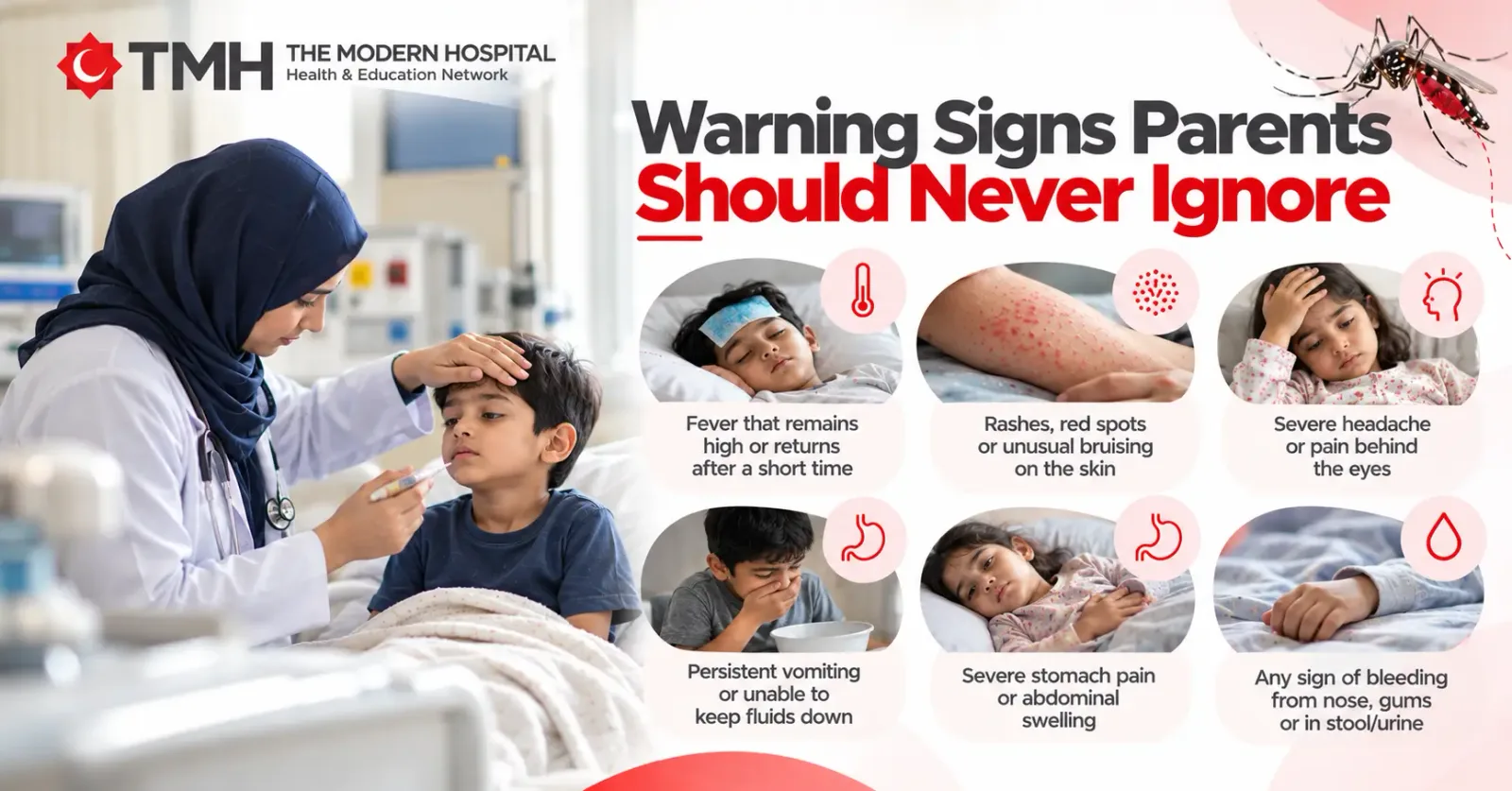
The most dangerous phase of dengue often occurs just as the high fever starts coming down. While it may look like your child is getting better, this transition period is when serious complications can develop.
Watching closely during this window can save your child's life. Seek immediate medical help if you notice any of these severe signs:
Continuous vomiting
Throwing up three or more times in a few hours, making it impossible to keep liquids down.
Severe belly pain:
Continuous crying, clutching the stomach, or sharp tenderness when you gently touch their abdomen.
Unexplained bleeding:
Fresh blood from the nose or gums, dark spots under the skin, or dark, tar-like stool.
Extreme tiredness or confusion:
Difficulty waking your child up, severe restlessness, or a sudden inability to recognize family members.
Fast or heavy breathing:
Breathing rapidly, panting, or showing chest tightness while resting.
Health guidelines classify these red flags as severe medical emergencies. Do not wait to see if things improve at home. Take your child straight to an Emergency department for urgent medical evaluation.
Dengue Symptoms in Children vs. a Regular Viral Fever
Telling the difference between a common bug and dengue during the first 24 hours can be tricky. Many seasonal illnesses start with a sudden spike in temperature, but comparing specific symptom patterns helps you know what you are dealing with.
If your child looks worse despite their temperature coming down, do not assume it is just another seasonal Child Fever. Treat extreme sleepiness, persistent vomiting, or refusal to drink as clear reasons to seek immediate medical advice.
When to Go to Pediatrics or Emergency
Knowing when to get medical help saves crucial time. If your child runs a high fever, turns down water, goes six hours without peeing, or complains of stomach pain, visit a Pediatrics Clinic imminently. However, some red flags require immediate action without waiting for an appointment. Go straight to an emergency room if you notice:
Non-stop throwing up:
Vomiting repeatedly so no liquids stay down.
Unusual bleeding:
Fresh blood from the nose or gums, or dark spots under the skin.
Extreme sleepiness:
Struggling to wake your child up, severe weakness, or acting confused.
Trouble breathing:
Fast panting or heavy chest movements while resting.
You can get round-the-clock medical care at The Modern Hospital Emergency department, where child specialists are available 24/7.
Why Testing Matters

Physical signs alone are not sufficient to conclude if its dengue. A simple Dengue Test is the only sure way for doctors to know what is going on and monitor your child's health accurately.
A doctor will usually recommend two quick checks:
Early virus check:
An NS1 blood test spots the dengue virus during the first few days of fever.
Blood count checks:
A Complete Blood Count (CBC) tracks platelet levels and red blood cells to catch any sudden drops early.
Early lab testing gives doctors clear numbers to work with, helping them make safe medical decisions and decide if your child needs closer medical care or can recover safely at home.
Wrapping Up
Looking after a child with dengue is tough on any parent, especially when they're too little to tell you what hurts. The best thing you can do at home is focus on the basics: make sure they're taking small sips of water or ORS, track how often they use the bathroom, and watch their energy levels.
Trust your gut if you feel like your child isn't getting better or if you see red flags like stomach pain or sudden drowsiness.
If you're ever uncertain or just want a doctor to check your child, you can bring them to The Modern Hospital or call us directly at 021-111-864-864.
Frequently Asked Questions
How long do dengue symptoms in child cases usually last?
The active illness usually lasts between 3 to 7 days. The high fever phase typically runs for 2 to 7 days. However, the 24 to 48 hours right after the temperature starts coming down is the most critical window. This is when parents need to watch most closely for any sudden warning signs.
What medicine can I safely give my child for a fever?
Stick only to paracetamol (acetaminophen) as directed by your pediatrician to manage a Child Fever. Never give ibuprofen, aspirin, or similar anti-inflammatory medicines, because these can significantly increase the risk of bleeding during a dengue infection. Always consult a doctor before giving any new medication.
Can a child recover from dengue safely at home?
Yes, many mild cases can be managed at home with plenty of rest, small and frequent sips of water or oral rehydration drinks, and careful monitoring. However, routine visits for a Dengue Test and blood count checks are essential so a doctor can confirm your child is recovering safely without hidden complications.
How can we protect our children from mosquito bites?
Use child-safe mosquito repellent, dress kids in lightweight long sleeves and pants, and ensure window screens are intact. Also, regularly check around your home to empty any standing water in buckets, plant saucers, or water coolers where mosquitoes breed.
What should my child eat and drink while recovering from dengue?
Focus on light, easy-to-digest foods and plenty of liquids. Offer small, frequent sips of water, fresh fruit juices, coconut water, and oral rehydration solutions (ORS) throughout the day. For meals, stick to plain foods like porridge, khichdi, boiled rice, or clear chicken broth. Avoid fried, oily, or dark-colored foods that might upset their stomach or make it hard to notice blood if they vomit.
Can a child get dengue more than once?
Yes. There are four different strains of the dengue virus. When a child recovers from one strain, they gain lifelong protection against that specific one, but they can still catch any of the remaining three. In fact, a second dengue infection can sometimes cause more intense symptoms than the first. This is why mosquito protection remains essential even after a past recovery.