

Platelet Count in Dengue - What Patients and Families Should Understand
Platelet Count in Dengue
Every dengue season in Pakistan brings a familiar wave of anxiety, especially when lab reports start showing falling platelet counts. For many patients and families, the first question is often the most urgent:
“How low is too low?"
The concern is understandable. Platelets are linked to blood clotting, and dengue has long been associated with bleeding complications. But what often gets overlooked is that platelet count alone does not determine how severe dengue is.
In fact, many patients with low platelet levels recover without complications, while others with relatively higher counts may still develop warning signs that require urgent care.
This confusion is partly driven by widespread myths, delayed awareness, and an over-reliance on lab numbers instead of overall clinical condition.
Health authorities, including the World Health Organization, emphasize that dengue management depends on a combination of symptoms, physical assessment, and laboratory trends.
Understanding how platelet count in Dengue behaves, and what matters for patient safety can help you make better decisions, avoid panic, and seek timely medical attention.
What Is Platelet Count and Why It Matters in Dengue
Platelets are tiny blood cells that play a crucial role in helping the body stop bleeding. When a blood vessel is injured, platelets gather at the site and form a plug, preventing excessive blood loss.
This is why platelet count is often associated with bleeding risk. But in dengue, the situation is more complex.
In a standard Complete Blood Count (CBC), platelet levels are measured to assess how well the blood can clot. A normal platelet count typically ranges between 150,000 to 450,000 per microliter of blood. During dengue infection, however, it is common for platelet levels to drop below this range.
Why Platelets Drop in Dengue
Dengue affects platelet count through multiple mechanisms:
Bone marrow suppression:
The dengue virus temporarily slows down platelet production in the bone marrow, reducing the number of new platelets entering circulation.
Increased destruction:
The body’s immune response may mistakenly target and destroy platelets.
Plasma leakage and consumption:
In more severe cases, platelets are used up more quickly due to changes in blood vessels and fluid balance.
Because of these combined effects, a falling platelet count is a typical part of dengue progression, especially between days 3 to 7 of illness.
Why Platelet Count Alone Can Be Misleading
One of the most important things families need to understand is:
A low platelet count does not automatically mean severe dengue.
A higher platelet count does not guarantee safety
Doctors don’t rely on platelet count alone. They look at the overall clinical picture, including:
Dengue Symptoms (such as persistent vomiting or abdominal pain)
Signs of bleeding
Hematocrit levels (which indicate blood concentration)
Hydration status and vital signs
This is why patients are often monitored with repeated lab tests and clinical assessments from the laboratory.
Platelet count is an important indicator, but it’s only one piece of the puzzle. Understanding how platelet count in dengue fits into the broader picture can prevent unnecessary panic and help families focus on what truly matters:
Recognizing warning signs and getting timely care when needed.
Understanding Platelet Count in Dengue (Why the Pattern Matters More Than the Number)
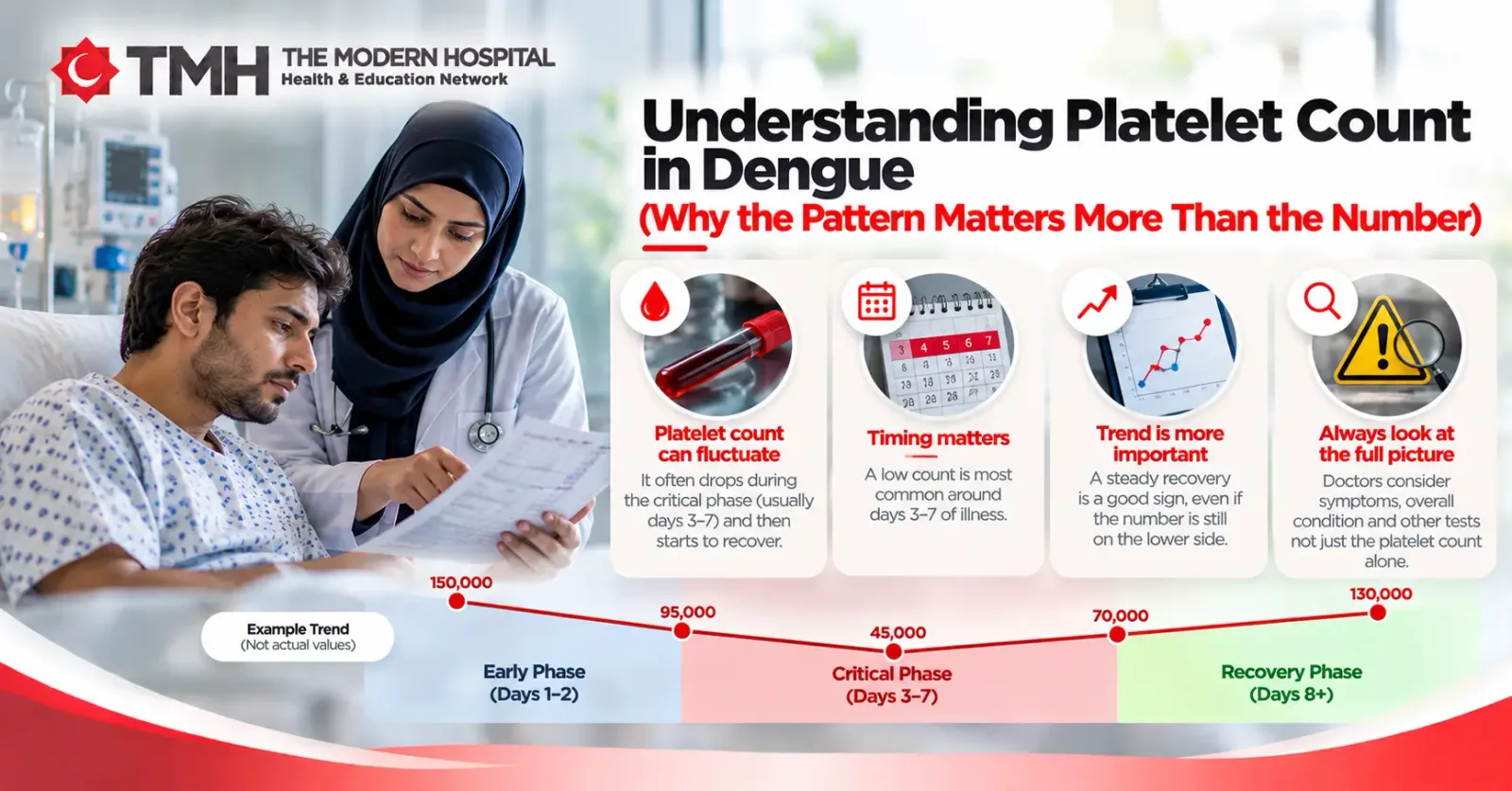
One of the biggest misconceptions about platelet count in dengue is that a single number can tell you how serious the illness is.
In reality, doctors focus much more on the trend over time rather than one isolated lab result.
Why Trends Are More Important
Dengue follows a predictable pattern, and platelet levels usually change along with it. Instead of reacting to one report, doctors monitor how the count is rising, falling, or stabilizing over several days using repeated dengue tests like the Complete Blood Count.
Here’s how trends are typically interpreted:
Gradual decrease
A steady drop in platelets during the early phase (usually days 3–5) is common and expected in dengue.
Stabilization
When platelet levels stop falling, it often indicates the body is entering a more stable phase.
Recovery (upward trend)
A consistent increase in platelet count usually signals recovery.
Rapid drop with symptoms
A sharp decline combined with warning signs (like bleeding or severe weakness) may indicate a higher risk and needs closer monitoring.
Why a Single Number Can Be Misleading
Looking at one platelet value without context can create unnecessary panic.
A patient with 45,000 platelets but stable condition may be doing better than someone with 180,000 platelets that are rapidly falling with symptoms.
This is why doctors avoid making decisions based on a single report.
Clinical Condition Always Comes First
According to guidance from organizations like the Centers for Disease Control and Prevention, dengue assessment is based on a combination of lab trends and clinical signs.
That means:
Symptoms and warning signs are prioritized
Platelet trends support the diagnosis instead of defining it
So If you’re tracking platelet count in dengue, focus on the overall pattern and symptoms, not just the number on the report. Regular monitoring and medical guidance are far more important than reacting to a single value.
Common Myths About Platelet Count in Dengue
In Pakistan, dengue season often comes with a wave of misinformation, especially around platelet count in dengue. These myths lead to panic, unnecessary treatments, and delayed decision-making.
Let’s break down some of the most common ones.
Myth 1: Platelets below 100,000 are always dangerous
This is one of the most widespread misconceptions.
While a drop below normal levels is expected in dengue, many patients recover safely even when their platelet count falls below 100,000. What matters more is whether the patient is stable and free from warning signs.
Myth 2: Platelet transfusion is always required when counts drop
Not true.
Platelet transfusions are not routinely recommended in dengue. They are usually considered only when there is active bleeding or a high-risk clinical situation. Unnecessary transfusions can expose patients to avoidable risks and complications.
Myth 3: Certain foods can quickly increase platelet count
Home remedies like papaya leaf extract, juices, or specific diets are often promoted as quick fixes.
However, there is no strong medical evidence that these can rapidly or reliably increase platelet levels during dengue.
Recovery depends on the body’s natural response and proper medical care.
Myth 4: Once platelets start increasing, the danger is over
An increasing platelet count is a positive sign, but it doesn’t automatically mean the patient is completely out of risk.
Doctors still monitor symptoms and overall condition before confirming recovery.
Myth 5: Platelet count alone determines dengue severity
This is the most important myth to correct.
As emphasized by global health authorities like the World Health Organization, dengue severity is determined by clinical warning signs and complications instead of just platelet levels.
The Reality
Platelet count in dengue just one part of the assessment. Relying on it alone leads to unnecessary fear or false reassurance. Understanding the full picture, including dengue symptoms, trends, and medical evaluation, is what truly helps in managing dengue safely.
When Low Platelet Count Becomes Concerning
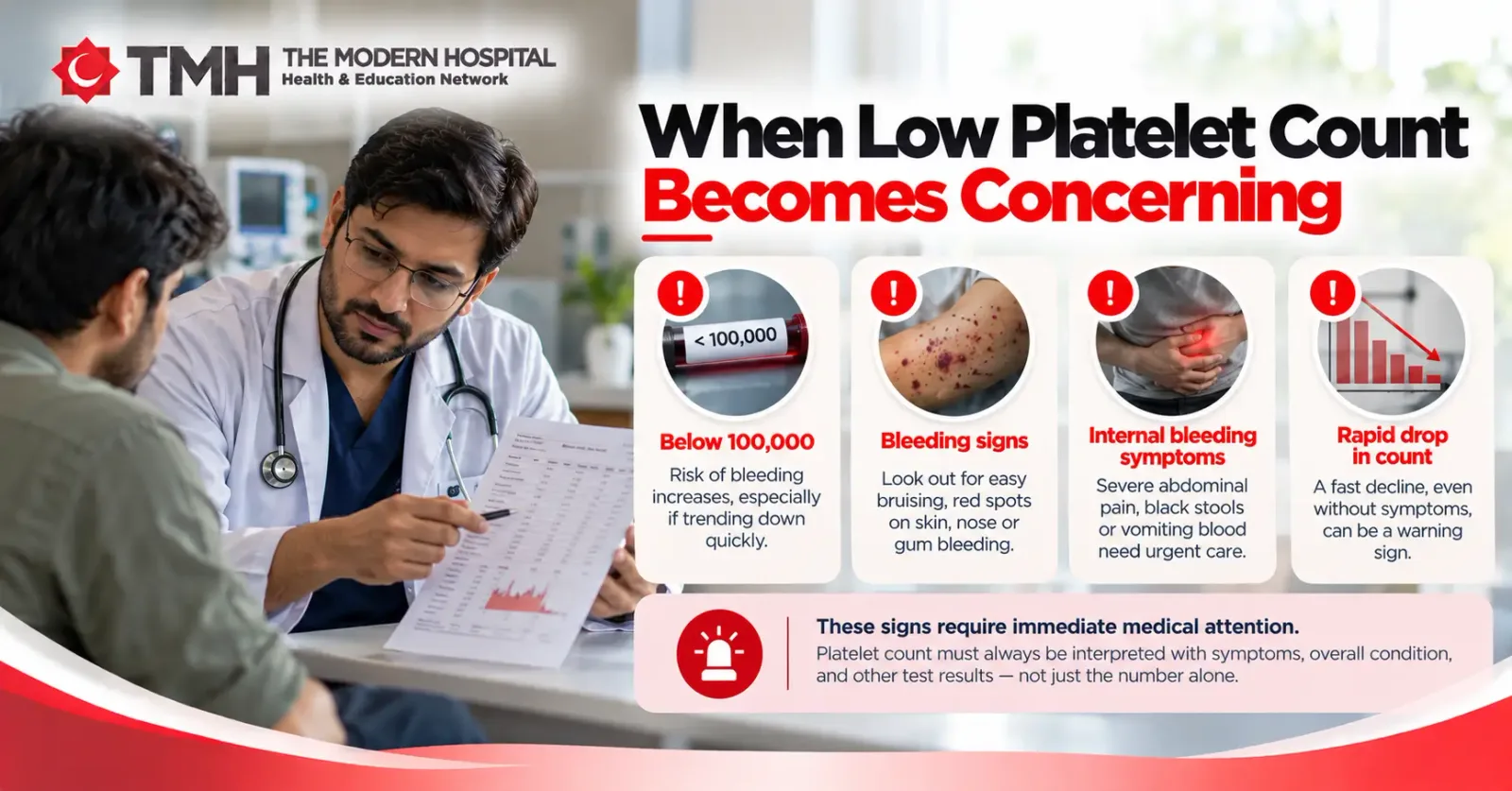
A drop in platelet count is expected in dengue, but there are situations where it becomes clinically concerning, because of what’s happening in the body alongside it.
Warning Signs That Require Immediate Attention
Low platelets become more serious when they are accompanied by specific symptoms. These warning signs indicate a higher risk of complications and should never be ignored:
Bleeding
Such as bleeding from gums, nosebleeds, blood in urine, or black stools. This suggests the body’s clotting ability may be affected.
Persistent vomiting
Ongoing vomiting can lead to dehydration and may signal worsening disease.
Severe abdominal pain
This can indicate internal complications, including fluid accumulation or organ involvement.
Unusual drowsiness or restlessness
Changes in alertness may reflect reduced circulation or early signs of severe dengue.
Difficulty breathing
Can occur due to fluid leakage into the chest or other complications.
These symptoms are considered dengue warning signs, and their presence matters far more than the platelet count in dengue alone.
Why Symptoms Matter More Than the Number
Health authorities like the Centers for Disease Control and Prevention emphasize that dengue severity is identified through clinical warning signs and overall condition.
This means:
A patient with low platelets but no warning signs may be safely monitored
A patient with warning signs, even with higher platelets, may need urgent care
When to Seek Urgent Care
If any of the above symptoms appear, especially during days 3–7 of illness, it is important to seek immediate medical evaluation. This is the phase when dengue can shift from mild to severe.
In such situations, timely access to emergency care can make a critical difference.
Low platelet count becomes dangerous only when combined with warning signs and clinical deterioration. Recognizing these signs early is what helps prevent complications and ensures proper treatment at the right time.
Platelet Transfusion: When Is It Actually Needed?
One of the most common reactions to a falling platelet count in dengue is the assumption that a platelet transfusion is required.
In reality, medical guidelines take a much more cautious and evidence-based approach.
Why Transfusions Are Not Routine
According to guidance from organizations like the World Health Organization, platelet transfusions are not recommended as a routine treatment in dengue patients.
This is because:
Most patients recover naturally as the infection resolves
Platelet counts often improve on their own during the recovery phase
Transfusions do not treat the underlying dengue infection
When Doctors May Consider Transfusion
A platelet transfusion may be considered in specific clinical situations, such as:
Active or significant bleeding
For example, continuous nosebleeds, gastrointestinal bleeding, or internal bleeding
Severe dengue with complications
Where bleeding risk is high and the patient’s overall condition is unstable
Critically low platelet levels with clinical risk factors
Even then, the decision is based on the entire clinical picture, not just a number
Risks of Unnecessary Transfusions
Giving platelets when they are not needed can lead to avoidable complications, including:
Allergic or transfusion reactions
Fluid overload, especially in vulnerable patients
Risk of infections (though screened, still a consideration)
Increased financial burden for families
Why Clinical Judgment Matters Most
Doctors evaluate:
Symptoms and warning signs
Bleeding risk
Vital signs and overall stability
Trends in lab results
Platelet transfusion is not a default response to low counts. Understanding this important information about platelet count in dengue can help families avoid unnecessary panic and focus on what matters:
Proper monitoring, supportive care, and timely medical intervention when required.
Monitoring Dengue Safely: What Patients and Families Should Do
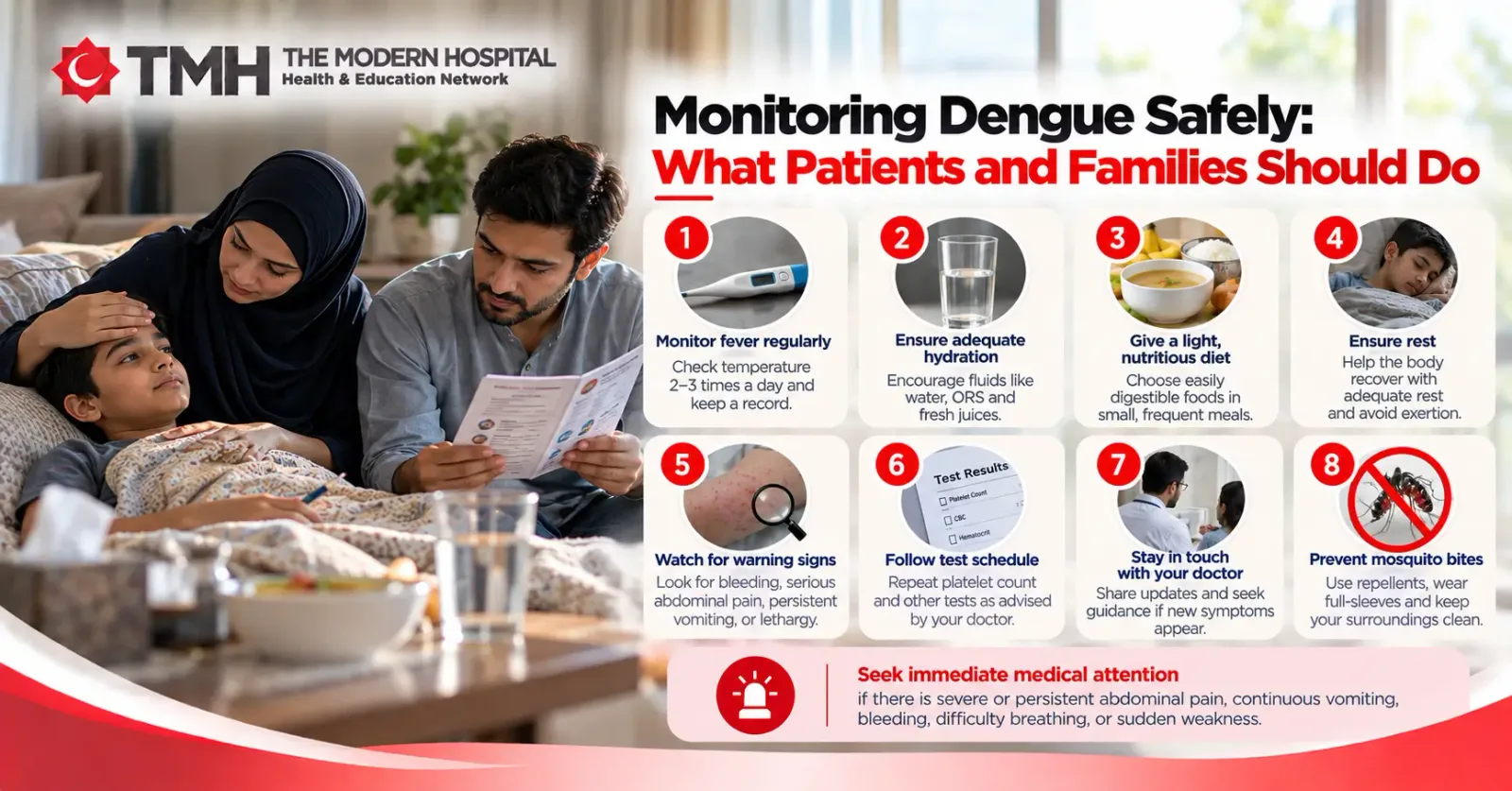
Managing dengue at home or in a clinical setting is about consistent monitoring and timely action. For families dealing with dengue, understanding what to track can make a significant difference.
Follow Regular Testing, But Don’t Obsess Over Every Number
Doctors often recommend repeat blood tests like the Complete Blood Count to monitor platelet trends and overall progress.
Testing helps track whether platelets are falling, stable, or recovering
Reports are interpreted in combination with symptoms, not in isolation
Frequent testing without medical guidance can lead to unnecessary anxiety
The key is to follow your doctor’s schedule and avoid self-prescribed repeated tests.
Watch Symptoms More Closely Than Lab Reports
While lab tests are useful, day-to-day symptoms give more immediate clues about a patient’s condition.
Pay close attention to:
Changes in energy levels
Appetite and fluid intake
Onset of vomiting or abdominal pain
Any signs of bleeding
These indicators often provide earlier warning than lab values.
Hydration and Rest Are Critical
Proper fluid intake plays a major role in dengue recovery:
Helps maintain circulation
Supports overall stability during the critical phase
Reduces risk of complications related to fluid imbalance
Rest is equally important, as the body needs time to recover from viral infection.
Avoid Self-Medication and Unverified Remedies
In many cases, families turn to over-the-counter drugs or home remedies in an attempt to “fix” platelet count.
Some medications can increase bleeding risk
Unverified treatments may delay proper care
Always consult a qualified doctor before trying anything new
Even with monitoring, situations can change quickly. If warning signs develop, patients should be evaluated without delay, this is where timely access to emergency care becomes critical.
Final Thoughts
During dengue, it’s completely natural for patients and families to focus on lab reports, especially when platelet counts start falling. But as we’ve seen, platelet count in dengue is only one part of a much larger picture.
A low platelet count on its own does not define severity, just as a higher count does not guarantee safety. What truly matters is how the patient is feeling, whether any warning signs are present, and how the overall condition is evolving over time.
At The Modern Hospital, dengue management follows this patient-centered approach: careful monitoring, evidence-based decisions, and prioritizing clinical signs over isolated lab values. This ensures that patients receive the right care at the right time, without unnecessary interventions.
In the end, staying informed is one of the most important steps families can take. When you understand what platelet counts in dengue mean, you’re better equipped to make informed decisions, and support recovery safely.
Frequently Asked Questions
What is a normal platelet count?
A normal platelet count is generally around 150,000 to 450,000 platelets per microliter of blood, although the reference range can vary slightly between laboratories. A platelet count below the laboratory's normal range is called thrombocytopenia.
Why do platelets drop during dengue?
Platelets can fall during dengue because the infection can temporarily affect platelet production in the bone marrow and increase platelet destruction or clearance. Changes associated with severe dengue, including vascular leakage and coagulation abnormalities, can also contribute. A falling platelet count is common during the course of dengue, particularly around the critical phase.
What platelet count is dangerous in dengue?
There is no single platelet count that automatically means dengue is dangerous. Doctors assess platelet levels together with bleeding, blood pressure, hydration, hematocrit, urine output, mental status, and other warning signs. A very low count deserves medical attention, but the patient's overall clinical condition is more important than a single number.
Is a platelet count of 50,000 dangerous in dengue?
A platelet count of 50,000/µL is significantly below the usual normal range, but the number alone does not determine whether a dengue patient has severe disease. Doctors also look for active bleeding, warning signs, changes in hematocrit, vital-sign abnormalities, and the patient's overall condition. Current WHO guidance recommends against prophylactic platelet transfusion solely because the count is below 50,000/µL when there is no active bleeding.
Is a platelet count of 30,000 dangerous in dengue?
A platelet count of 30,000/µL is very low and requires medical assessment, but it does not by itself establish severe dengue or automatically mean that a platelet transfusion is required. Doctors consider whether there is active bleeding or other signs of deterioration and monitor the patient closely.
Is a platelet count of 20,000 dangerous in dengue?
A platelet count of 20,000/µL is severely low and warrants close medical supervision. However, platelet transfusion is not automatically given based on the number alone. Current guidance emphasizes clinical condition and active bleeding rather than using a platelet threshold alone to decide on prophylactic transfusion.
Can you have dengue with a normal platelet count?
Yes. A normal platelet count does not rule out dengue, particularly early in the illness. Dengue diagnosis requires appropriate clinical assessment and, when indicated, laboratory testing rather than relying on platelet count alone. WHO's current laboratory guidance emphasizes that clinical diagnosis alone can be insufficient because dengue symptoms overlap with other infections.
When do platelets start falling in dengue?
Platelet counts often fall around the transition from the febrile phase to the critical phase, which commonly occurs around the time the fever begins to settle. The critical phase is typically around days 3–8 after fever onset, although the course varies between patients.