

Physiotherapy for Heart Health and Stroke: Prevention, Recovery, and Safe Movement
Discover how physiotherapy for stroke and heart disease restores mobility, stimulates brain recovery, and builds cardiovascular strength safely.
Physiotherapy for stroke supports recovery by improving movement, balance, strength, and daily function after a neurological event. Under professional supervision, therapy focuses on:
Improving coordination, balance, and walking ability
Supporting the brain’s ability to relearn movement patterns
Building physical endurance through safe, monitored activity
Encouraging habits that support heart and vascular health
A stroke or major heart event often changes how you approach everyday activities. Movements that once felt so effortless, such as standing from a chair, holding objects, or walking across your home, might suddenly require more effort and attention.
Many patients and families wonder how much activity is safe during recovery and when it’s the right time to start moving again. That caution is natural, but avoiding movement for too long affects strength, balance, and overall recovery.
The heart and brain depend on the same network of blood vessels, which means many risk factors, including high blood pressure and artery damage, affect both organs. Taking care of cardiovascular health plays an important role in protecting brain health as well.
Physiotherapy provides a guided approach to rebuilding movement after a stroke while supporting overall physical health. Rehabilitation programs highlighted by World Physiotherapy Day emphasize the role of professional guidance in improving mobility, strength, and daily function after neurological conditions.
Starting physiotherapy for stroke under medical supervision allows your recovery plan to match your abilities, health condition, and progress. In this guide, we’ll explain how physiotherapy supports stroke recovery, how movement benefits heart health, and what patients experience during rehabilitation.
How Does Physical Therapy Support Heart Disease Prevention?
Protecting your heart starts with supporting the health of your blood vessels, circulation, and overall fitness.
Long periods without physical activity affect how efficiently your heart and blood vessels work. Over time, factors such as:
High blood pressure
Reduced fitness levels
Unhealthy lifestyle habits
Increase the strain placed on your cardiovascular system. Regular movement plays an important role in maintaining heart health.
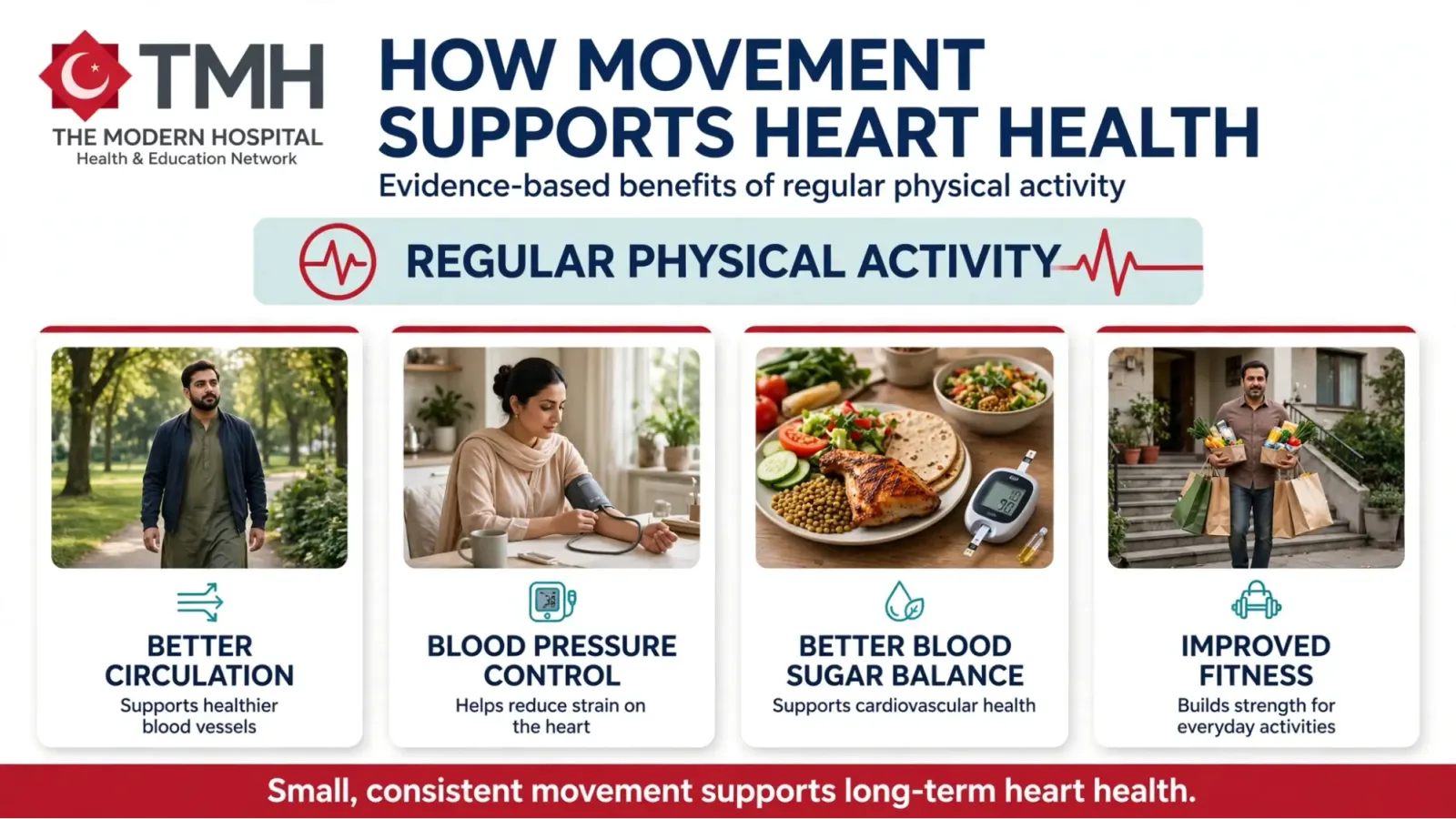
Guided physical activity improves circulation, supports healthier blood pressure levels, and strengthens the muscles that help your body perform everyday tasks. Physical activity also influences other areas linked to heart health.
Regular movement supports:
Better blood sugar control
Improved cholesterol balance
Strengthens your body’s ability to handle daily physical demands.
Starting Physical Activity Safely With Medical Guidance
If you’ve spent years with limited activity or are recovering from a health condition, restarting exercise requires the right approach.
Working with Cardiology specialists and trained therapists allows your exercise plan to match your health condition, fitness level, and recovery goals. A gradual approach to Physical Activity builds strength while reducing unnecessary strain on your heart.
What Happens During Early Hospital Recovery After a Stroke or Heart Event?
Recovery after a stroke or heart event often begins before you leave the hospital. Once your condition stabilises, your healthcare team introduces gentle movements that support:
Circulation
Prevent weakness
Prepare your body for the next stages of rehabilitation.
Spending too much time in bed affects muscle strength, lung function, and blood circulation. Physiotherapy for stroke recovery focuses on safe movements that maintain mobility, rebuild strength, and prepare your body for the next stages of rehabilitation.
Early hospital care often includes:
Bed Positioning and Joint Alignment:
Therapists position your body carefully to maintain comfort, support movement, and reduce stiffness in weaker areas.
Breathing Exercises:
Gentle breathing techniques and chest exercises support lung function during recovery.
Assisted Bed Mobility:
Therapists guide movements such as turning, sitting upright, and placing weight through your feet to gradually rebuild mobility.
During each session, physical therapists monitor important signs such as blood pressure, heart rate, and oxygen levels. Your progress guides how activity levels increase throughout recovery.
How Does Specialized Physiotherapy Support Post-Stroke Rehabilitation?
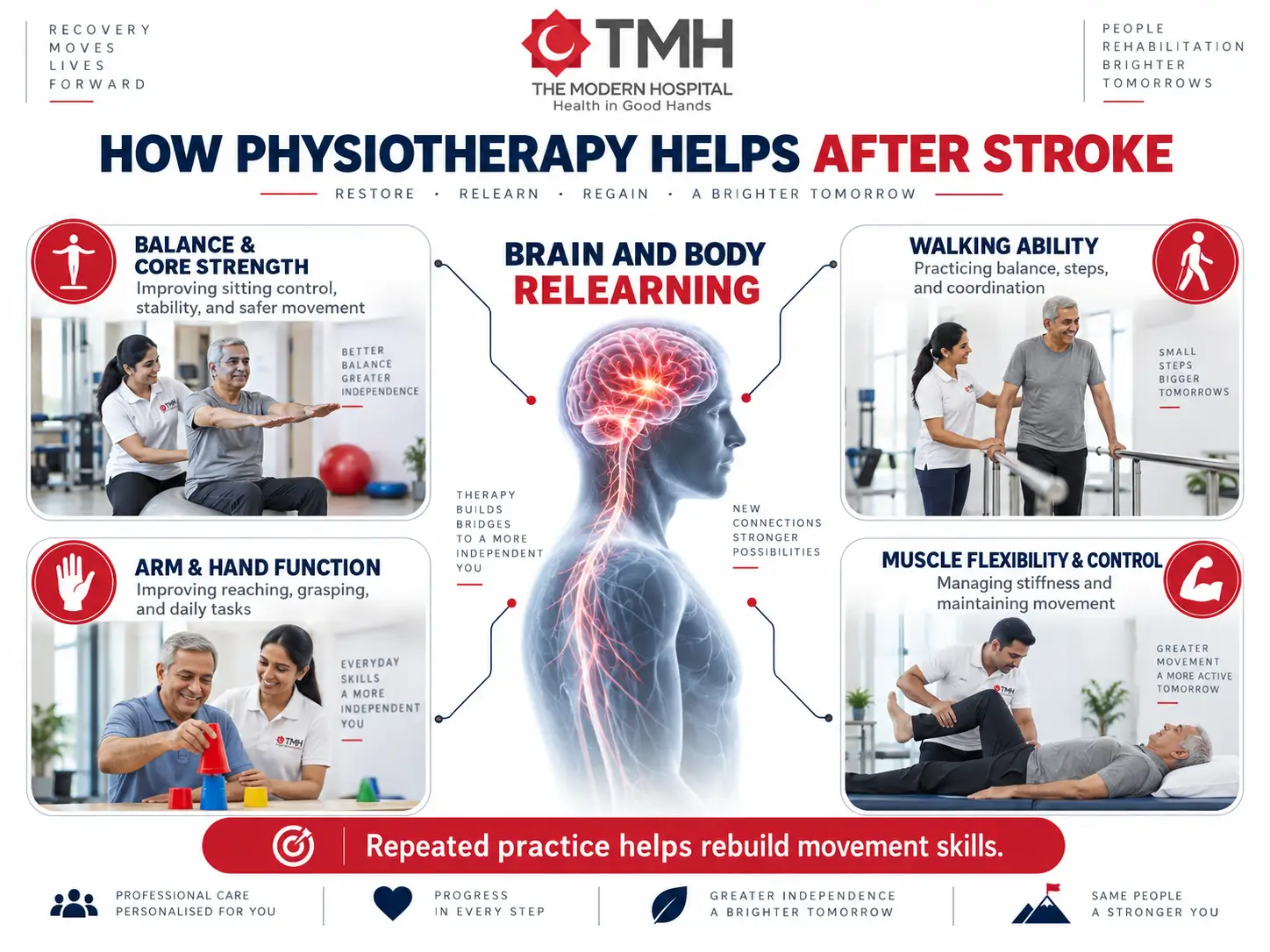
Physiotherapy for stroke focuses on helping the body relearn movements after a stroke by improving balance, coordination, strength, and daily function through repeated practice.
The brain has the ability to adapt after injury through a process called neuroplasticity. Specialized Stroke Rehabilitation uses targeted exercises that encourage this recovery process.
Working alongside Neurology specialists, physiotherapists focus on key areas of recovery:
Rebuilding Balance and Core Strength
Before walking becomes safe again, many patients need to improve their sitting balance, trunk control, and coordination. Exercises focused on stability create a stronger foundation for standing and movement.
Improving Walking Ability
Walking after a stroke requires coordination between several muscle groups. Therapists guide patients through walking exercises that focus on balance, step control, and safer movement patterns.
Depending on your needs, rehabilitation might include walking aids or equipment that provides additional support during practice.
Managing Muscle Stiffness After Stroke
Some stroke survivors experience changes in muscle tone, including stiffness or tightness in affected limbs. Physiotherapists use stretching, movement exercises, and specific techniques to maintain flexibility and improve comfort.
Improving Arm and Hand Function
Stroke rehabilitation also focuses on upper-body movement and daily activities. Practicing reaching, grasping, and hand coordination supports tasks such as eating, dressing, and personal care.
Why Do Exercise Programs Need to Match Individual Recovery Needs?
Every stroke survivor and heart patient has a different recovery journey. Your medical history, current strength, balance, heart function, and daily challenges all influence the type of exercise that suits you.
A general workout routine from the internet does not consider these differences. Someone recovering from a stroke might need support with balance and one-sided weakness, while someone recovering from a heart condition might require closer monitoring of exercise intensity.
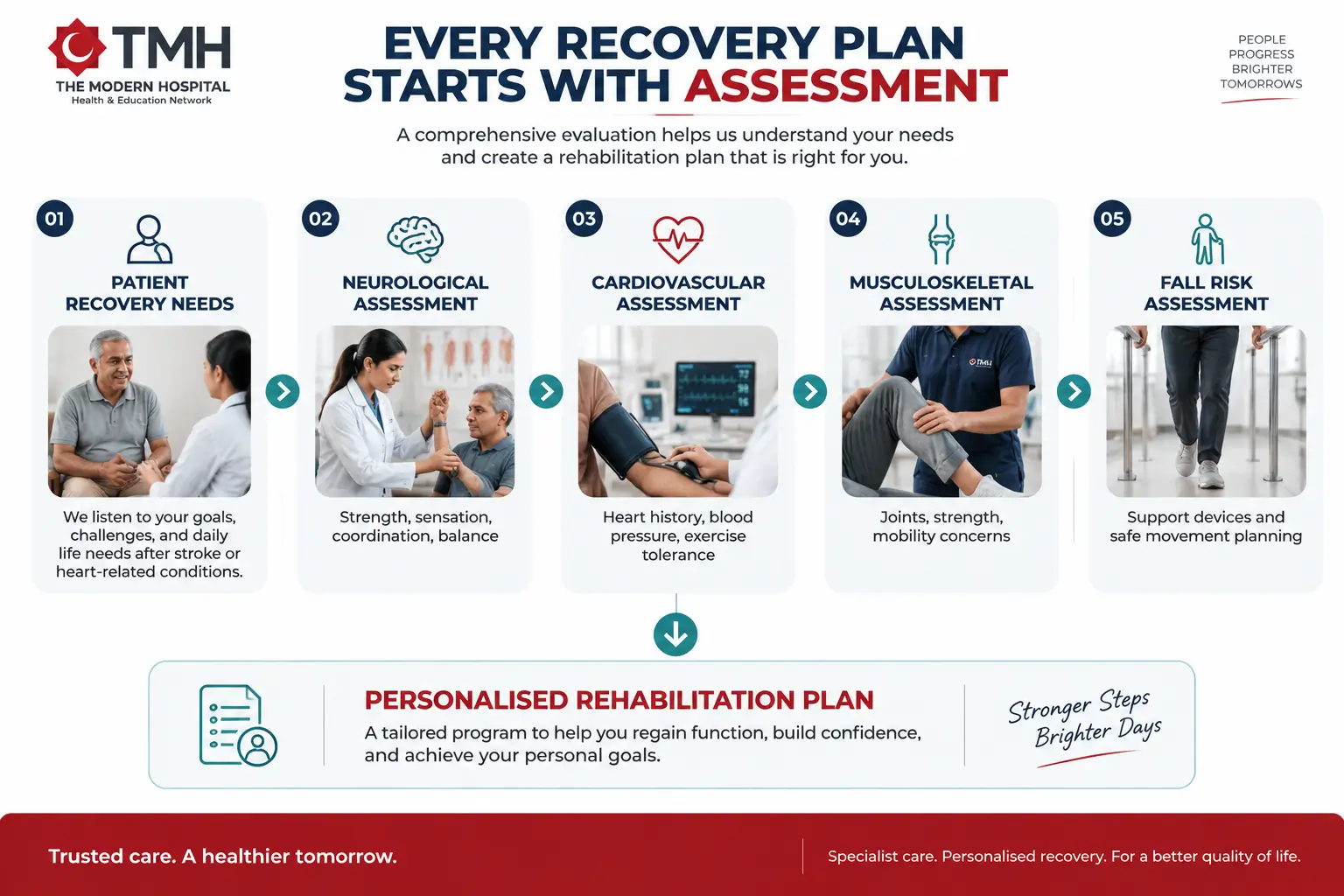
Before starting a rehabilitation plan, your healthcare team reviews important areas such as:
Neurological Assessment:
Understanding changes in strength, sensation, coordination, and balance.
Cardiovascular Assessment:
Reviewing heart history, blood pressure, and exercise tolerance.
Musculoskeletal Assessment:
Identifying joint concerns or previous injuries that affect movement.
Fall Risk Assessment:
Choosing suitable support devices and exercises based on mobility needs.
During rehabilitation sessions, therapists monitor how your body responds to movement and adjust activities according to your progress. This approach allows you to build strength safely while avoiding unnecessary strain.
Important Medical Note:
Exercise intensity, movement duration, and activity goals should always follow the advice of your doctor. Do not begin a new exercise program after a stroke or heart event without medical clearance.
What Warning Signs Require Stopping Activity and Seeking Immediate Emergency Care?
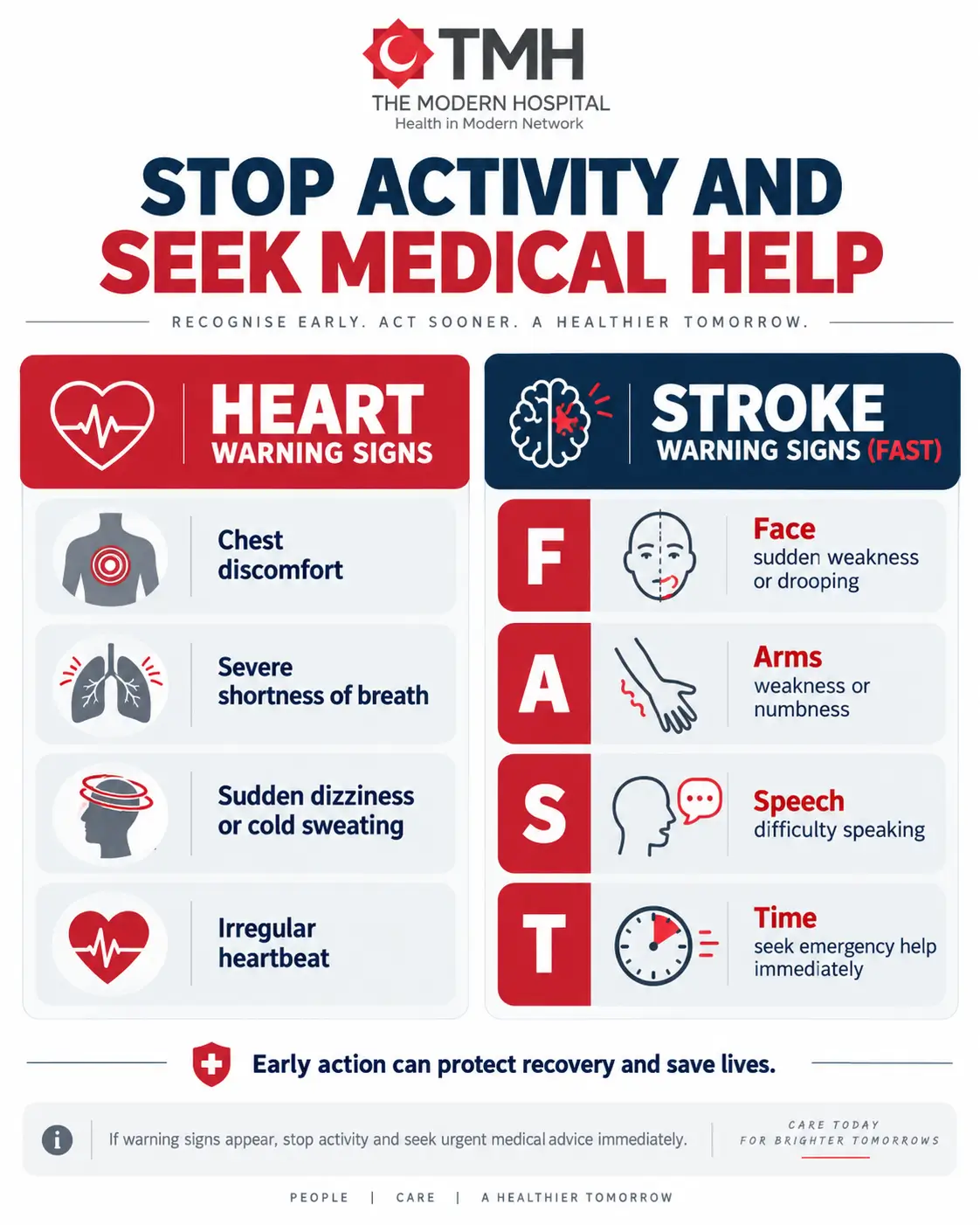
Feeling tired after exercise or sweating lightly during movement is a normal response as your body rebuilds strength. Some symptoms point to a more serious problem and require immediate attention. Stop exercising, sit down, and rest if you experience any of the following:
Chest Discomfort:
Pressure, tightness, squeezing, or burning in the chest that spreads toward the neck, jaw, shoulder, or arm.
Severe Shortness of Breath:
Difficulty breathing even after stopping activity and resting.
Cold Sweating or Sudden Dizziness:
Unexplained nausea, clammy skin, lightheadedness, or feeling faint during or after movement.
Irregular Heartbeat:
A sudden racing, fluttering, or uneven heartbeat that feels unusual.
Stroke survivors should also watch for signs of another neurological event. Remember the FAST warning signs:
Face:
Sudden weakness or drooping on one side of the face.
Arms:
Sudden weakness, numbness, or difficulty lifting one arm.
Speech:
Slurred speech, trouble finding words, or difficulty understanding others.
Time:
Sudden balance problems, vision changes, or other unusual neurological symptoms require urgent medical attention.
If symptoms continue after resting or any stroke warning signs appear, seek emergency care immediately. Chest pain, breathing difficulty, or sudden neurological changes require urgent assessment through a 24/7 Emergency department.
How Does The Modern Hospital Support Stroke and Heart Rehabilitation?
Recovering after a stroke or heart-related event often involves several areas of care. Your movement, heart function, and overall health all play a role in how safely you return to daily activities.
At The Modern Hospital, recovery begins with assessments that look at the full picture of your health. The Neurology team evaluates changes in movement, coordination, and nerve function after a stroke, while the Cardiology team reviews heart health through tests such as ECG, echocardiography, and Doppler studies.
These evaluations help your rehabilitation team understand what your body needs before increasing activity levels. During Physiotherapy, exercises are adjusted according to your strength, balance, mobility, and medical condition, so your recovery progresses at a pace that matches your abilities.
Having these services connected means your rehabilitation decisions consider both the neurological effects of a stroke and the cardiovascular factors that influence recovery. If concerns arise during your rehabilitation, access to diagnostic testing and 24/7 Emergency care provides additional support when you need it.
Rebuilding Daily Life After Stroke or Heart Disease
Recovering after a stroke or heart-related condition takes time, practice, and patience. The goal of rehabilitation is not only improving movement but also helping you feel more prepared for everyday activities, from walking safely to managing tasks that once felt routine.
Physiotherapy for stroke focuses on restoring movement, improving balance, and rebuilding the physical skills affected by a neurological event while supporting your return to daily activities.. Progress happens through consistent practice, regular medical follow-up, and exercises matching your recovery stage.
Every recovery journey looks different. Staying connected with your healthcare team, following your rehabilitation plan, and paying attention to changes in your body all play an important role in long-term progress.
Frequently Asked Questions
How long does stroke rehabilitation usually take?
Stroke recovery looks different for every person. Progress depends on factors such as the area of the brain affected, the severity of the stroke, overall health, and consistency with rehabilitation. Some improvements happen during the first few months after a stroke, while other areas of recovery continue over a longer period through regular therapy and practice.
Can physical therapy help if a stroke happened several months or years ago?
Physiotherapy for stroke remains valuable even when significant time has passed. Targeted exercises support movement, balance, flexibility, and coordination by encouraging the brain and body to work together during recovery.
What is the difference between occupational therapy and physiotherapy after a stroke?
Physiotherapy focuses on movement-related goals such as improving strength, balance, walking ability, and body control. Occupational therapy focuses on helping people manage daily tasks that require coordination, such as dressing, writing, eating, and personal care activities.
Both therapies often work together as part of a complete stroke recovery plan.
Can an older patient with high blood pressure safely participate in heart rehabilitation?
Age alone does not determine whether someone can participate in heart rehabilitation. Doctors and therapists consider factors such as blood pressure control, heart health, mobility, and overall fitness before recommending activities. With appropriate medical supervision, rehabilitation exercises are adjusted to match each person’s abilities and recovery needs.