

Cardiac Rehabilitation After a Heart Attack - What Recovery Support May Include
Learn what cardiac rehabilitation after a heart attack includes, from supervised movement to heart-healthy lifestyle guidance, to help rebuild stamina safely.
Cardiac rehabilitation after heart attack is a medically supervised recovery program that supports your return to daily activities after a cardiac event. It focuses on:
Guided exercise to rebuild strength and improve stamina
Heart-healthy nutrition choices and lifestyle changes
Education about medications, blood pressure, and heart health
Emotional support during the recovery process
Returning home after a heart attack often brings relief along with many questions. You want to get back to your normal routine, but everyday activities like walking, climbing stairs, or completing household tasks might feel uncertain at first.
Many patients and their families worry about doing too much too soon and putting extra pressure on a recovering heart. That caution is understandable. Your heart needs time to heal, and returning to physical activity without proper guidance creates unnecessary risks.
Recovery programs supported by World Physiotherapy Day highlight the importance of supervised movement and rehabilitation after serious cardiovascular events. Cardiac rehabilitation after a heart attack provides medical guidance, gradual exercise plans, and regular monitoring to support a safer return to daily life.
A team of healthcare professionals evaluates your progress, adjusts activities according to your condition, and teaches you how to protect your heart during recovery. In this guide, we’ll explain what cardiac rehabilitation includes, how medical supervision supports recovery, and the role of exercise, lifestyle changes, and follow-up care after a heart attack.
What Are the Main Phases of Cardiac Rehabilitation?
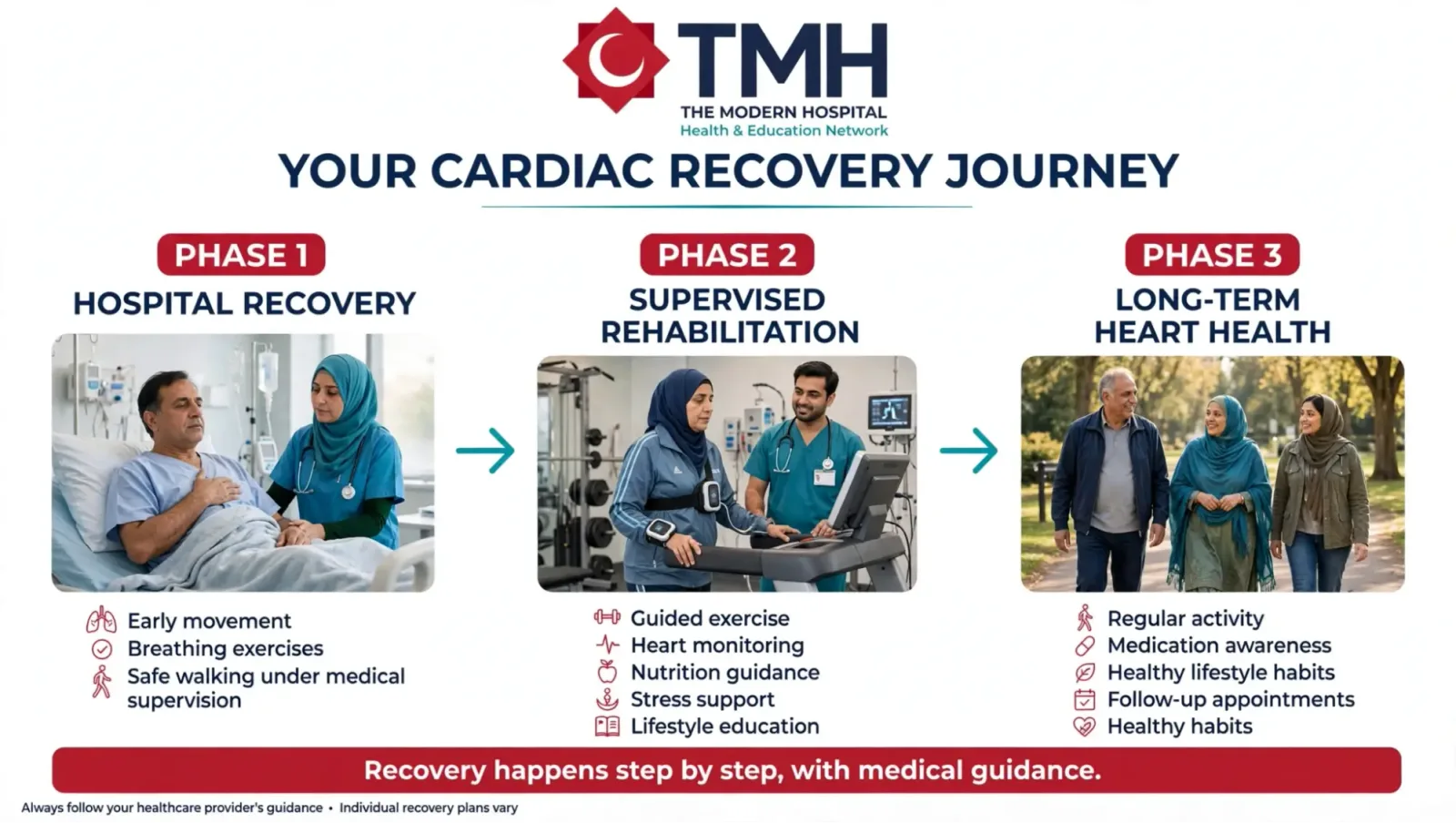
Recovery after a heart attack happens gradually. Cardiac rehabilitation after a heart attack follows different stages that support your return to daily activities while your healthcare team tracks your progress.
Phase 1: Inpatient Care and Early Movement
Cardiac rehabilitation begins during your hospital stay. In the early days after a heart attack, your medical team focuses on gentle activities that prepare your body for recovery. You might start with:
Sitting upright and changing positions safely
Deep-breathing exercises
Short walks with medical supervision
These simple movements support blood circulation, improve lung function, and prevent stiffness after spending extended time resting.
Phase 2: Supervised Outpatient Rehabilitation
After you return home, the next stage focuses on supervised recovery sessions. During these visits, healthcare professionals monitor your heart rate, blood pressure, and response to physical activity.
Your rehabilitation plan usually includes:
Gradual exercise based on your current fitness level
Guidance on healthy eating habits
Support with managing stress after a heart attack
Each activity is adjusted according to your condition, allowing you to build strength at a pace that suits your recovery.
Phase 3: Long-Term Heart Health Maintenance
The final phase focuses on continuing the habits developed during rehabilitation. Your daily routine might include regular walking, heart-healthy meals, taking prescribed medications, and attending follow-up appointments.
Maintaining these habits plays an important role in protecting your heart health over time.
What Lifestyle and Educational Guidance Does the Cardian Rehabilitation Provide?
Recovering after a heart attack involves more than improving physical strength. A complete cardiac rehabilitation after a heart attack also focuses on the everyday choices influencing your cardiovascular health.

Heart-Healthy Nutrition for Everyday Meals
Changing your eating habits after a cardiac event often brings questions about what belongs on your plate. Rehabilitation teams provide guidance on making practical food choices that support heart health. Important areas include:
Reducing Sodium Intake:
Limiting extra salt and highly processed foods supports healthier blood pressure levels.
Choosing Better Cooking Oils:
Using healthier oils in appropriate amounts supports overall cardiovascular health.
Building Balanced Meals:
Including whole grains, vegetables, lentils, and lean proteins creates meals that support recovery.
Medication Management and Daily Routine
After a heart attack, your doctor might prescribe medications such as blood thinners, beta-blockers, or statins to protect your heart and reduce future risks.
Understanding why each medicine is prescribed makes it easier to follow your treatment plan consistently. Your healthcare team explains medication schedules, possible concerns, and the importance of taking each dose as directed.
Managing Emotional Health After a Heart Attack
A heart attack affects your emotional well-being as well as your physical health. Feeling worried, stressed, or uncertain after the event is common. Rehabilitation programs include guidance for managing these emotions through:
Conversations with healthcare professionals
Stress management techniques
Support while adjusting to changes in daily life
Addressing these concerns allows you to feel more comfortable as you gradually return to your routine.
Managing Heart Health Risk Factors
Long-term recovery also involves managing conditions affecting your heart. Your healthcare team reviews factors such as:
Blood pressure levels
Blood glucose control if you have diabetes
Smoking habits
Activity levels
Keeping these factors under control supports better heart health and reduces strain on your cardiovascular system.
Why Is Supervised Physical Movement Safer Than Exercising at Home?
After a heart attack, knowing when and how to start exercising again often feels uncertain. Too much activity too soon puts unnecessary strain on your recovering heart, while avoiding movement completely affects your strength and stamina.
Supervised rehabilitation creates a safer path between rest and regular activity.

During rehabilitation sessions, specialists provide guided Mobility Support while monitoring how your body responds to exercise. Activities often include gentle aerobic movements such as walking or cycling at an intensity selected for your recovery stage.
Your healthcare team tracks:
Heart rate and rhythm
Blood pressure before, during, and after exercise
Oxygen levels during physical activity
Working with trained Physiotherapy professionals matches your exercise plan to your current abilities. You learn which sensations are expected during activity and which symptoms require medical attention.
This guidance builds a safer foundation for Safe Exercise as you continue your recovery at home.
Important Medical Note:
Exercise intensity, target heart rates, and activity duration should always follow the advice of your cardiologist or physiotherapist. Do not begin a new exercise routine after a heart attack without medical clearance.
When Should You Stop Physical Activity and Seek Immediate Emergency Care?
Feeling slightly tired or breathing a little heavier during light activity is a normal part of rebuilding strength after a heart attack. Cardiac warning signs feel different from normal exercise effort. Recognizing those differences allows you to respond quickly when your body needs medical attention.
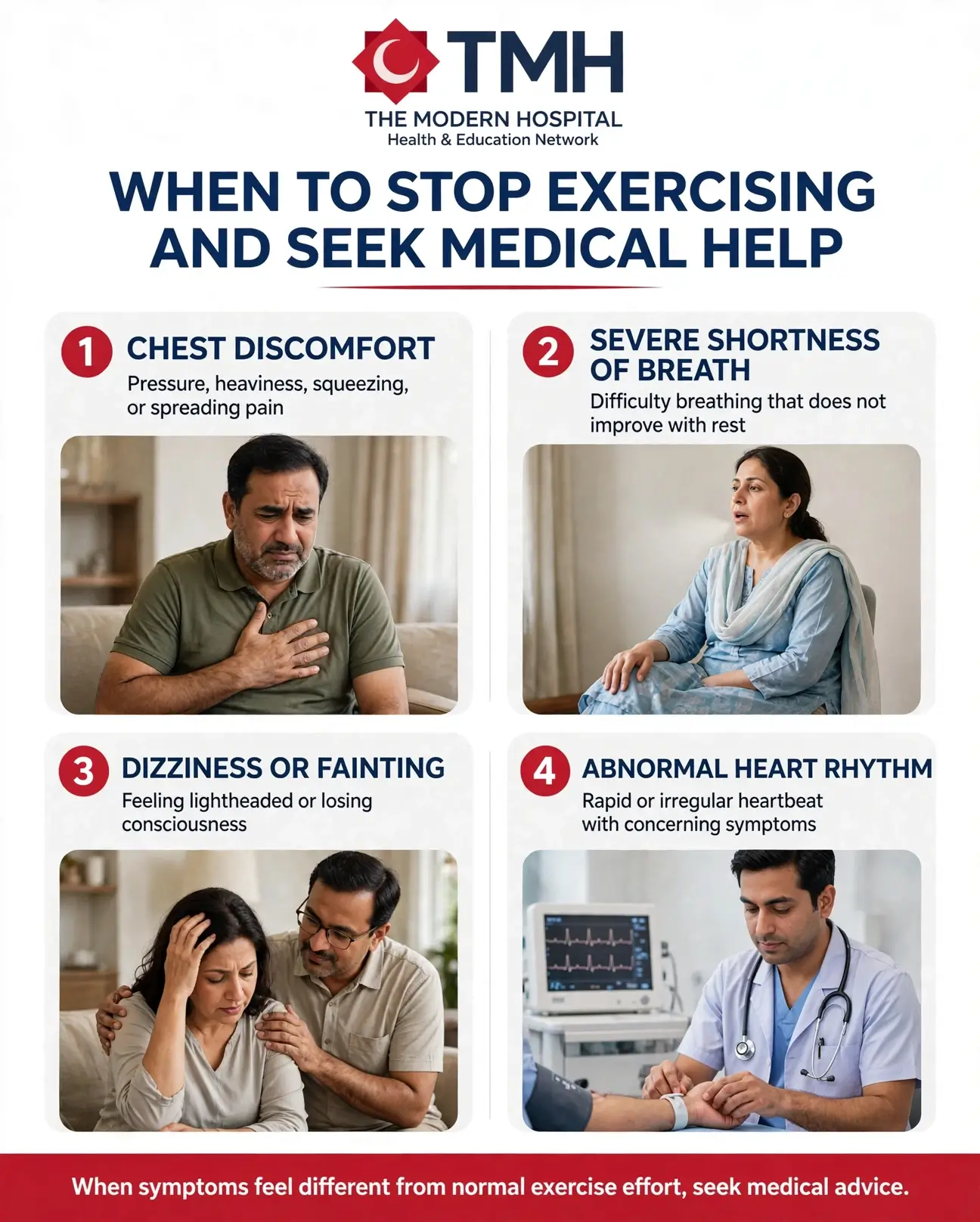
Stop exercising, sit down, and seek medical advice if you experience:
Chest Discomfort:
Pressure, heaviness, squeezing, burning, or pain in the center of your chest that spreads to your shoulder, arm, neck, or jaw.
Severe Shortness of Breath:
Difficulty breathing that does not improve after stopping activity and resting.
Dizziness or Fainting:
Sudden lightheadedness, blurred vision, or feeling like you might lose consciousness.
Abnormal Heart Rhythm:
A rapid, pounding, or irregular heartbeat combined with symptoms such as nausea or cold sweating.
If these symptoms continue after resting, treat them as an emergency. Chest discomfort, breathing difficulty, or sudden weakness after a heart attack requires prompt medical attention through a 24/7 Emergency department.
How Does The Modern Hospital Support Cardiac Rehabilitation After Heart Attack?
Recovery after a heart attack involves regular monitoring, gradual activity, and coordination between different healthcare professionals. At The Modern Hospital, patients receive support through cardiology assessments, rehabilitation guidance, and diagnostic services throughout their recovery journey.
Before beginning physical activity, the Cardiology team evaluates heart function through tests such as ECG, echocardiography, and Doppler imaging. These assessments provide important information about your heart health and guide decisions about your rehabilitation plan.
During rehabilitation sessions, Physiotherapy professionals guide exercises according to your current abilities while monitoring your response to movement.
Diagnostic services through the Laboratory support ongoing health checks when your doctor requires additional testing. If urgent symptoms appear during recovery, the 24/7 Emergency department provides immediate medical care.
Continuing Your Cardiac Rehabilitation After Heart Attack
A heart attack often changes the way you approach everyday activities. Even simple tasks might bring questions about what feels safe, how much activity is enough, and when you’re ready to do more.
Cardiac rehabilitation after heart attack gives you a guided path forward through exercise, lifestyle changes, and regular medical follow-up. Instead of guessing how much activity your heart can handle, your recovery plan is based on your health, progress, and medical advice.
At The Modern Hospital, cardiologists, physiotherapists, and diagnostic teams work together to track your recovery from the early stages of rehabilitation through your return to daily routines. Having these services connected means your exercise plan, heart health assessments, and follow-up care remain coordinated throughout the recovery process.
Frequently Asked Questions
How soon after a heart attack can a patient begin outpatient cardiac rehab?
The timing of outpatient cardiac rehabilitation depends on your recovery, heart function, treatment history, and your cardiologist’s assessment. Gentle movements often begin during the hospital stay, while supervised outpatient sessions start after your doctor confirms that you’re ready.
Can older adults or patients with joint pain participate in cardiac rehabilitation?
Cardiac rehabilitation plans are adjusted according to your physical abilities and health needs. If joint pain or mobility challenges affect exercise, physiotherapists recommend suitable activities that place less strain on your body while supporting heart health.
How many weeks does a typical outpatient program last?
The length of a cardiac rehabilitation program depends on your health condition and recovery progress. Many programs continue for several weeks, with regular sessions that gradually increase activity levels as your heart becomes stronger.
Does completing a cardiac rehabilitation program lower the risk of another heart attack?
Cardiac rehabilitation supports long-term heart health by improving physical activity habits, medication awareness, nutrition choices, and risk factor management. Following your rehabilitation plan and continuing healthy habits after the program plays an important role in protecting your heart.