

Malaria Symptoms vs Dengue: Key Differences and Why Testing Matters
Malaria Symptoms
Fever is one of the most common reasons people seek medical care in Pakistan, especially during monsoon season. But when that fever is caused by a mosquito-borne illness, the situation becomes more complicated. Two of the most common causes are malaria and dengue, and telling them apart based on symptoms alone is not as straightforward as many people assume.
Both illnesses can begin with similar complaints: fever, weakness, headache, and body pain. Because of this overlap, families often try to distinguish between malaria symptoms and Dengue Symptoms at home. This approach can be misleading, and in some cases, risky.
While there are clinical patterns that may suggest one illness over the other, there is no reliable way to confirm the difference without proper testing. Delays in accurate diagnosis can affect how quickly appropriate care is started.
This is why understanding the differences and overlaps between malaria symptoms and Dengue Symptoms is important for recognizing when medical evaluation and testing should not be delayed.
Why Malaria and Dengue Are Easily Confused
Telling malaria and dengue apart during the first 24 to 48 hours is notoriously difficult because both infections trigger similar early reactions in the body. Understanding why they get mixed up helps explain why guessing at home often leads to delays in treatment.
Shared Mosquito Seasons
Both illnesses spread through mosquito bites and surge during humid or rainy weather when mosquito breeding peaks. Because both diseases circulate at the same time of year, a sudden Fever can easily point to either infection.
Similar Early Warning Signs
During the first day or two, both conditions trigger a nearly identical mix of symptoms: a sudden high temperature, deep physical weakness, nausea, and a heavy headache. Early on, both can easily be mistaken for a standard seasonal bug.
The Danger of Guessing at Home
Assuming a fever is harmless or guessing between the two at home can be risky. While they start out looking like twin conditions, they affect the blood and internal organs in completely different ways as the days go on.
Recognizing how early malaria symptoms and Dengue Symptoms overlap is the critical first step toward getting accurate diagnostic testing instead of relying on guesses.
Malaria Symptoms: What Is Most Typical
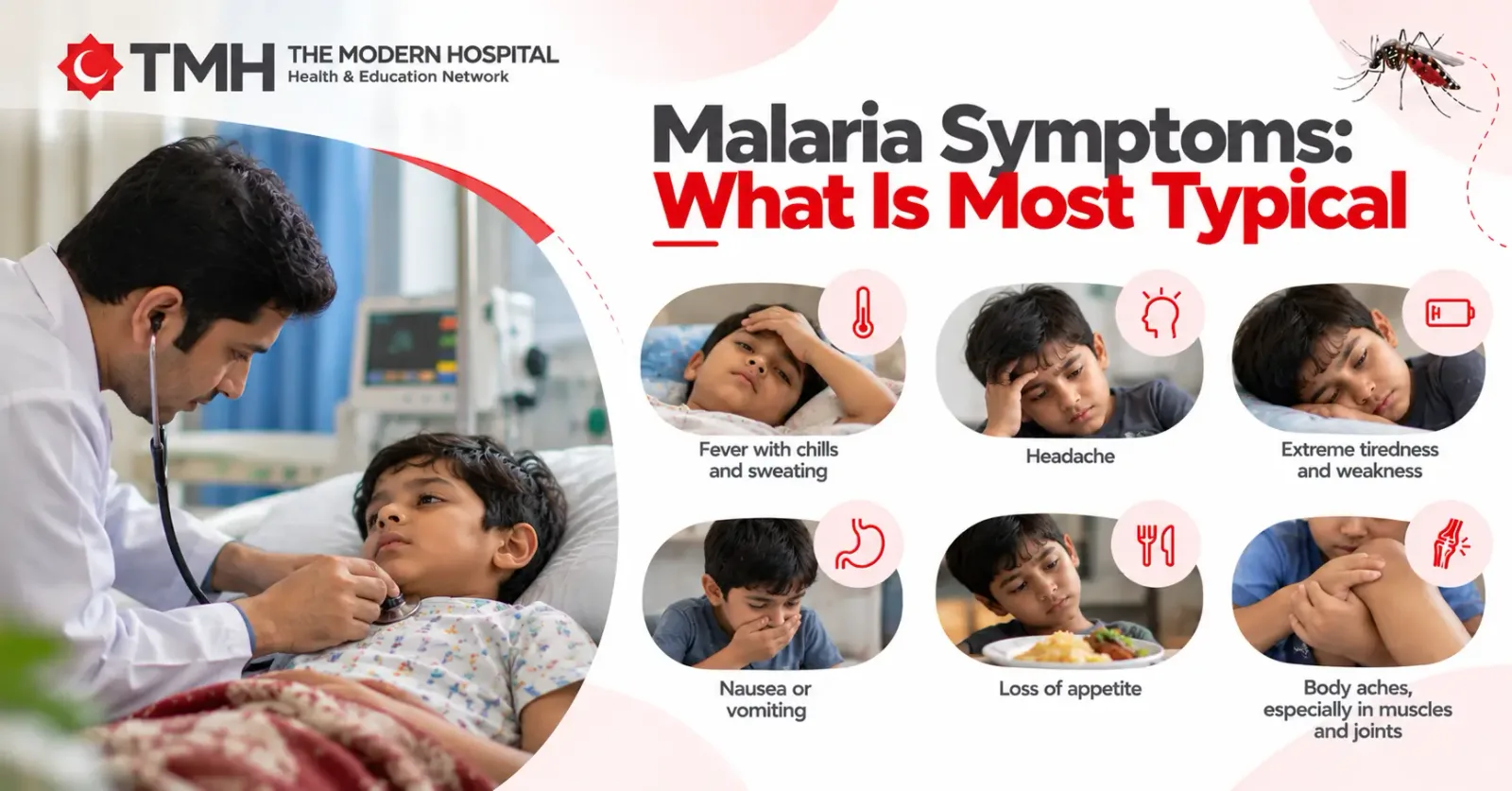
While early malaria symptoms can initially feel like a standard seasonal flu, classic malaria symptoms rapidly evolve into recurring fever cycles, intense shivering, and heavy sweating. Recognizing these typical signs helps you spot how the infection impacts the body over time.
The Hallmark Malaria Symptoms
The most common malaria symptoms include:
High fever and shaking chills
Shivering or severe chills often occur right before a sharp spike in body temperature.
Profuse sweating
As the fever breaks, heavy sweating typically follows, leaving the person feeling completely drained.
Severe headache and muscle aches
Deep body pain, backaches, and a persistent pounding headache are very common.
Extreme exhaustion
Patients usually feel deeply wiped out and weak, even between fever spikes.
Stomach distress
Nausea, vomiting, and loose stools (diarrhea) frequently accompany the illness.
How Symptoms Progress
Health organizations like the WHO and CDC note that malaria typically starts like a severe flu before settling into a cycle of fever, chills, and sweating. Because these symptom cycles can wear down the body quickly, getting an accurate diagnosis early is essential for starting the right treatment.
Dengue Symptoms: What Is Most Typical
Dengue virus causes a sharp reaction in the body, often leading to deep, physical discomfort. While early signs may mimic other viral infections, key Dengue Symptoms develop within a few days of the initial bite that help doctors identify the condition.
Common Dengue Symptoms
Classic dengue symptoms typically last for 2 to 7 days and commonly include:
Sudden high fever
A rapid spike in body temperature, often reaching up to 104°F (40°C).
Pain behind the eyes
A distinct ache behind the eye sockets that feels worse when moving the eyes.
Severe joint and muscle pain
Intense aches in the bones, joints, and muscles, which is why dengue is historically known as "breakbone fever."
Skin rash
A red, blotchy rash that often appears a few days after the Fever starts.
Nausea and vomiting
Stomach upset that can make it hard to keep liquids down.
Swollen glands and deep fatigue
Noticeable swelling in the lymph nodes accompanied by overwhelming physical exhaustion.
Severe Dengue Warning Signs
The most critical window for dengue occurs as the high fever begins to drop. During this transition, parents and caregivers must watch closely for warning signs of severe dengue, including:
Severe belly pain or abdominal tenderness
Persistent vomiting (at least 3 times within 24 hours)
Bleeding from the nose or gums, or easy bruising
Extreme sleepiness, restlessness, or unusual exhaustion
Difficulty breathing or rapid breathing
Fever Pattern and Malaria Symptom Timing
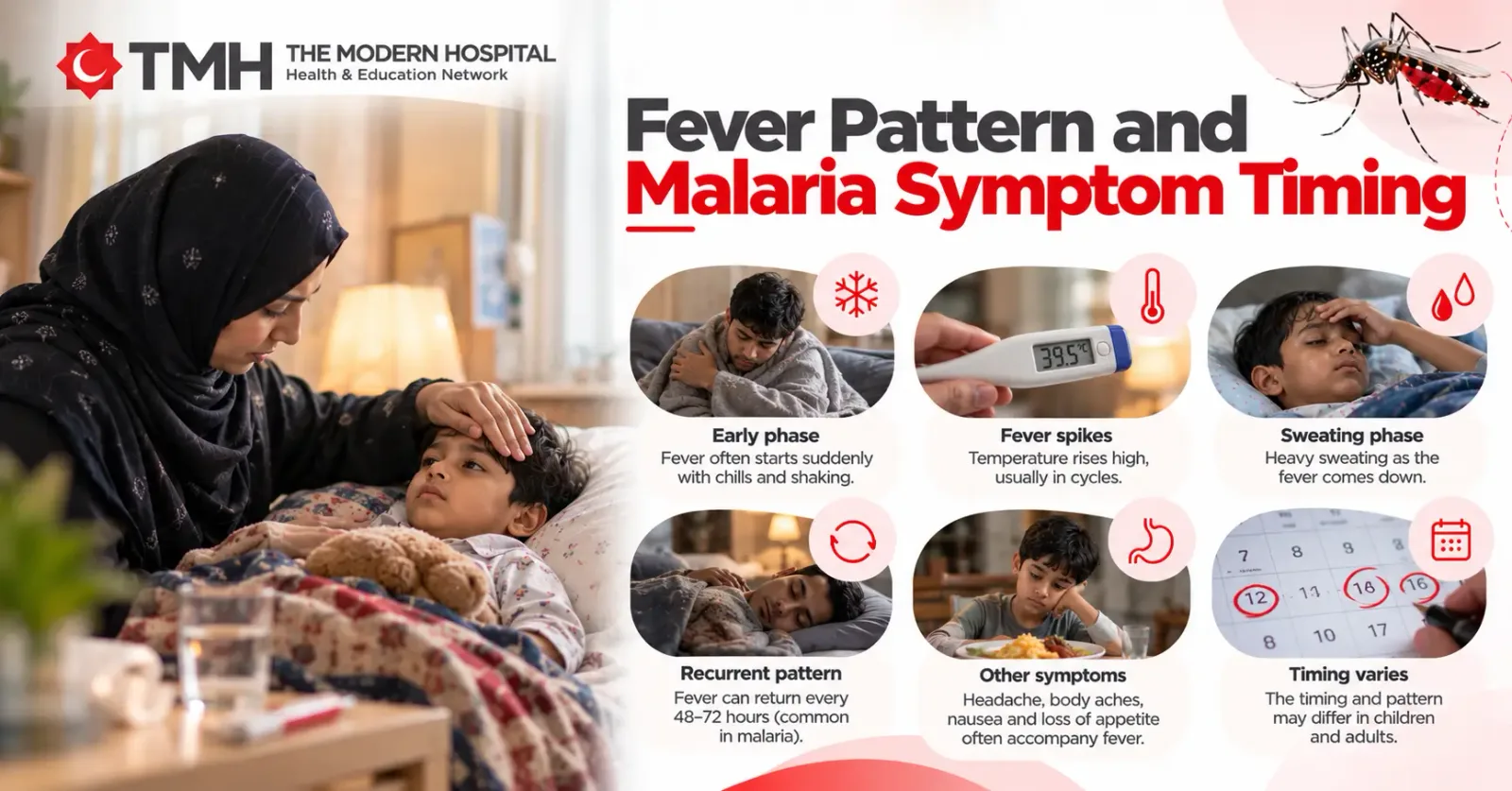
One of the clearest ways to differentiate these two mosquito-borne infections is by looking at how quickly symptoms appear after a bite and how the Fever behaves over time.
Incubation Period: When Symptoms Start
Malaria
Symptoms usually take 10 to 15 days (and sometimes longer) to appear after an infected mosquito bites. This longer timeline means a person might not connect their current illness to a bite that happened weeks earlier.
Dengue
Symptoms develop much faster, usually appearing 4 to 10 days after infection.
How the Fever Behaves
Cyclical Fever in Malaria
Malaria fever often comes in distinct cycles or "waves." A person may experience sudden, intense shaking chills, followed by a sharp fever spike, and then heavy sweating as the temperature drops.
This cycle can repeat every 48 to 72 hours, depending on the parasite strain.
Continuous High Fever in Dengue
Dengue typically presents as a continuous, high-grade fever that remains elevated for 2 to 7 days. Rather than cycling up and down with chills, the fever stays consistently high before dropping, which is when severe warning signs must be watched closely.
Symptoms That Overlap
Because both illnesses trigger an intense immune response early on, many signs look almost identical during the first few days. Recognizing where these conditions overlap explains why guessing the cause at home is unreliable.
The Common Middle Ground Between Dengue and Malaria Symptoms
Both malaria and dengue frequently cause:
High Fever
A sudden rise in body temperature that leaves the person feeling unwell.
Severe Headache
A heavy, persistent ache across the forehead or temples.
Body Aches and Fatigue
Widespread soreness in muscles and joints, accompanied by low energy.
Nausea and Vomiting
Stomach distress that makes it difficult to keep fluids or meals down.
When someone experiences this exact mix of symptoms during peak mosquito season, physical signs alone cannot pinpoint the cause, which necessitates getting a lab test.
Symptoms That Lean Toward Dengue vs. Malaria
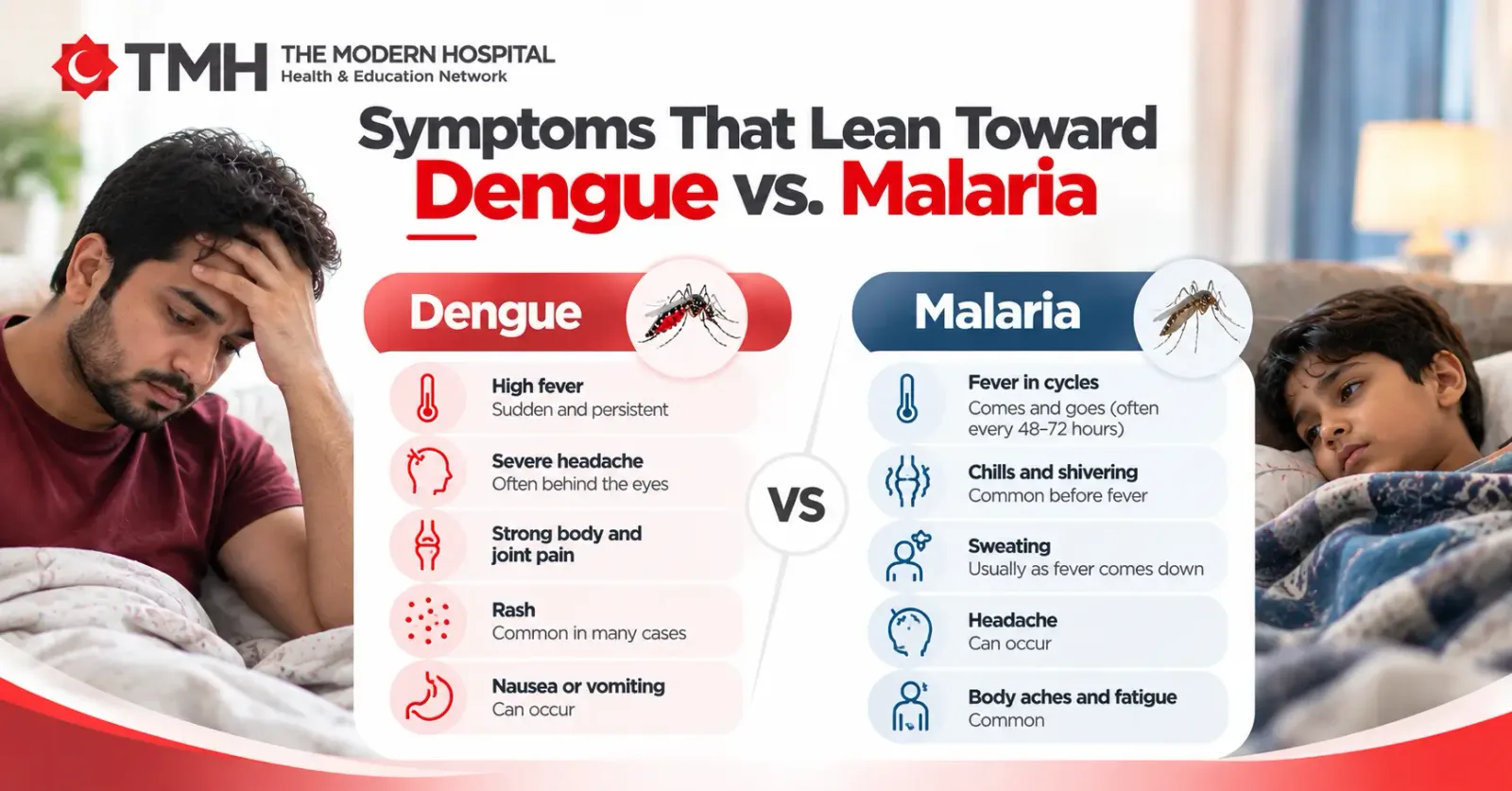
While both illnesses share common ground, subtle differences in physical signs can provide valuable hints. Knowing which specific clues lean toward one infection or the other helps narrow down what your body is experiencing while you arrange proper lab testing.
Signs That Point More Toward Dengue
When evaluating potential Dengue Symptoms, doctors look for specific physical markers that rarely show up in early malaria cases:
Pain Behind the Eyes
A sharp, aching sensation concentrated right behind the eye sockets.
Skin Rash
A flat, red, blotchy rash that appears as the initial Fever progresses.
Severe Joint and Bone Pain
Intense, deep aching across major joints and bones.
Mucosal Bleeding or Easy Bruising
Mild bleeding from the nose, gums, or unusually easy bruising.
Signs That Point More Toward Malaria
On the other hand, classic malaria symptoms lean heavily toward distinct temperature fluctuations and bodily reactions:
Severe Shaking Chills
Intense shivering fits that occur right as the body temperature spikes.
Sweating Cycles
Heavy, drenching sweats that follow a high fever episode.
Cyclical Flu-like Exhaustion
Rapid shifts between severe chills, intense heat, and temporary relief after sweating breaks the fever.
Why Testing Matters: The Role of Accurate Lab Diagnosis
Because early malaria symptoms mirror dengue so closely in the first 48 hours, attempting to diagnose a high Fever at home significantly delays necessary lab testing. The only way to know for sure what is causing a high Fever is through proper diagnostic testing.
Confirming Malaria
To confirm whether malaria parasites are in the bloodstream, doctors rely on specific diagnostic tools:
Rapid Diagnostic Tests (RDTs)
Quick blood tests that deliver results within minutes by detecting malaria antigens.
Blood Smear Microscopy
A microscopic evaluation where a technician examines a drop of blood on a slide to identify the exact strain of the parasite.
A timely Malaria Test allows healthcare providers to prescribe targeted antimalarial medication immediately, stopping the infection before it causes severe complications.
Confirming Dengue
Dengue diagnosis requires a different set of diagnostic evaluations:
NS1 Antigen Test
Best performed during the first 1 to 5 days of illness to detect dengue virus proteins.
Complete Blood Count (CBC)
Essential for monitoring blood health, particularly blood platelet levels and hematocrit (fluid levels).
Why Proper Lab Work Is Essential
Getting these tests performed through a reliable diagnostic Laboratory provides your medical team with clear, objective answers. A lab-confirmed result ensures you receive the correct treatment plan right away, avoiding unnecessary antibiotics or ineffective home remedies.
Who Needs Medical Evaluation Sooner

While any persistent high temperature warrants attention, certain individuals and specific red flag symptoms require immediate medical intervention. Delays in seeking care for either condition can lead to serious health risks.
High-Risk Groups
Certain people are far more vulnerable to severe complications from both mosquito-borne illnesses:
Young children and infants
Dehydrate quickly and can deteriorate rapidly.
Pregnant women
Face increased risks of severe anemia, pregnancy complications, or low birth weight.
Older adults and people with chronic health conditions:
May experience severe strains on their heart, liver, or immune system.
If anyone in these high-risk groups develops a sudden fever, scheduling an immediate consultation with a General Physician is essential to get proper baseline blood work and guidance.
Warning Signs That Demand Immediate Care
Regardless of age, head straight to the nearest hospital Emergency department if you or a family member notice any of these severe warning signs:
Malaria Symptoms Demanding Immediate Care
Severe, continuous belly pain
Persistent vomiting (unable to keep any liquids down)
Bleeding from the nose, gums, or blood in vomit or stool
Difficulty breathing or unusually rapid breathing
Extreme sleepiness, confusion, or unusual exhaustion
A sudden drop in body temperature accompanied by cold, clammy skin
Don't Guess, Get Tested
When a sudden Fever strikes during mosquito season, trying to tell malaria and dengue apart at home is a risky guessing game. While physical clues provide useful hints, tracking malaria symptoms versus Dengue Symptoms visually is never a substitute for professional blood work when managing a severe Fever.
If you or a family member fall ill, skip the guesswork. At The Modern Hospital, our 24/7 diagnostic Laboratory and experienced medical team are ready to provide quick, accurate testing and compassionate care so you can get the right treatment without delay.
Frequently Asked Questions
Can a person have malaria and dengue at the same time?
Yes. It is possible to get infected with both at the same time. This is known as a co-infection. Co-infections can cause more severe symptoms, which makes getting a Malaria Test at a reliable Laboratory even more critical when a Fever starts.
How quickly can lab tests confirm whether it is malaria or dengue?
Rapid Diagnostic Tests (RDTs) for malaria and Dengue NS1 antigen tests can often deliver initial results within 15 to 30 minutes. A Complete Blood Count (CBC) or a blood smear microscopy evaluation processed a Laboratory typically provides comprehensive results within a few hours, allowing your General Physician to begin the correct treatment plan.
Can antibiotics cure malaria or dengue?
Antibiotics are designed strictly to kill bacteria. They don’t work against the malaria parasite or the dengue virus. Treating dengue or malaria with antibiotics will not lower your fever or speed up recovery, and taking unprescribed medication can cause unnecessary stomach distress or organ strain. Always consult a healthcare provider for the proper prescription.
What should I do if a high fever does not drop after taking paracetamol?
If a high temperature persists, stay hydrated with small sips of water or ORS, use gentle room-temperature water sponging, and seek immediate evaluation at an Emergency facility or consult a doctor right away to check for underlying complications.